
When I was a little kid, I had a complicated relationship with horror. Like a lot of little boys, I really loved monsters and spooky things fascinated me. I had monster toys, monster clothes, monster books, ate the monster cereals and, of course, I loved Halloween. And when it came to Halloween, I didn’t want to be no clown or pirate or cowboy. I wanted to be a vampire, or a ghost, or a ghoul. However, despite the fact that I liked spooky things, I did not like being scared, and I was too timid to actually watch horror films. When I would somehow see some sort of scary scene in movies or on television, or come across a frightening image or object, it had the ability to drive me to tears and haunt me for weeks. But despite the strong emotional reaction, it would also fascinate me. I might not have known how to vocalize it, but I loved being scared as much as I hated it. My earliest memories of being both terrified and fascinated with horror media in this way did not primarily come via movies but found its way to me through music. In my earliest memories, I had a childhood fear of KISS, who were marketed towards children in the 170’s, but were just too macabre for my three-year-old mind. Around 1980, when I was about five years old, I remember being horrified when I saw a poster of Ozzy Osbourne from his “Blizzard of Oz” period at the local K-Mart. While his massive eyes, gritted teeth and fake gore, which looked more like jelly than blood, seems cheesy today, it scared the hell out of me…. especially when a neighbour kid told me that he bites heads off of bats! But when I was eight years old, I had a very different reaction to the crossroads between music and horror when Michae; Jackson’s “Thriller” video was released in late 1983. One of the most important music videos of all time, the 15-minute short film was the closest thing to a horror film I dared to watch, and I found it pretty cool! That video became not only a gateway moment for me as a music fan, but as a horror fan as well.
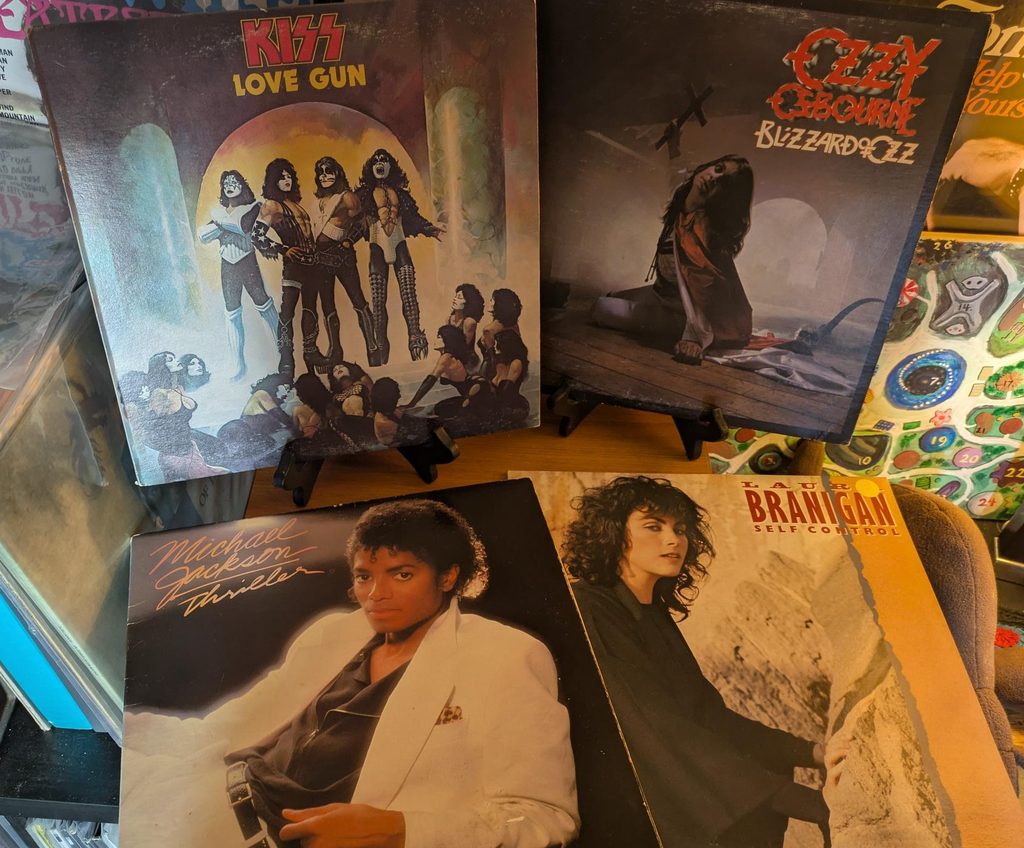
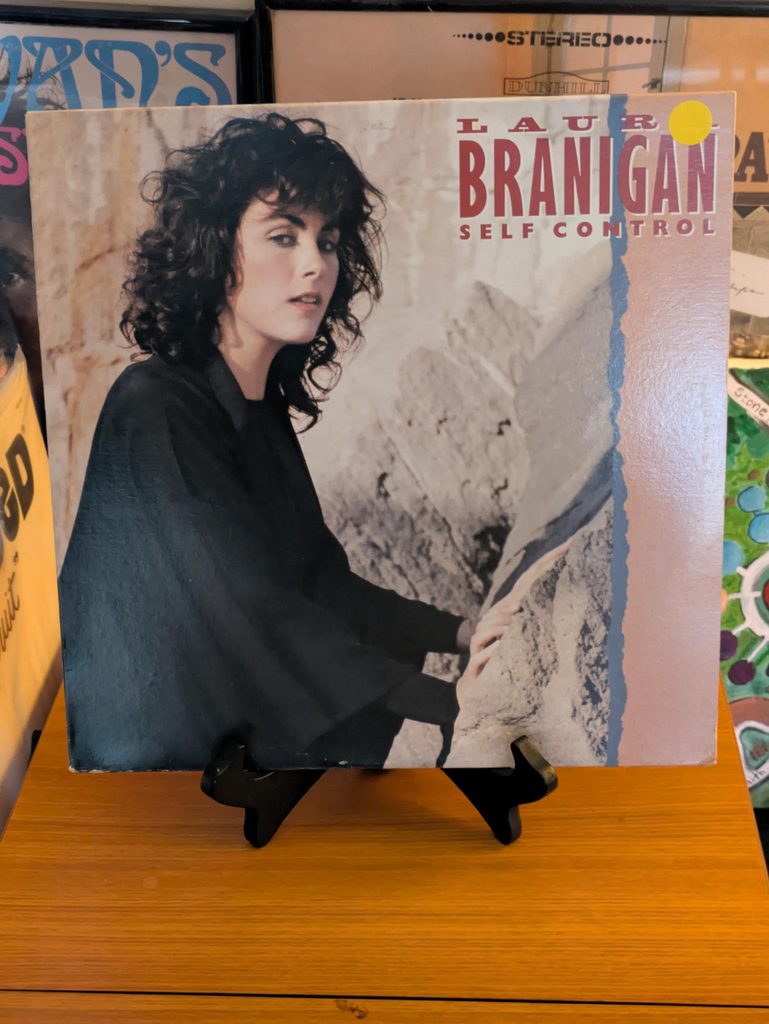
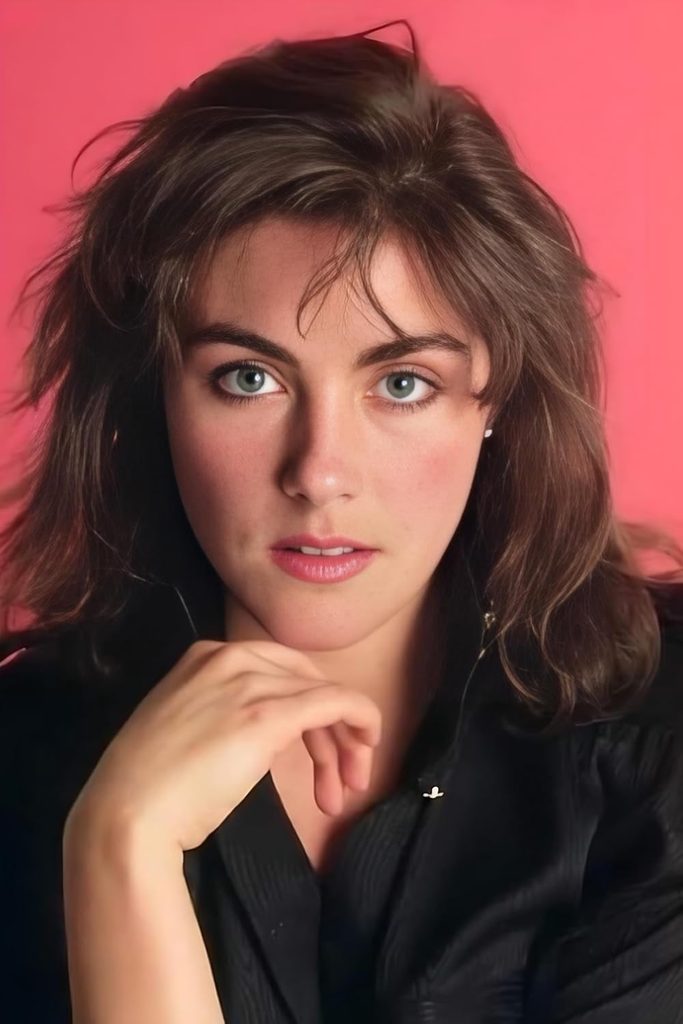
But this Vinyl Story is not about Michael Jackson’s “Thriller.” There are literally hundreds of articles about the legacy and importance of that video. But what often gets overlooked is another horror-based music video that was darker and more insidious than Michael Jackson’s video. In April 1984, only four months after the release of “Thriller,” pop diva Laura Branigan released the video for her club hit “Self Control” on MTV. Directed by Academy Award Winning director William Friedkin, “Self Control” had some extremely dark stuff going on in it, and over forty years later continues to give me some seriously sickening creeps that sends goosebumps through my body.
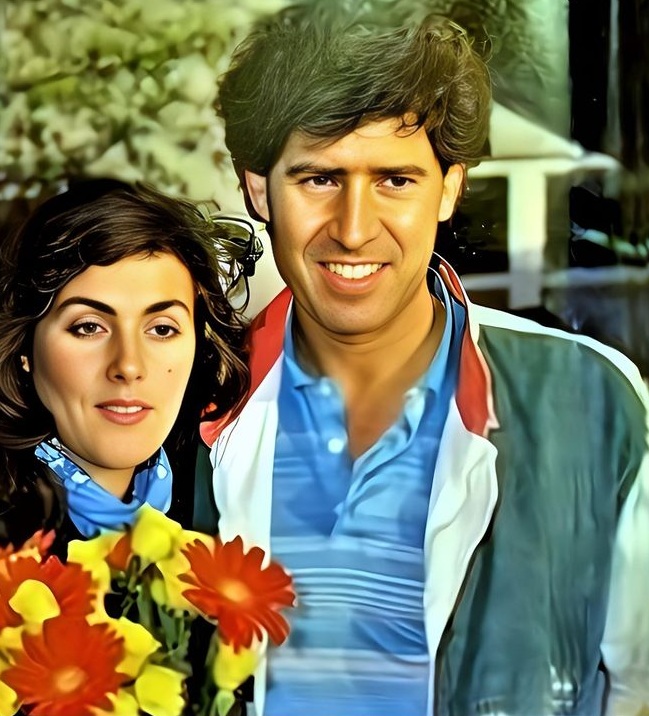
Yet despite it being both interesting and well produced, Branigan’s “Self Control” video isn’t one that gets much discussion, and didn’t really become considered one of the iconic videos of the 1980’s. But what I find even more confounding is that when attempting to research the video I haven’t found any information about it beyond the filming locations and some minor controversy the video caused upon release, nor could I find any critical commentary on the film from either the past or the present. I can’t find the names of any performers, chirographers or even stories from people on the set. Nobody seems to be talking about “Self Control” despite it being one of the most haunting music videos ever made.
Now the 1980’s was very crowded in regard to the amount of women at the top of the pop scene, and in order to sort through all the different personalities and voices that were appearing on MTV you almost needed a score card. As a result, Larua Branigan often gets lost amongst the plethora of women from the era, and while her hits still remain in the popular soundscape, she hasn’t managed to reach the iconisim of some of her more colourful contemporaries. But what made Branigan unique from the other women performing at the time was that she had a vocal style usually reserved for belting out emotional ballads but merged it with high energy pop music. As a result, she had a vocal power which went far beyond a lot of the performers whose music was being heard in dance clubs at the time. The other thing that made her unique, although it primarily went overlooked by North American fans, was that Branigan was bringing the exciting sound of the European club scene to North America by Americanizing Eurodance hits and successfully bringing them to MTV.
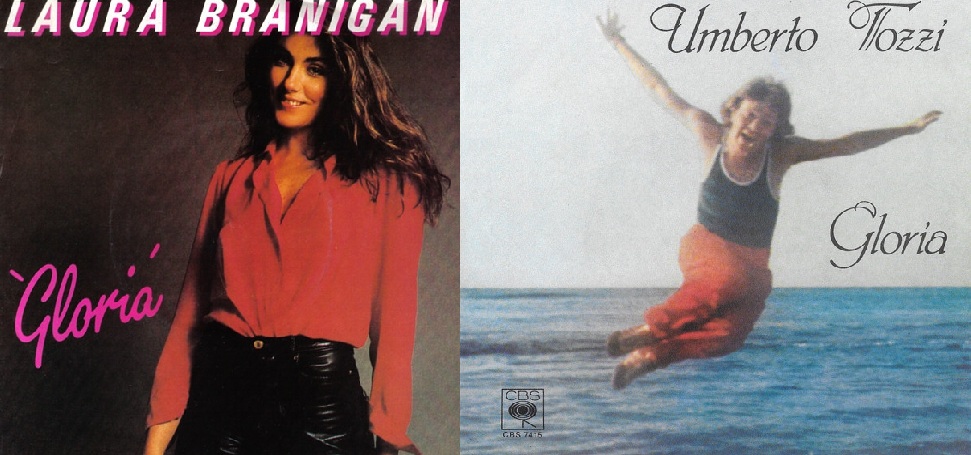
Starting out in a folk-rock group called Meadow, Branigan spent much of the 1970’s working as a professional background vocalist while also pursuing a career as an actress before getting her big break in 1979 when she was signed to Atlantic Records and was teamed up with German record producer Jack White (not to be confused with The White Stripes’ Jack White) who had also just been signed to work with the company. Having only worked with European acts prior to coming to Atlantic, White had his finger on the pulse of the European music scene and brought Branigan a recording of Italian singer-songwriter’s Umberto Tozzi’s “Gloria” (not to be confused by the 60’s banger made famous by Them and The Shadows of Knight). A big hit in Italy and Germany in 1979, the song had been translated in English and recorded a few times with limited success but was still basically unheard in North America. Well, Branigan added her big brassy voice behind “Gloria,” and it was released as the second single to her debut album, “Branigan,” in 1982 and quickly became an international hit, outperforming the original version. Landing at the #2 spot on the Billboard charts in April 1982. “Gloria” would also go on to seal Branigan as one of the top female vocalists in pop when she it earned a Grammy nomination for “Best Female Vocalist” alongside icons like Linda Rondstadt, Olivia Newton-John, Melissa Manchester and Juice Newton.
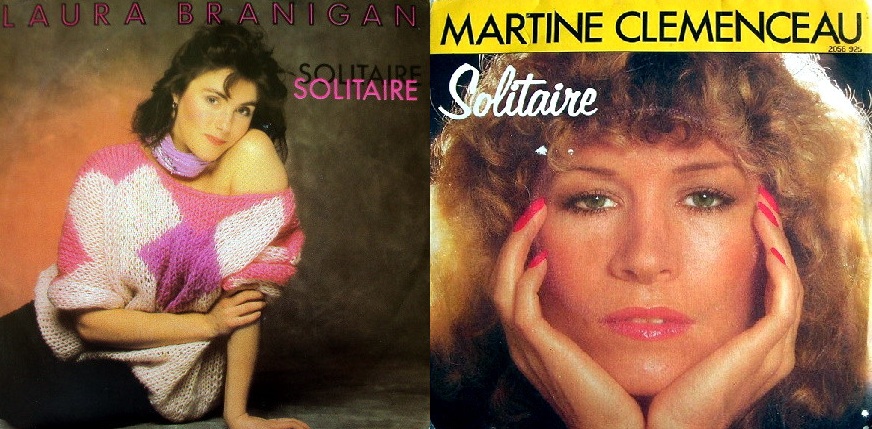
Branigan and White teamed up again for her sophomore album, “Branigan 2” with another cover from the European charts, Martine Clemenceau’s “Solitaire” (not to be confused with the Carpenters hit song) which hit the top of France’s music charts in 1981. Branigan’s version went to #7 on the American Billboard charts in May 1983, and the video that was released in conjunction with the song was a much larger production than that of many of the videos being made for MTV at the time. Although she had found her success as a recording star, Branigan was still acting and had gotten guest star spots on “CHiP’s,” “Knight Rider,” and “Automan.” Branigan showed some natural acting chops in the “Solitaire” video which had the feel of an episodic drama instead of just a film of the musician performing their song.
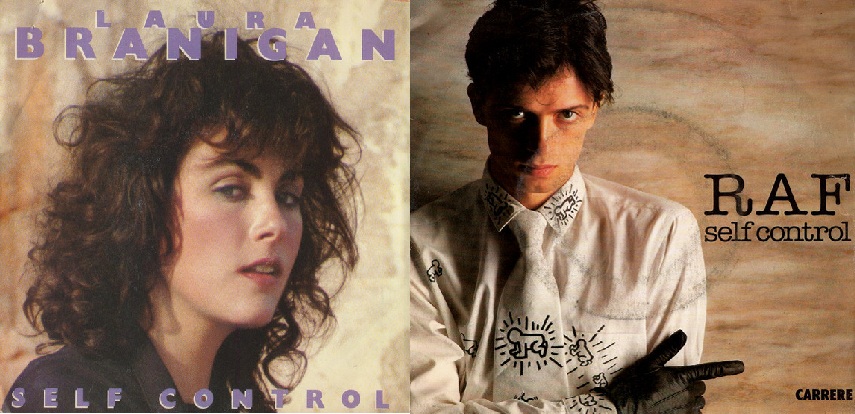
Although “Solitaire” kept Branigan on the charts, it didn’t have the same impact that “Gloria” had on the public, and for her next album Branigan and White sought to find another song that would bring her music back onto the club scene. Well, fortune would smile on the duo when White was handed an advanced copy of a yet to be released song by Italian pop star Raf titled “Self Control.” A pulsating haunting pop song about the Eurodisco scene, the song was already composed in English and was predicted to become a major hit on the European market. Teaming up with arranger Harold Faltermeyer, who had been working as an apprentice under Georgio Mordoer, “Team Branigan” recorded the song prior to the release of Raf’s version and decided to make it the center piece of Branigan’s third album. Raf released his version of “Self Control” in January 1984, and it went to the top of the charts throughout Europe, becoming an instant Eurodance classic. But two months later Branigan’s version was released and instantly started climbing the charts, eventually outperforming Raf’s version in multiple countries. “Self Control” would end up being Branigan’s biggest hit in Europe, and reaching the #4 spot on the Billboard charts, would be her second biggest hit in the US.
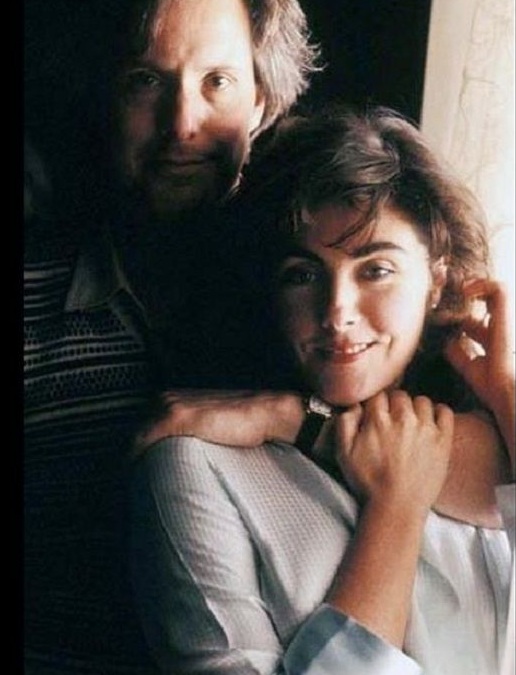
Soon after the release of the single, Branigan’s “Self Control” video made its premier on MTV, reinterpreting the song in a way that brought horror to pop music like never known before.
Just how the collaboration between Laura Branigan and William Friedkin came to be seems to be lost to history. I can’t find any clear-cut narrative on how it happened, but never before had an MTV music video been directed by an Academy Award winning director. I was able to find a tidbit that stated that the concept for the video came completely from Branigan herself, and it was suggested it may have come from a nightmare, but there is no solid confirmation of this. Well, if Branigan wanted to bring a nightmare to life, she found the right director to film it.
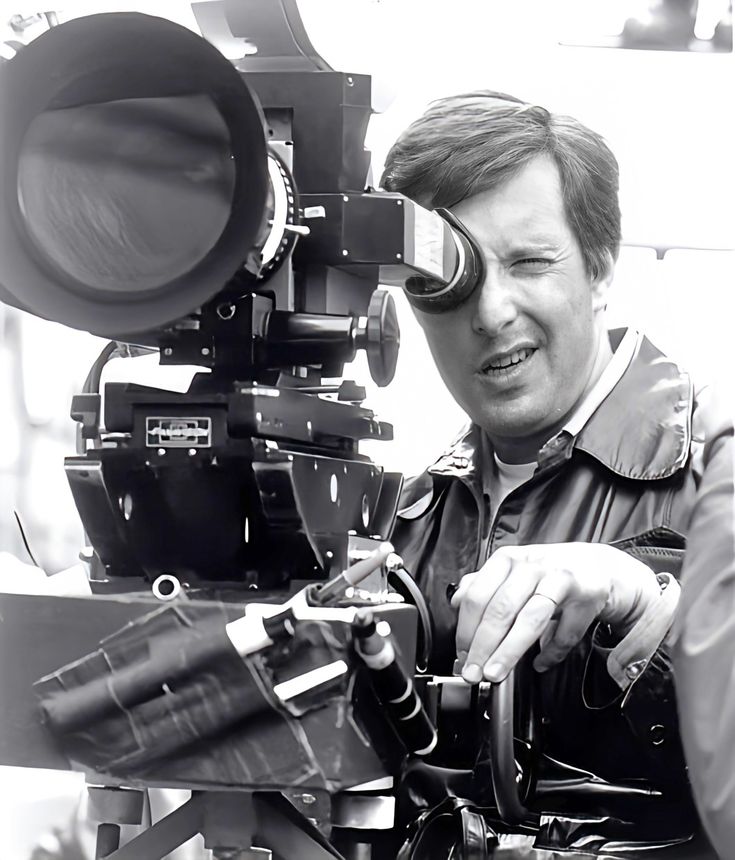
The director of modern classics such as “The French Connection” (1971) and “Sorcerer,” (1977), Friedkin had become a living legend in Hollywood for shocking audiences with his horror classic “The Exorcist” (1973). Prior to “Self Control,” Friedkin had released his controversial crime drama “Cruising” (1980) which brought audiences to the seedy urban jungle of underground fetish scene and gay sex bars. Friedkin had a proven track record of creating unnerving narratives with provocative imagery and didn’t seem concerned with public backlash when executing an artistic vision.
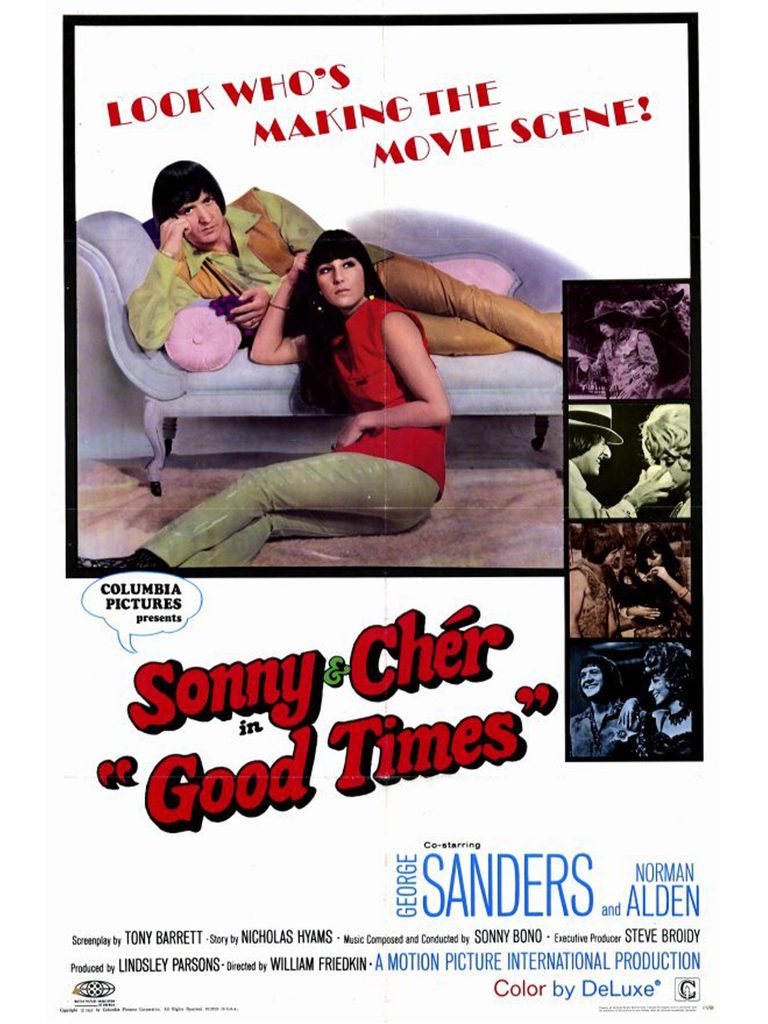
But while he had never directed a music video for MTV yet, William Friedkin wasn’t inexperienced when it came to filming pop music. In 1967 Friedkin made his theatrical directorial debut with Sonny and Cher’s feature film “Good Times.” A mishmash of a production with little plot and even less point, the film was an abysmal flop. However, making the most he had with the little material he had to draw from, Friedkin proved himself to be an exciting director with a unique artistic vision, and despite it’s lack of substance, “Good Times” proved to be a visually stunning film, especially during Sonny and Cher’s musical sequences. Filmed much like music videos would be made a decade later, Friedkin created some powerful visuals and emotional vignettes for some forgettable songs such as “Trust Me,” “Just a Name,” and “It’s the Little Things,” where he actually tested some visual effects that he’d later use in “The Exorcist.” His work with Sonny and Cher would primarily be ignored, but it’s extremely good work, and is an interesting showcase of William Freidkin’s ability to create music videos
But Larua Branigan was bringing Friedkin a lot more to Friedkin than the producers of “Good Times” had brought to the table, giving him something seriously juicy to chomp on. Branigan took the original lyrical content of Raf’s “Self Control,” and reinterpreted it into a terrifying world filled with monsters, mystery and ecstasy.
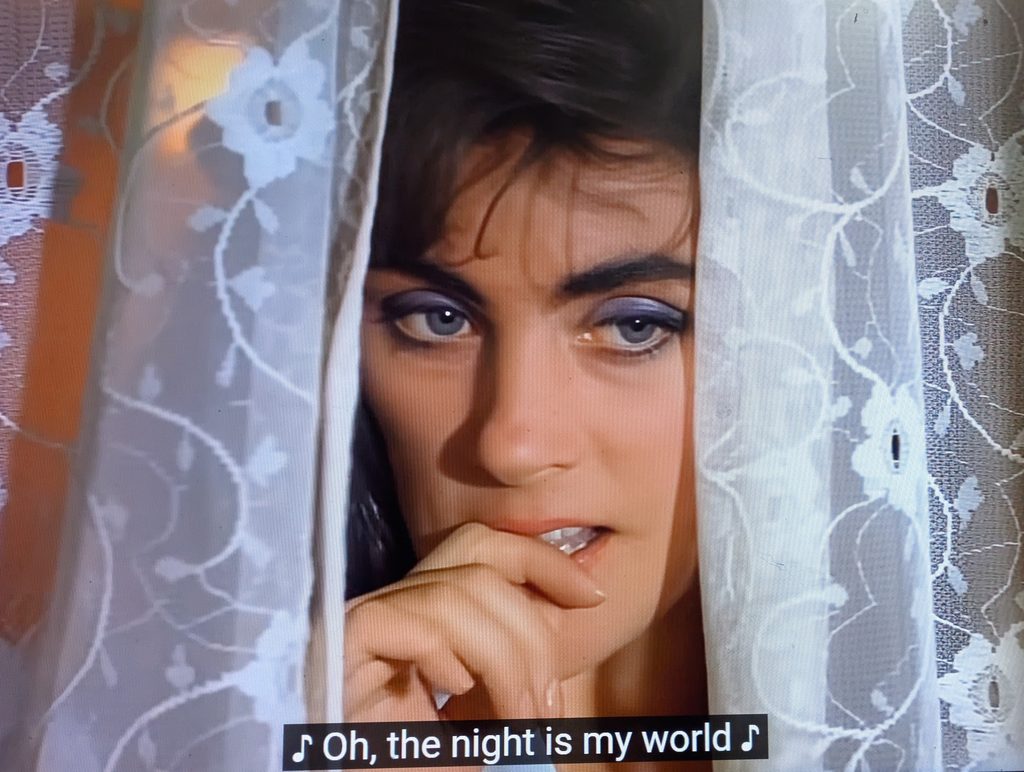
Now when Raf wrote “Self Control,” he was writing about his own personal experiences cruising through the Milan club scene. He had noticed that there was a different way that the city’s clubbers behaved during the light of the day compared to how they acted in the shadows of the streets. By day they went about their daily business, with jobs or school, and behaved primarily in a conventional manner. They were civilized, mundane and maybe even restrained. But, when the sun came down and they’d hit the city streets, it was a whole different story. The night was wild, weird, sexy and a time where ordinary people could abandon their inhibitions:
”Oh, the night is my world
City light painted girl
In the day, nothing matters
It’s the nighttime that flatters
In the night, no control
Through the wall something’s breaking
Wearing white as you’re walkin’
Down the street of my soul
You take my self, you take my self control
You got me livin’ only for the night
Before the morning comes, the story’s told
You take my self, you take my self control
Another night, another day goes by
I never stop myself to wonder why
You help me to forget to play my role
You take my self, you take my self control
I, I live among the creatures of the night
I haven’t got the will to try and fight
Against a new tomorrow, so I guess I’ll just believe it
That tomorrow never comes
A safe night (You take my self, you take my self control)
I’m living in the forest of a dream (You take my self, you take my self control)
I know the night is not as it would seem (You take my self, you take my self control)
I must believe in something, so I’ll make myself believe it (You take my self, you take my self control)
This night will never go.”
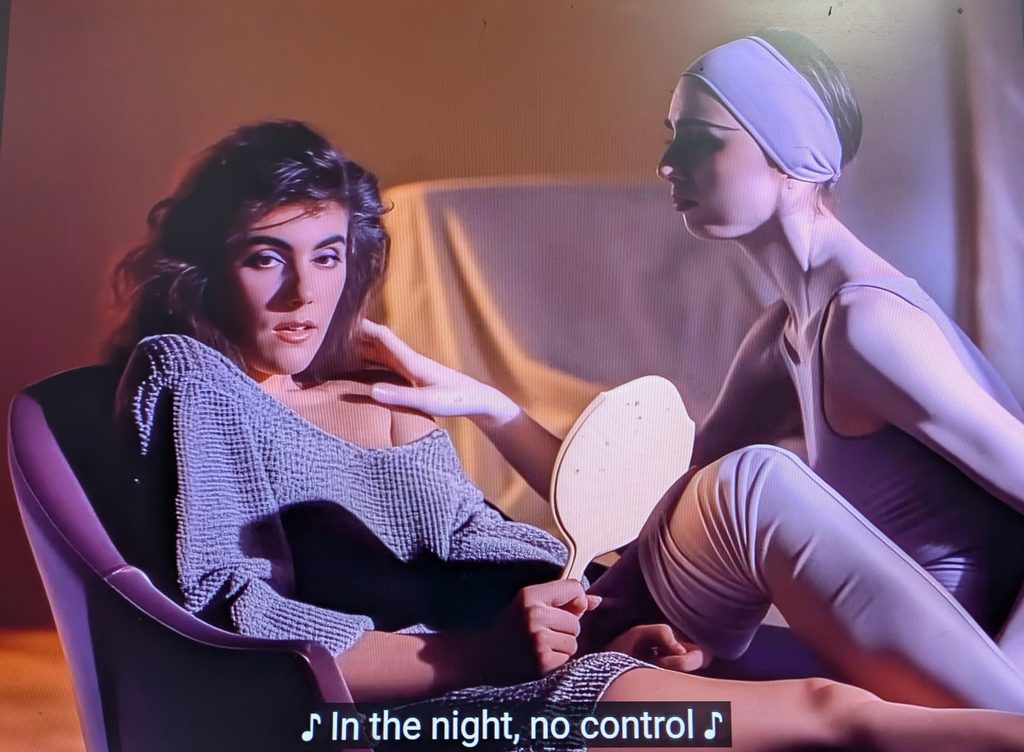
In the second verse of the song, Raf is singing to the night directly, as if it is a figure or a person. Raf states “You take my self control,” as if he isn’t able to resist the night’s seduction. Another key metaphor, “I live among the creatures of the night,” referred to the other people who inhabit the. But when Laura Branigan brought her vision for “Self Control” to William Friedkin, she took these provocative metaphors and turned them into literal characters. Filled with erotic imagery and strange symbolism, Branigan and Friedkin created a video for “Self Control” that isn’t only an exploration in horror, but in fetishistic sex and the strange and ritualistic ceremonies that we hear about in urban legends.
The video opens with Laura Branigan in her apartment watching the day turn into night. But even before things get really wild, some supernatural weirdness begins when a strange white skinned figure emerges from the darkness to caress Branigan seductively as she begins to get ready for a night in the city. Little explanation is given as to who this figure is supposed to be, and she eventually becomes a moot point who is quickly forgotten as the video continues. However, the white skinned figure is sort of a harbinger of the drama that is to come.
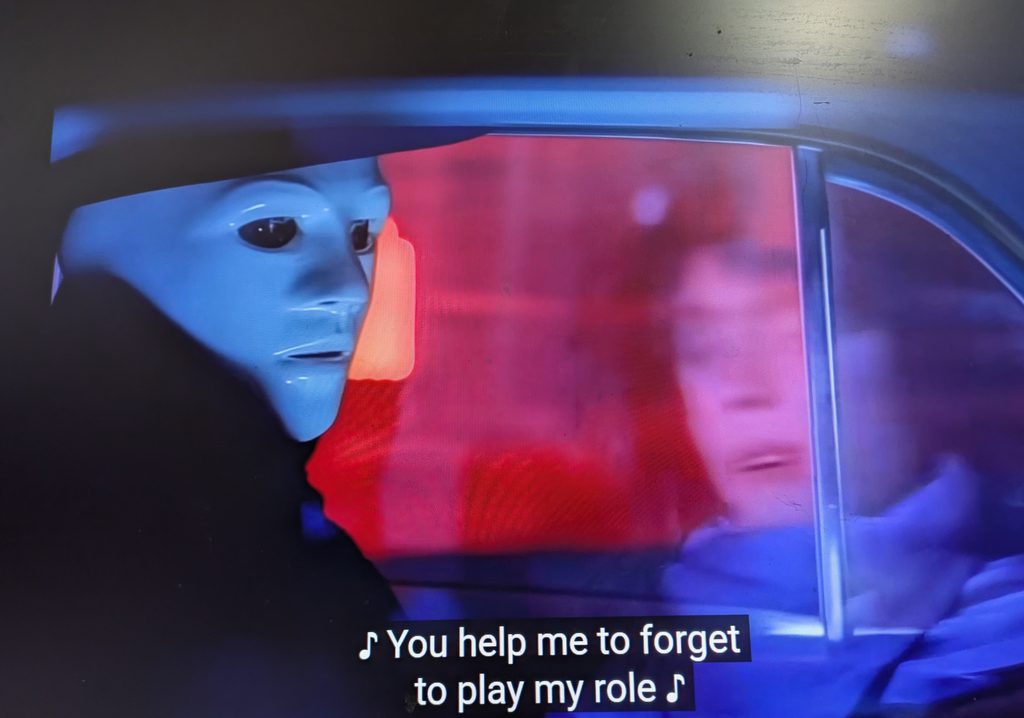
The scene changes to Branigan walking down a city street filled with people, but when stopping at a deserted crosswalk a car pulls up to her. In the car she sees a man in a black fedora and overcoat wearing a white mask that covers his entire face. The man has some serious Phantom of the Opera vibes, and you can just see his eyes peeking out from the dark eyeholes. The masked man looks directly at her before driving away, and there is a flash of Branigan’s startled expression in the refection of the vehicle.
Another cut and we are in a nightclub where people are shooting craps, and Branigan is seen taking the dancefloor with hipsters in the latest European fashions. Everyone is young, everyone is having fun…until Branigan stops in her tracks and her face drops as she sees, standing at the bar, the mysterious figure in the white mask. He stands out garishly amongst the hip kids in their modern gear, but Branigan seems to be the only one who notices him,
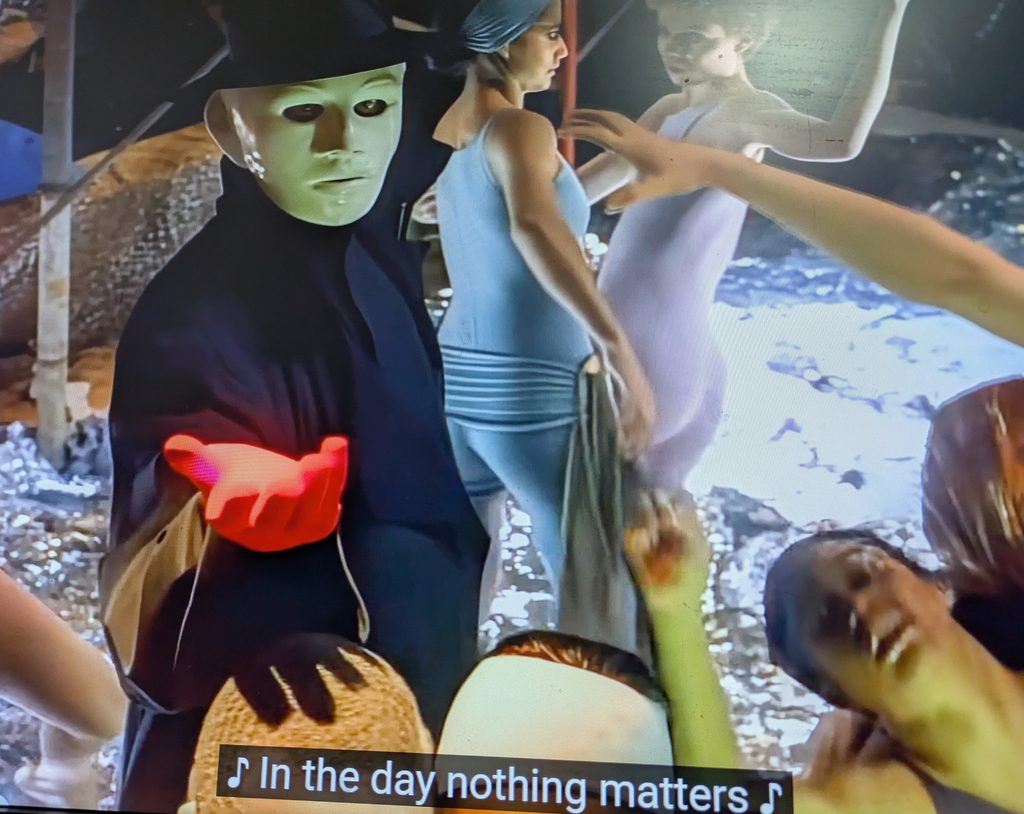
Another cut and the masked figure is seen walking down a dank alley. He turns around to look behind him, and as he gets to a glowing door, we see that Branigan is following him. Beyond the door, Branigan descends some stairs, and stops in astonishment. Below she sees some serious “Eyes Wide Shut” type shit happening, with more costumed figures having some sort of ritualistic dance orgy. Are they human or incubuses? Whatever they are, it’s a lot. Scanning the room, she sees her masked man, but this is when something important happens. He beckons to her with an outstretched hand, and now you realize that he is not the one stalking her, but she is willingly following him!
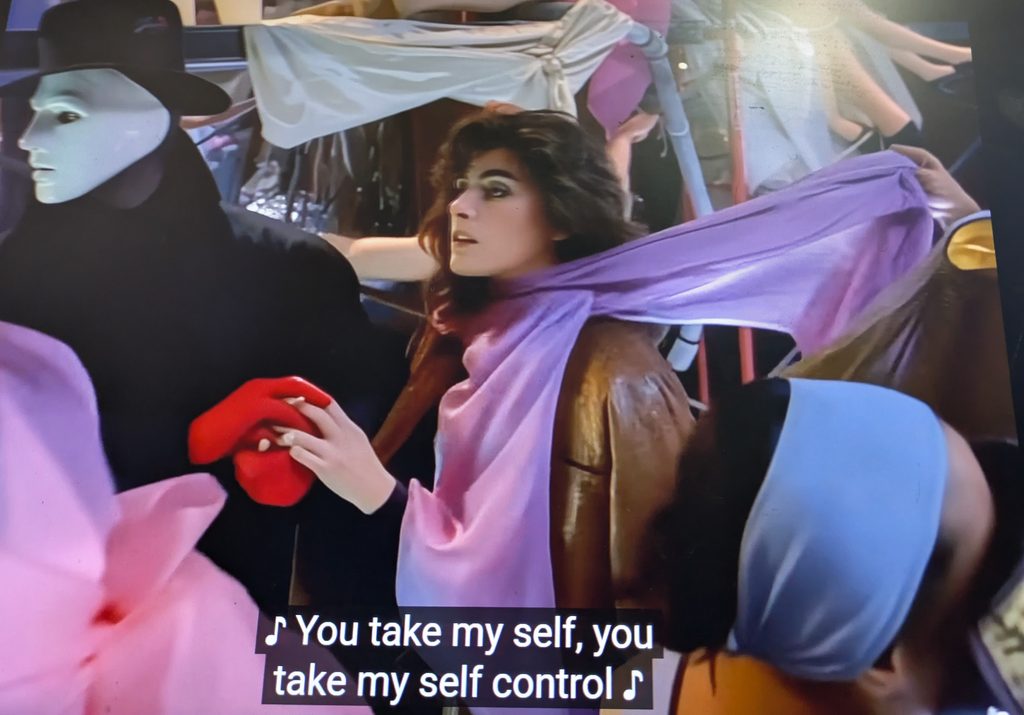
More erotic scenes of the demon orgy follow, and then another sene of the masked figure guiding Branigan by the hand through the hedonistic mass. Branigan seems to fully take on a Christine Daae role now, with her masked man leading her into the cellars beneath the city. At some point the masked figure takes her coat, which Branigan steps out of effortlessly, and then she faces both a dancing horde of sex demons and confronts the masked figure face to face
Then the narrative changes abruptly to Branigan running scared down a corridor covered in sheets, where sex demons grab at her from the walls. While Branigan has seemed starled or cautious thus far in the video, this is the only time she actually seems terrified or under any sort of an attack. Arriving to the end of the hall, she enter a strange room where more sex demons emerge, as well as the masked man.
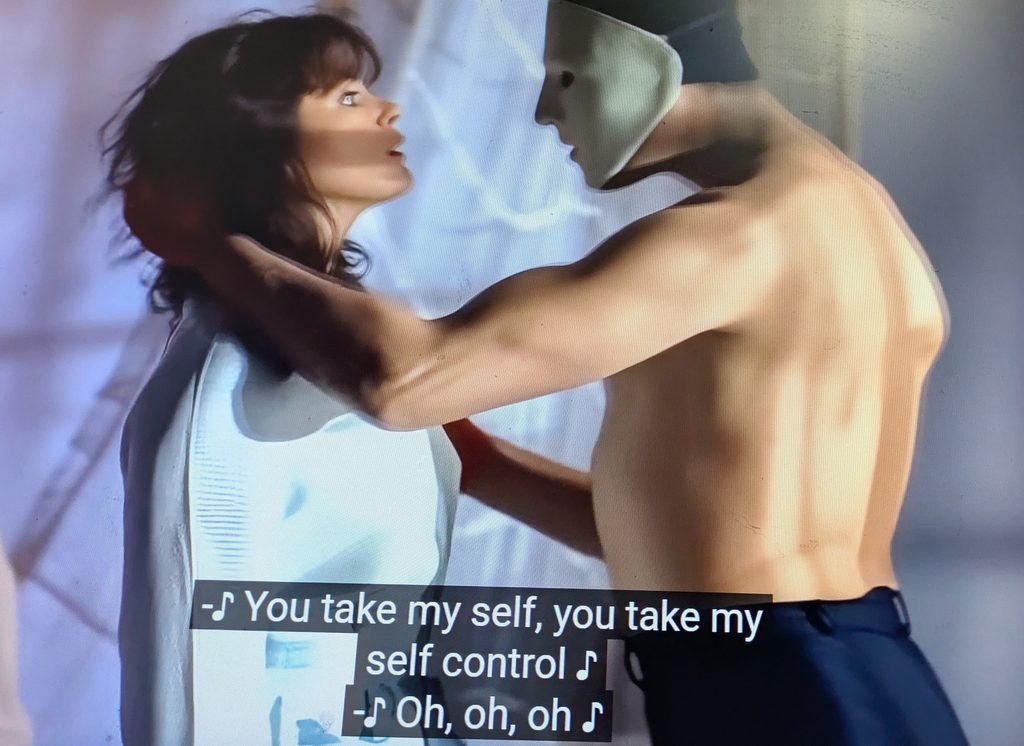
After another quick cut, we see the sex demons caressing Branigan, who is now out of her dress and wearuing a white silk robe. She faces her masked persuader, who is partially undressed. He roughly grabs her by the back of her head, and pulls her down onto a bed, and although she looks at him with frightened eyes, she does not resist his seductio. In the next few frames, we see her caress the mask gently as she gives into sexual ecstacy, and then a shot of the sex demons watching. This highly erotic sequence is eerie, ritualistic and extremely kinky.
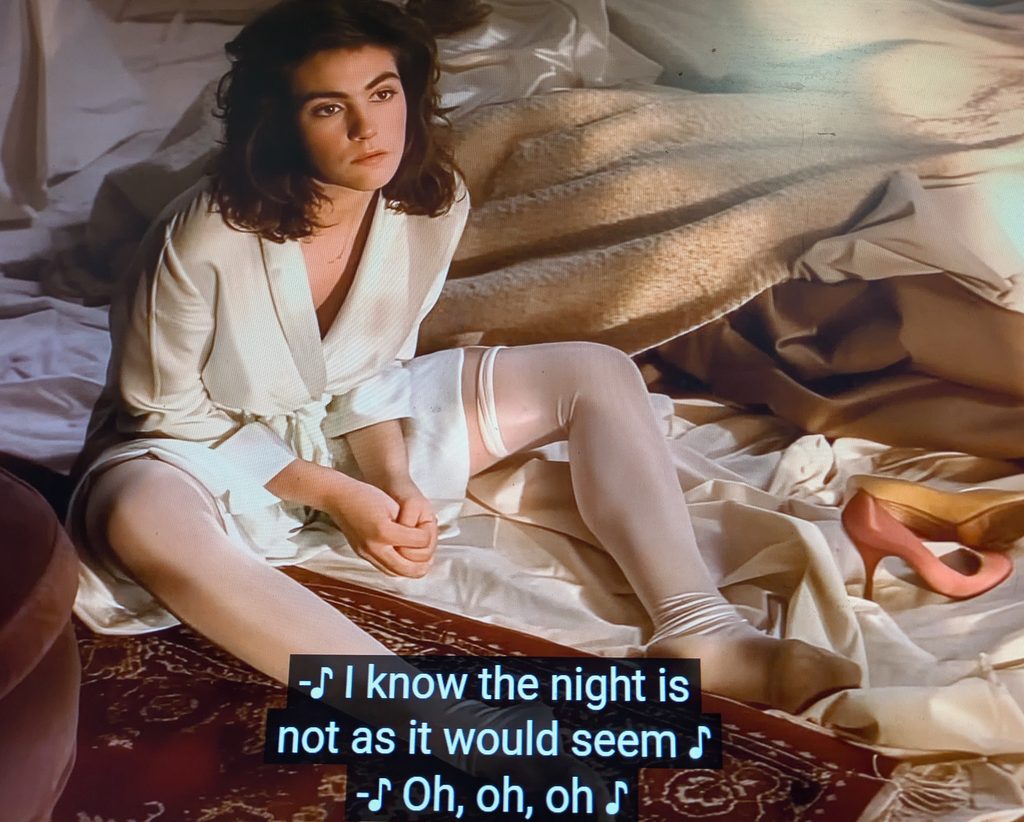
Moments later we see an overview of the room again, with bodies strewn on the floor, and demons standing in the corners, and the masked man, now dressed once again, walks to the window where the sun is starting to shine. As the dawn emerges, the masked man fades away. Branign gets up from where she was sitting, shoulders slumped, head bowed and walks towards the shadows. However, in a strange coda to the video, she is seen back in her apartment as if she is waking up from a short of dream. Did any of this happen, or wasd it all just a dark fantasy? Well, the answer is right there on the pillow beside her. As she looks over, the masked man is in her bed staring at her!
Look. I’ve seen a lot of horror films, but still today that is some seriously terrifying stuff. In five minutes, William Friedkin shot a video that is more chilling, and has more subtext, than many of the modern full length horror films released in theatres today.
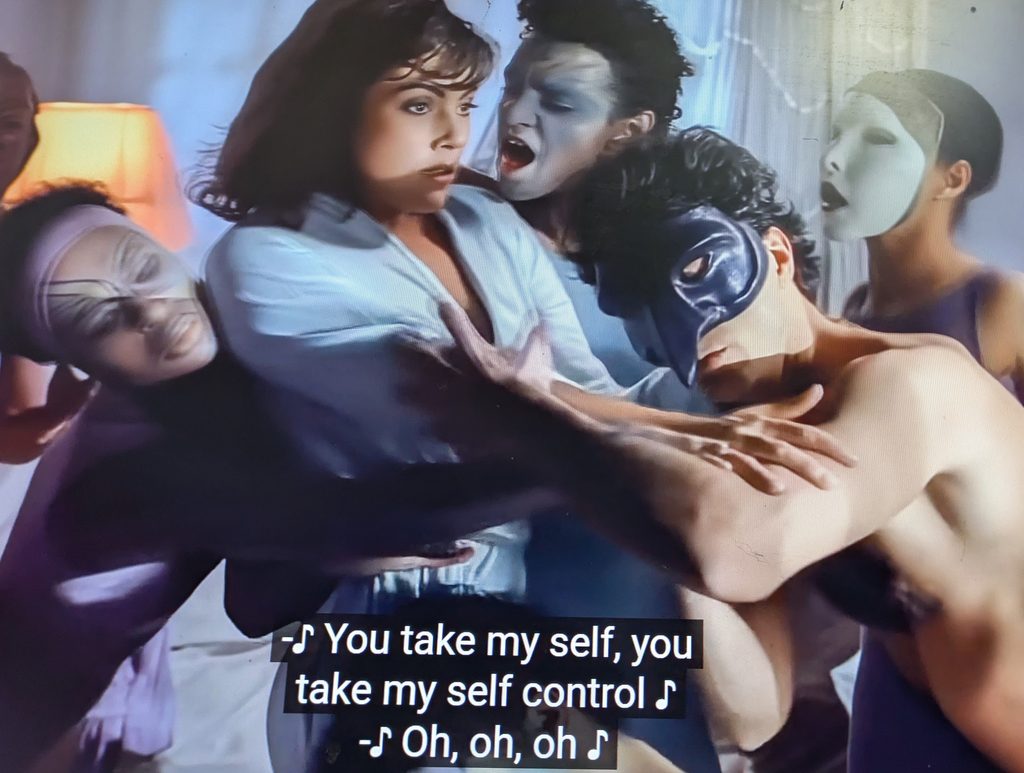
When Branigan’s “Self Control” video was released in 1984, it obviously raised a few eyebrows. By venturing into the world of erotic horror, the video was too intense for conventional audiences and MTV had immediate concerns with elements of the video and sought to have it censored. However, the objections that MTV had to the video were not the ones that you might think. While the video plays out like some sort of twisted rape fantasy, MTV was more concerned with the leotarded sex demons having what could be interpreted as simulated sex. Well, Branigan was outraged by MTV’s requests to have the video cut, and with “Self Control” already placing in the Billboard Top 10, she initially stood strong on the matter beleeing the song was already too popular for MTV to ban it outright. However, after much debate, Branigan and her team eventually consented to some minor cuts, and the “Self Control” video was only aired on MTV after 10 pm. Still, that didn’t stop me from somehow seeing this video when I was eight years old and having it seriously freak me out! This video gave me nightmares for weeks!
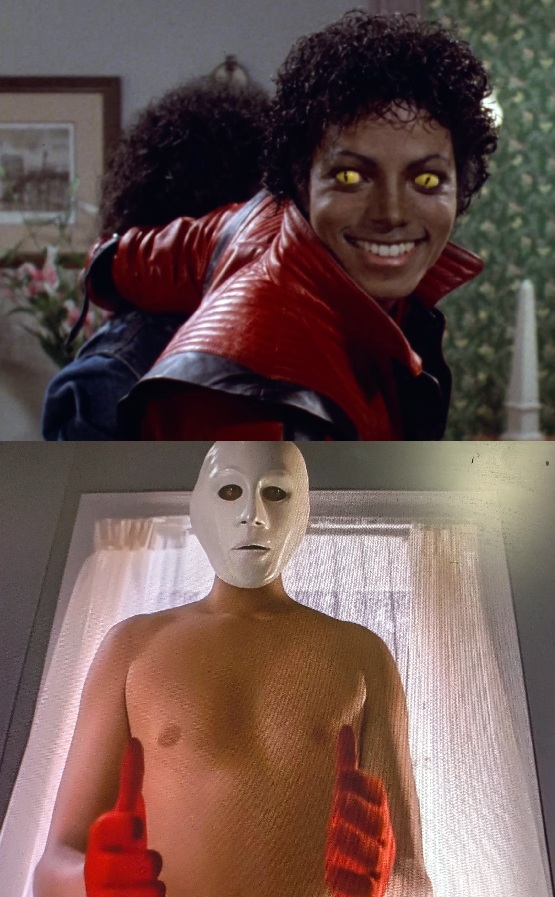
While Michael Jackson’s “Thriller” will always be the most famous horror music video of all time, if for no other reason than the important historical role it played in the development of the medium, I honestly believe that “Self Control” is the scarier of the two videos. “Thriller” has an over-the-top cartoonish quality to it, and while the gore within the production is indeed garish, the dancing zombies turns it into high camp. There is a whimsical cheekiness to “Thriller” which pays homage to late night monster movies. But “Self Control” has a much darker and insidious feeling to it that treads into some very uncomfortable territory. The masked figures, the ritualistic sex acts, the stalking, seduction and questionable sexual violence. It’s a narrative which is even more disturbing today than it was in 1984, making it a far more uncomfortable video to revisit. However, this also makes it the more provocative of the two videos, and Friedkin’s excellent production gives it a timeless feel that, for the exception of some unfortunately dated visual effects, makes it look extremely modern. Perhaps “Self Control’s” uneasy subtext is what prevents it from being one of the legendary music videos of the classic MTV era.
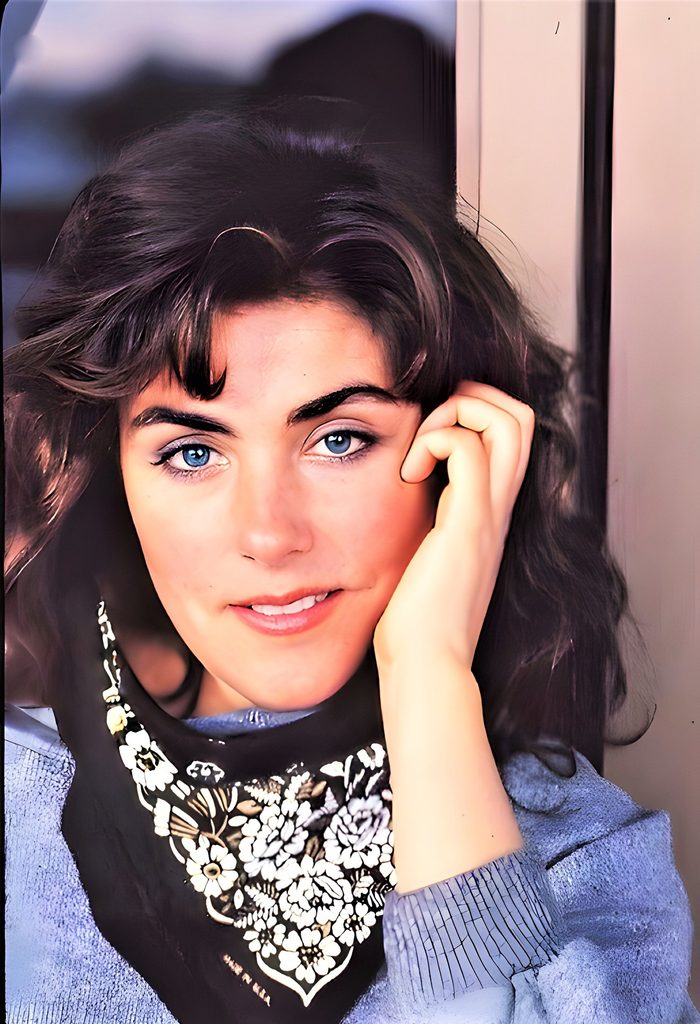
But when viewed as a short film, which music videos essentially are, “Self Control” is an overlooked gem of the horror genre. Laura Branigan’s dark recreation of Raf’s song was turned into a macabre masterpiece via the vision of William Friendkin. Even after over forty years, the video still hits every raw nerve and is a horror masterpiece of the highest calibre that deserves a lot more attention.


