
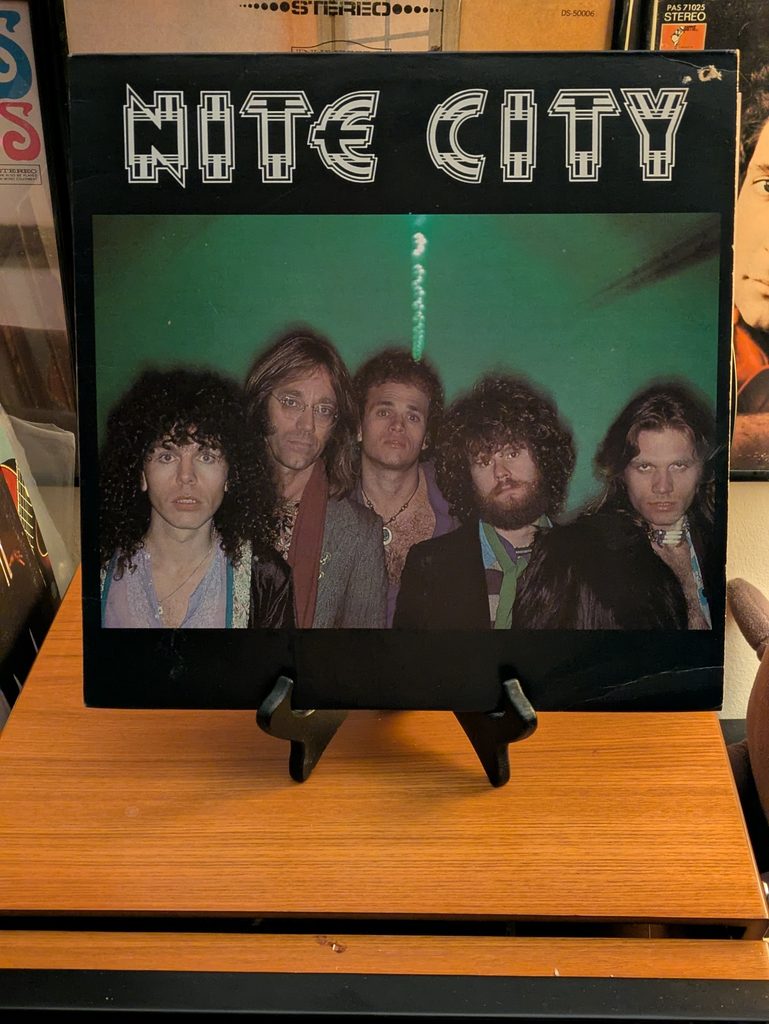
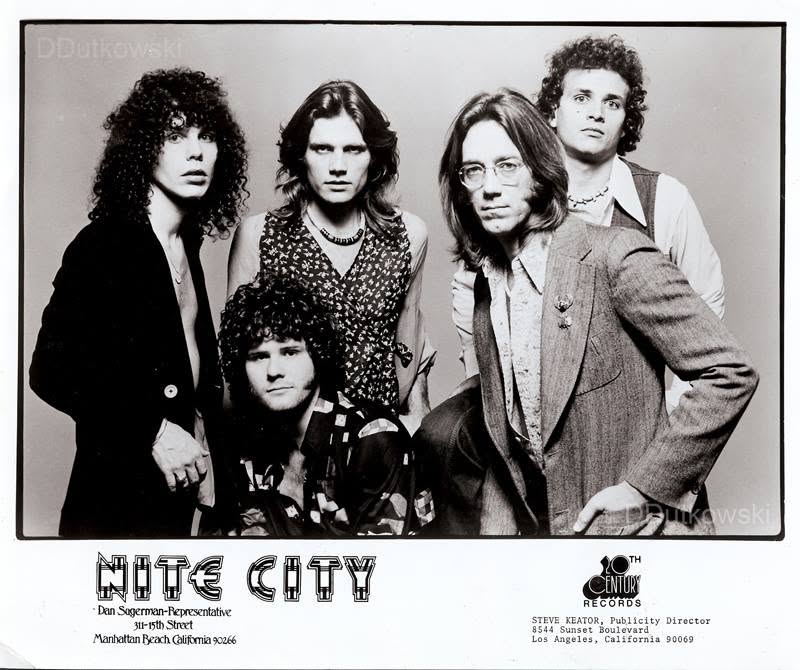
For over a year, a copy of Nite City’s 1977 debut album has been sitting at Ottawa’s Baked Goods Records with a $5 price sticker on it. Not an album that you often see in stores or shows, I’m always surprised that an astute record collector “in the know” hasn’t picked up what I consider to be a difficult to find gem. So, when I mentioned it to the shop employee one afternoon, he pretty much summed up Nite City’s musical legacy perfectly when replying, “I don’t even know who those guys are.” That could be the problem. Nobody really knew, or probably even cared, who Nite City was when they put out their debut album in 1977, and even fewer people know them now. Peering out at the listener from the cover with glassy eyed stares, Nite City honestly looks like one of the many generic rock bands that never made it. But, despite their obscurity, Nite City comes with their own lore as the most dismissed group to spawn out of The Doors’ legacy. The second band to be formed and led by Ray Manzarek, Nite City was an honest attempt by The Doors’ fabled organist to finally get out from under the shadow of Jim Morrison and move into the world of glam rock. Made up of a talented roster of musicians, Manzarek seemed to be willing to once again slip into the o background and allow a new singer, Noah James, become the voice of Nite City’s music. But despite putting four years of his life into the development of Nite City, things just didn’t click for Manzarek’s second band, and Night City completely fell through the cracks of music history. In fact, so little has been written about Nite City in the fifty years since their debut that they could be one of the most enigmatic bands to come out of Los Angeles during the 1970’s.
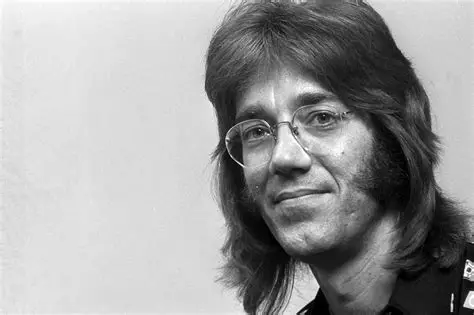
Doing a comprehensive deep dive into the story of Nite City has proven to be one of the hardest Vinyl Stories I’ve ever tried to tell because very little has been written about them making the research difficult. Sure, there is a shallow Wikipedia article and insipid AI generated material cut and pasted all over the internet, but original or historical content is far and in-between. As a result, I found myself going beyond paywalls to read vintage magazine articles and newspaper reviews and found myself shifting through countless interviews with Ray Manzarek in which he doesn’t ever mention Nite City at all. But what seems to be a running theme in the few bits and pieces of primary material that I can find on Nite City is that even music journalists at the time had very little interest in Manzarek’s new musical direction, and when they were supposed to be promoting Nite City, all anyone wanted to talk about was Jim Morrison, and Manzarek was more than willing to indulge them.
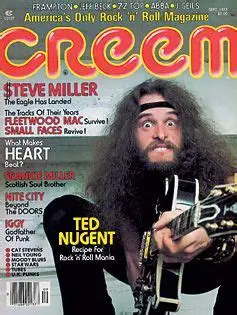
In a 1977 article for Creem Magazine titled “Ray Manzarek’s Nite City: The Dark Side of LA,” music journalist Patrick Goldstein begins the article by writing “There’s no way to write a story about Ray Manzarek and his new band, Nite City, without conjuring up the ghost of Jim Morrison, The Doors’ late and lamented Lizard King. Morrison’s spirit haunts Nite City just as surely as it lurks in the midnight allays and slick, seamy streets of Los Angels, a city Morrison adduced with the boldness of a young Romeo and spurned with the frenzy of an aging gigolo.” These are word’s written by a writer who hasn’t even bothered to listen to the “new album” and Goldstein’s main objective in talking to Ray Manzarek is clear. He had no interest in Nite City, but a lot of interest in Jim Morrison. This becomes the main subject of his entire article although he manages to shoehorn a few bits and pieces about Nite City out of pure obligation.
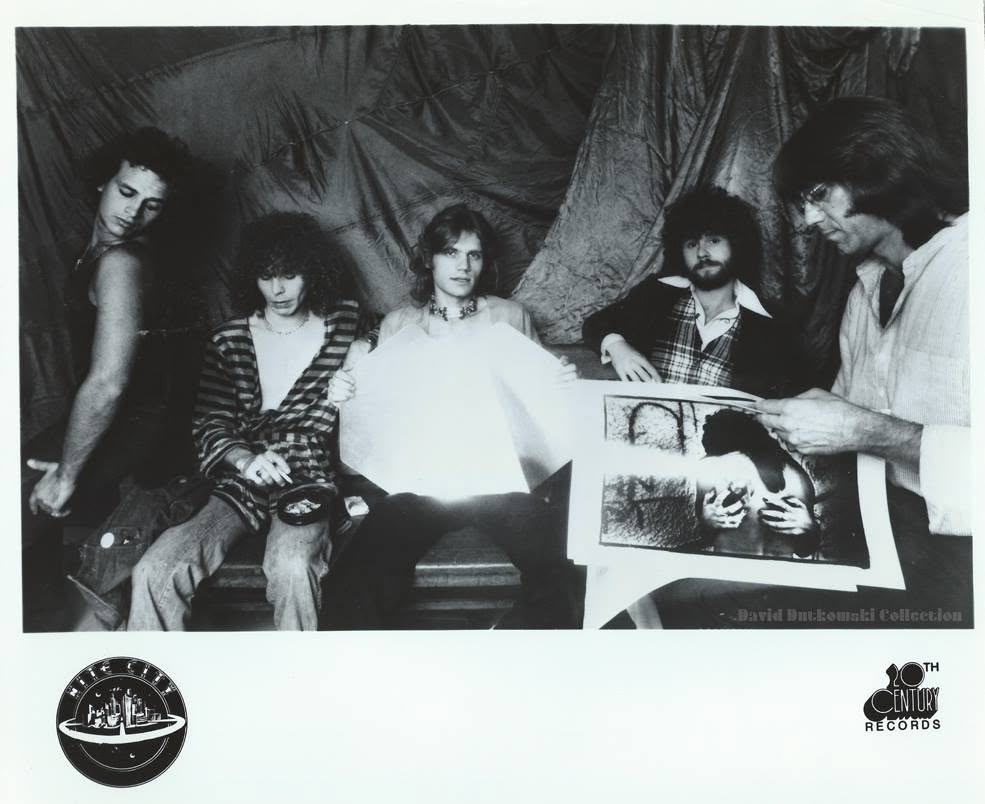
Throughout old write ups from The LA Free Press, The New York Times and Crawdaddy Magazine, reviewers attending Nite City shows seemed to have a mixed reaction to the group, with some loving them and others dismissing them. But, in each article the writer’s constant attempt to forcibly attach Manzarek’s Doors legacy onto Nite City. What seemed to be missed completely is that Nite City wasn’t trying to be The Doors. The band was, in no way, a copycat band. With Manzarek forgoing his traditional psychedelic organ to a more modern synthesized sound, Nite City merged hard rock and glam rock into a surprisingly modern “post punk” sound years before it’d become popular. Nite City’s sound was fresh and modern and exciting, but the looming memory of the departed Morrison continued to distract everyone who came to see Manzarek’s new band.
As to why Ray Manzarek decided to start a new band after launching his own solo career is a story that seems to be lost to time. In all my research I couldn’t find any explanation of the origins of Nite City. However, when looking at Manzarek’s career path after disbanding The Doors in 1973, we can make some strong assumptions to how it came to be.
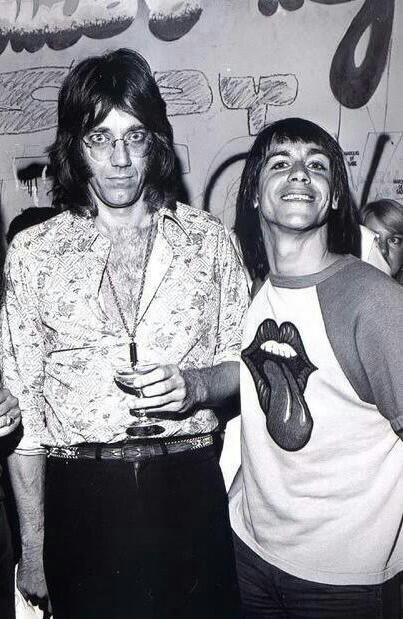
While glam rock may have seemed far away from the blues/jazz background that Manzarek came from, his affiliation with the scene happened fairly naturally. Throughout the 70’s Manzarek was managed by long times Doors’ associate Danny Sugarman, whose most prolific client at that time was Iggy Pop. When promoting his first two solo albums, “Golden Scarab” and “It All Began With Rock n; Roll, Now It’s Out of Control,” Manzarek toured with Iggy and often opened for him as a supporting act. Within time, Manzarek became sort of an elder stateman in Iggy’s growing entourage, watching the new breed of pre-punk rockers create a vivid and exciting music scene of their own. Attending the same clubs and after parties as Iggy and his crew, Manzarek was eventually incorporated in a scene where glam rock, punk and new wave were intercepting with one another and becoming the new sound.
After neither of his albums produced any hits, having completed the obligations of his two-album deal for Mercury, Manzarek was dropped by the label. Although his solo albums were ambitious, it was painfully clear that despite his talent and name recognition, Manzarek didn’t have the voice or the personality to make it as a solo performer. I think this is something Manzarek always knew about himself, which is why he always seemed content to push Jim Morrison into the forefront of The Doors while he lurked a few steps behind pulling at the levers. Thus, with his solo career having more or less collapsed, it seems that it was back to basics for Ray Manzarek. He had been the leader of one of the biggest rock bands in America in the 1960’s. Why couldn’t he do it again in the 1970’s?
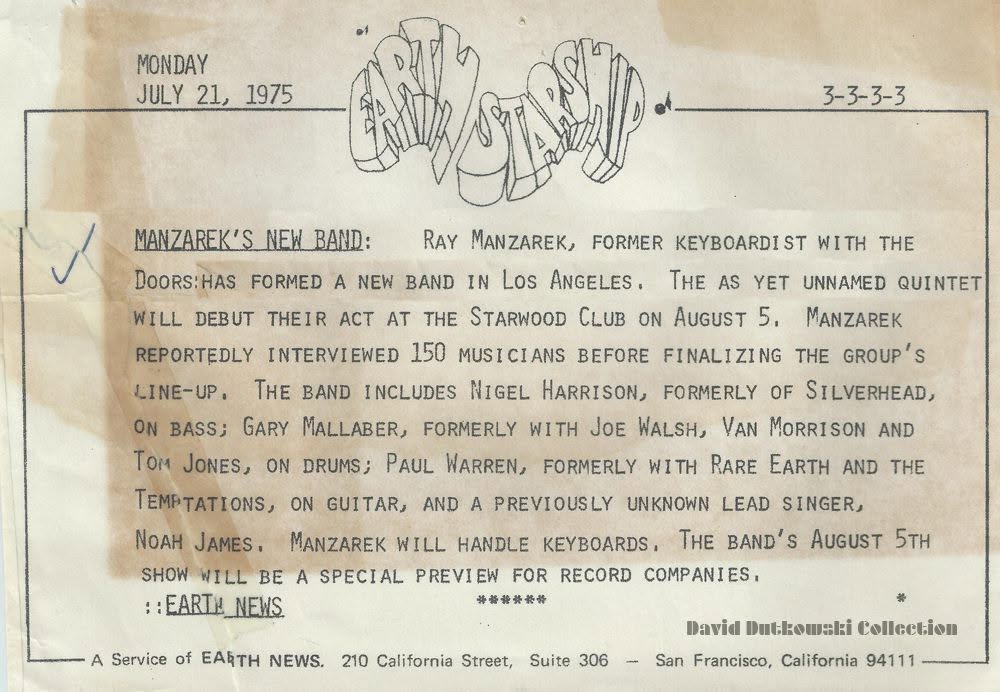
Now according to one source, initially the idea was that Ray Manzarek and Iggy Pop were going to form the band together, which is a rock and roll fantasy that fans had been wanting since the first rumors that Iggy had once auditioned to be Jim Morrison’s replacement in The Doors began to circulate. However, according to this source, that plan was interrupted when Iggy hooked up with David Bowie and went to Berlin to sober up, which is when they produced Iggy’s breakthrough albums “The Idiot” and “lust for Life.” A nice story, but the dates for this narrative just doesn’t match up. Iggy and Bowie left for Berlin in 1976, but the earliest performance by Nite City happened a year earlier in 1975. In a press release written by Danny Sugarman dated July 21, 1975, an early version of the new band made it’s debut at LA’s Starwood Club on August 5, 1975, to an invited audience of record executives. Although the band didn’t yet have a name, the line-up was more or less already intact. Alongside Ray Manzarek on keyboards, the band included Nigel Harrison on bass, Gary Mallanger on drums, Paul Warren on guitar and, as the front man of the group, a brand-new unknown singer named Noah James. Nearly a year later, in June 1976, the band played two nights at the LA Scottish Rite Auditorium under the name Pyramid (a throwback to Manzarek’s Egyptian theme in ‘The Golden Scarab”), and by this time Gary Mallanger, who formerly had worked with Steve Miller, Joe Walsh, Paul Williams and Van Morrison, was gone and was replaced on drums by Jimmy “Mad Dog” Hunter.
So, who were Nite City? Reportedly Manzarek and Sugarman had auditioned approximately 150 musicians and managed to put together a powerhouse of a collective. In later years some sources have called Nite City a “super group” in retrospect, with one writer compared them accurate to being to Ray Manzarek what Tin Machine was to David Bowie. Although Ray Manzarek was, at that time, the only member of the group with any previous fame, he had surrounded himself with some extremely experienced players.
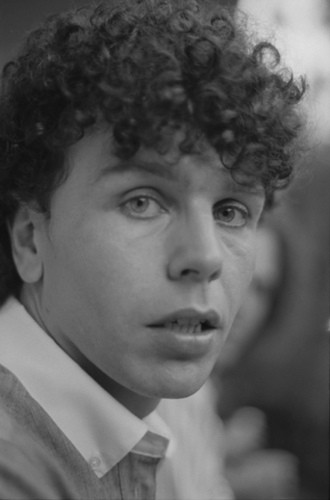
Bassist Nigel Harrison originally came from England, and in the early 70’s had played with Silverhead from 1972 to 1975 before moving to Los Angeles where he gained the attention of Sugarman and Manzarek when he was working as a session guitarist for Iggy Pop. Of notable interest is that when Nite City was still in the development stage, Harrison was featured as an uncredited bassist on The Runaways’ debut album, replacing Jackie Fox’s tracks which manager Kim Fowley didn’t feel were strong enough.
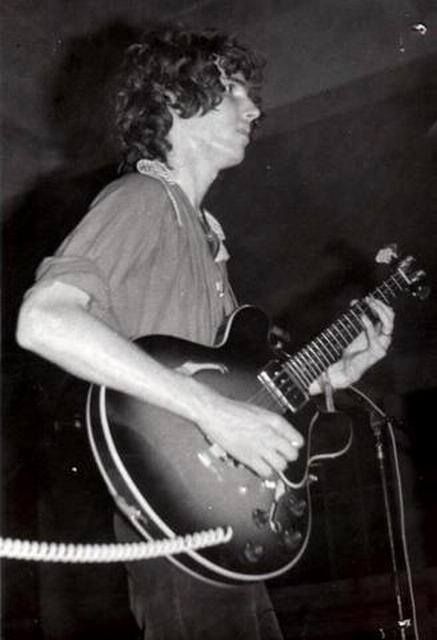
Guitarist Paul Warren got his start in his hometown of Detroit by working as a session musician for Motown, with his most prominent recording being his lead guitar work on The Temptation’s classic “Papa Was a Rolling Stone.” When Motown moved it’s operations to Los Angeles in 1973, Warren moved with them and became a member of Rare Earth. For some reason Warren severed his relationship with Motown in 1975, which led to his departure from Rare Earth, but opened him up to join Nite City.
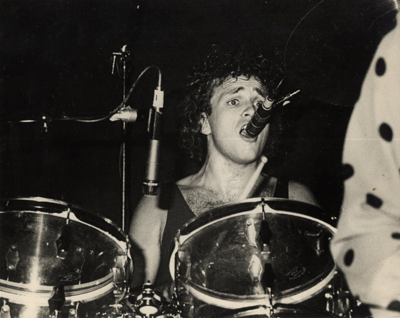
Jimmy “Mad Dog” Hunter was another Detroit based musician which was brought into the fold by Paul Warren when Nite City needed a new drummer. Although there is plenty of information on Hunter after his time with Nite City, little is available about what his pre-Nite City career work was.
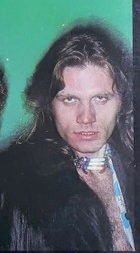
But Nite City’s lead singer remains to be the most mysterious. As the group’s new front man, Noah James had a lot riding on him as the voice of Nite City, and, for all intents and purposes, he could deliver. Decked out flamboyantly in black fur on the cover of Nite City’s debut album, James had the rock star look, with his long hair and piercing intense stare. As to his vocals, James proved to be a capable singer whose could perform the raw hard rock sound Nite City sought to create. Furthermore, while it can be argued that he had the same vocal intensity of Jim Morrison, James wasn’t necessarily a Jim Morrison clone. His vocals were distinctly his own, which only strengthened Nite City’s authenticity as it’s own musical entity.
However, just who Noah James was, and how he and Ray Manzarek met, remains to be a story that doesn’t seem to have ever been told, and no biographical information on James has ever been revealed publicly. In a write up for the group’s 1976 gig as Pyramid, Danny Sugarman provided a cryptic biography of James which only increased his shadowy past:
“Noah James: Past unknown. Lyricist and composer of unbridled appeal and imagination. A true warrior, fighter, raver, and singer. A Libra, creativity in dark places. A romantic. Wears a mask of many moods.”
Although this description of James is dramatic, in hindsight it also seems a bit forced, as if Sugarman was trying to procreate a mysterious persona onto James before the public had even heard of him. Although Dany Sugarman was good at connecting with music insiders and finding opportunities for his artists, he also had the tendency to put it on fairly thick in his promotional material, often forcing a dramatic preestablished mythos into an artist’s narrative instead of allowing it to grow organically. His band biography used in promotional material for Nite City is the most obvious example of this with it’s dramatic narrative and convoluted storytelling. Unfortunately, the only evidence of Manzarek and James’ partnership we have comes out of this document, and Sugarman’s attempt to force a symbiotic relationship on the two that was similar to the one that Manzarek had with Jim Morrison is so overblown that it becomes almost satirical:
“In 1976…still hungry for the unknown and sacred, Manzarek founded Nite City, choosing once again a lead singer with whom he saw eye to eye. Noah James became Manzarek’s voice, and Manzarek in turn provided Noah a bizarre soundtrack on which to overdub lyrics. Together they took an unspoken oath to create a new musical expression for an old topic: Truth. With all of it’s beauty and pain, they were dedicated to be it’s vehicle into the endless night, and whoever else they took into the fold would have to share in that pursuit.”
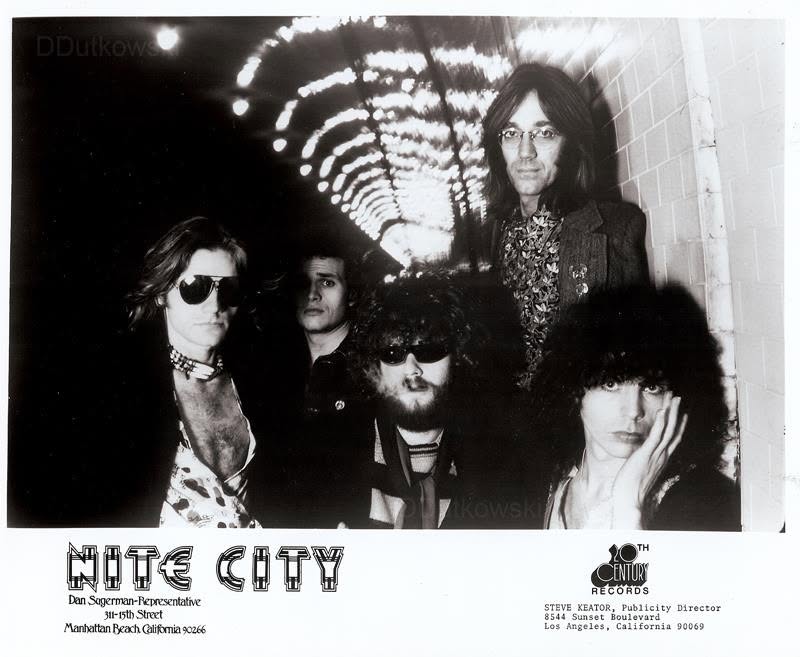
Throughout 1976 Manzarek and Sugarman continued to develop Nite City using the Starwood Club as their base of operations where the band wrote and rehearsed in private. With new music primarily being composed by Manzarek, Sugarman, James and Warren, Nite City’s hard rock sound was actually vastly different than what was popular at the time in the city’s soundscape. By the mid-1970’s the folk/rock scene which was born in Laurel Canyon had spilled over into the country/rock industry, and the music that was coming out of LA was no longer the drug induced psychedelic sounds of the 1960’s. Through Nite City, Manzarek and company sought to infuse hard rock back into the Sunset Strip and bring the raw energy and grit of the New York scene to the West Coast. In the Creem Magazine feature, Manzarek explained “Nite City sorta represents the dark side of LA…We’re not The Eagles and we’re not Jackson Browne. We’re not part of the laid-back country scene. We’re a big-city band. LA is a big city, and we’re part of both its electricity and its strangeness.”
This sentiment was repeated by Danny Sugarman in Nite City’s bio and, despite it’s forced intensity, it matched up with Manzarek’s statemen, albeit it a lot more dramatically:
“They were born in Los Angeles. Nite City is a metropolitan American band, but more than that they are a rock and roll band from LA. And they reflect their environment. America in the seventies. American in the streets. Nite City are about living with emotions strangling you. Ruthlessly they expose the seamy underbelly of city life as both voyeurs and products of their scene. Their music brims with anguish and defeat: desperation and survival. But also pictured on the dramatic landscape of Nite City is something more, a reassurance, beyond the desolation and tragedy of joyous echoing of hope.”
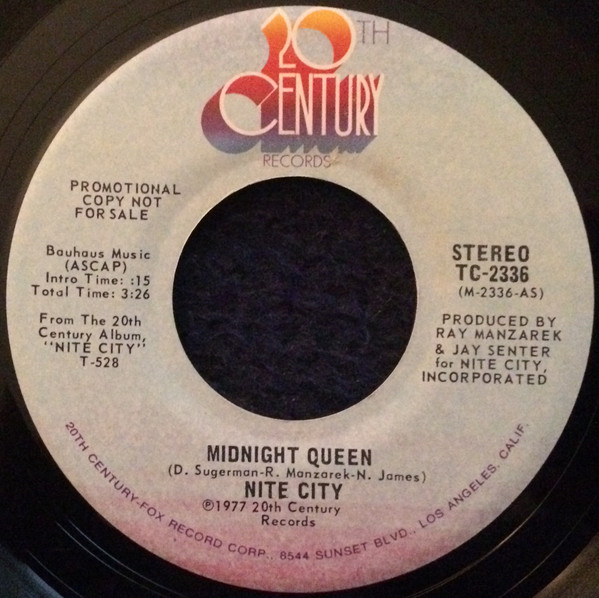
But potentially the most bizarre part of Nite City’s development was how Danny Sugarman was trying to sell the group by bypassing the public and going directly to industry insiders. Traditionally a band is formed, creates music, plays gigs, finds a fan base and then signs a deal and makes a record. Sugarman had Nite City doing things completely out of order. While Nite City wrote and rehearsed throughout 1976, Sugarman managed to get the group signed to 20th Century Records without the group having ever played in front of an actual audience or giving the public any access to their music. Despite having no existing fanbase of any sort to call their own, Nite City recorded their debut album in late 1976, which was released in February 1977. Only after the album was finally released in record stores did Nite City finally perform their first official concert at the Starwood. Meanwhile, the band’s first single, “Midnight Queen,” was immediately rushed out to radio stations, and while it received a little bit of airplay, it was primarily ignored. But even with no fan following nor industry buzz, Sugarman believed in both the product the band created alongside Ray Manzarek’s star power, and soon Nite City was on a promotional tour throughout the West Coast, with a few New York dates scattered along the way.
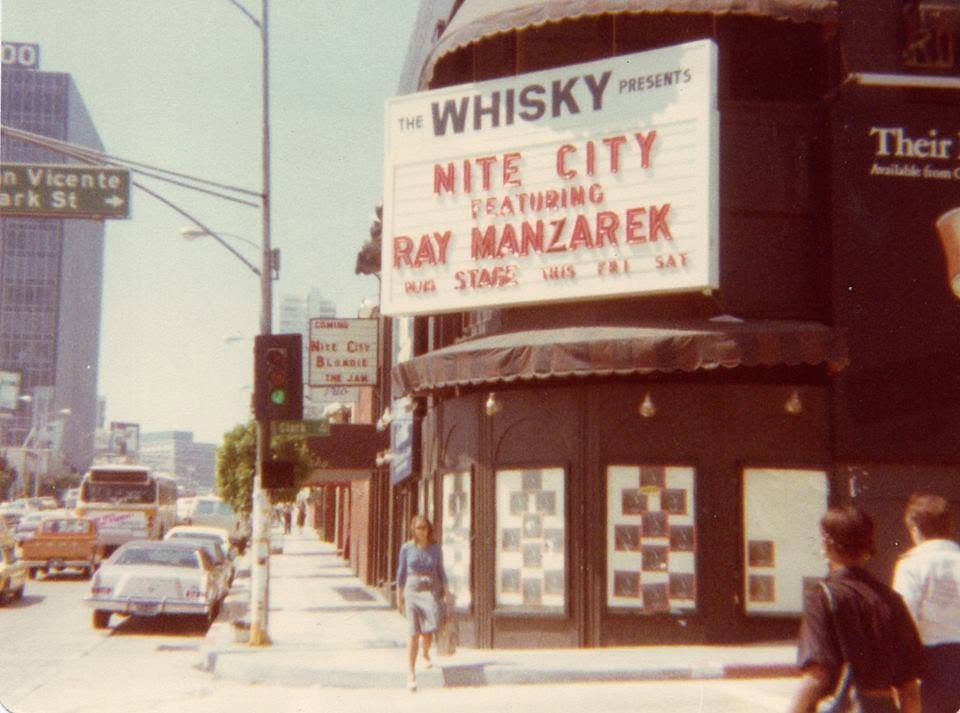
Retrospectively, Sugarman’s faith in Nite City’s debut album wasn’t without merit. Although critics seemed to be divided on it, “Nite City” is actually a pretty cool album. Featuring a harder rock vibe than anything Manzarek had been involved with before, Nite City managed to capture the excitement and feeling of the 70’s glam rock sound. The musicians on the album are solid, with Manzarek providing some interesting keyboard work while Noah James proved himself to be a competent lead singer. Furthermore, the songwriting on the album proved to be above average. Set in an obvious urban landscape, the lyrics authentically reflected the hedonistic decadence of the 1970’s, just as Manzarek had intended it to. In fact, it’d even be fair to say that in the case of the LA scene of the time, Nite City might even have been a little ahead of its time. While their sound might have been out of step for the Sunset Strip in 1977, only a few years later the hair metal industry would explode up and sown the boulevard, with bands like Motley Crue, Van Halen, Guns n’ Rose and Metallica creating a somewhat similar sound that Nite City was creating. Although distinctly glam rock, the throughline between Night City and the 80’s metal can easily be heard.
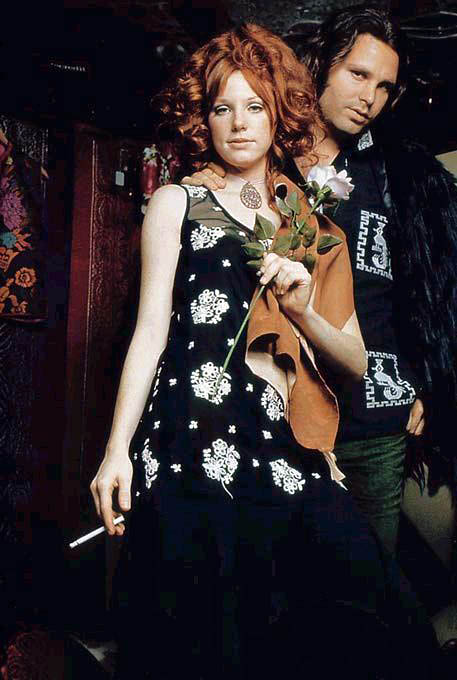
While all of the songs on “Nite City” are strong, the most interesting is “Angel W/ No Freedom,” which a New York Times reviewer stated was a tribute to Pamela Courson. Jim Morrison’s long-time girlfriend, who had been with him in Paris when he died, Pam would lose her own life in1974 from a heroine overdose. Like Morrison, Pam was 27. Although Morrison himself had written a number of songs about Pam, including “Wild Child,” “My Wild Love” and “Queen of the Highway,” Manzarek and Sugarman, who both spent time with Pam after Morrison’s death, painted a far more tragic portrait of a lost soul who had died way too young. “Angels W/ No Freedom” presents Pam as the woman she became after the traumatic loss of her rock star lover:
“Angel with no freedom
A child without a friend
A love with no reason
A scream loud in the air
Failure is your fortune
Falling through the night
Loving is your torture
Reaching for the light
Marry all your madness
Mmm, can’t do you no harm
Bury all your sadness
Bury all your charms
Once we were young, having so much fun
Life like a child, full of smiles
Running wild
Wild child, dreaming wild
Wild child, dreaming wild
Angel wings are broken
Nothing left to save
Dreams that were illusion
Are lost in yesterdays…
Heroin, killed my best friend
Oooo, yeah, yeah, yeah!
Heroin, killed my best friend, yeah…”
Well, as good as the material on the album was, despite Sugarman’s relentless promotion, “Nite City” went unnoticed and undersold. Although the group got mentioned in the trades, Nite City got little attention from the public, and the album went absolutely nowhere.
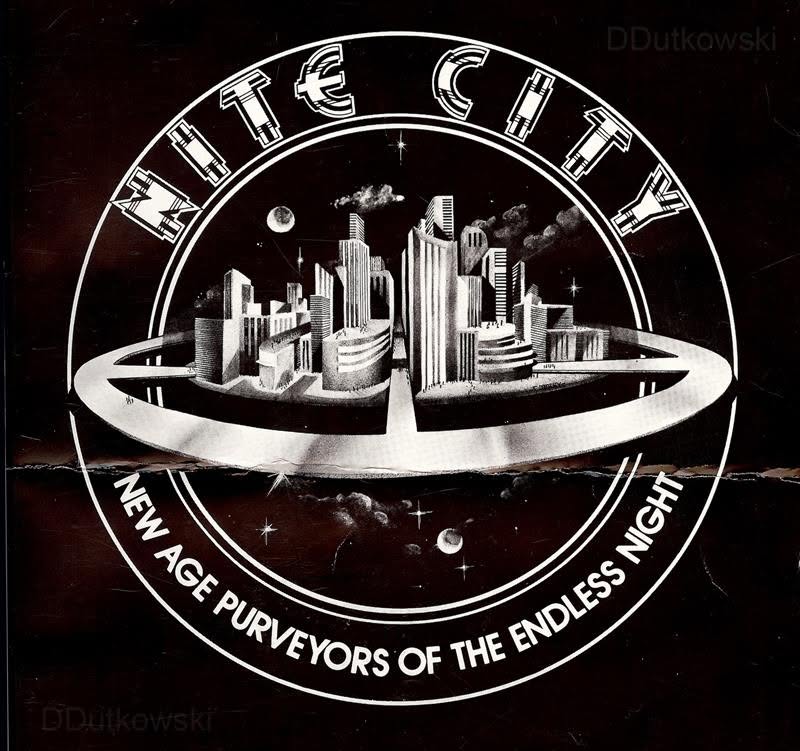
But behind the scenes instability seemed to float to the surface when Noah James was fired from the group shortly after the release of the album. Just why he was fired remains to be another untold story to this day. Nobody ever talked about it, although a flippant comment in the Creem Magazine article seems to allude to the fact that he was not missed:
“Noah James, the band’s recently canned led singer whose unfortunate fondness for gaudy Indian jewelry and bearskin overcoats ma have hastened his exist.”
An obvious underhanded statement, little more was ever said about Noah James ever again.
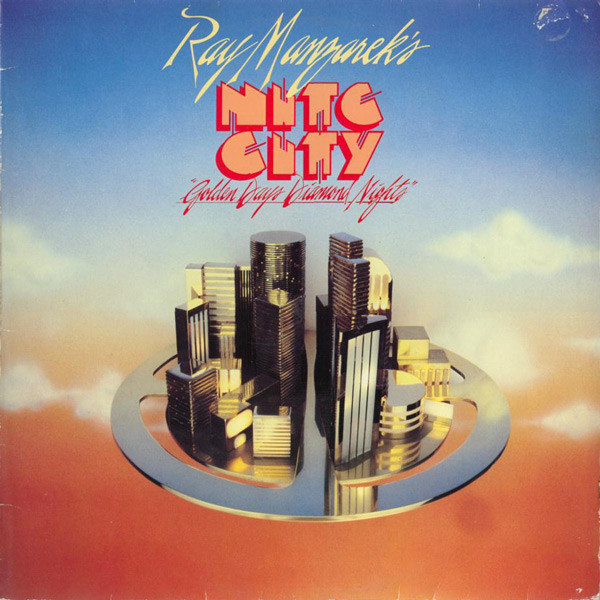
But despite Nite City’s lack of success, the group went back into the studio to try again. Now being called Ray Manzarek’s Nite City (an obvious attempt to put Manzarek’s name out in front to attract the attention of Doors fans) a second album, “Golden Days, Diamond Nights” was recorded in late 1977 with Paul Warren stepping up to the mic as the band’s new lead singer. With Manzarek and Warren providing the songwriting, “Golden Days, Diamond Nights” abandoned the glam rock feeling of the previous album and sounded a lot closer to Manzarek’s solo material infused wit a bit of a Steely Dan vibe. It isn’t bad, but it is far less interesting than the music that the group was making with Noah James. But whether Nite City’s new direction was better or not would ultimately become a moot point because even less people would ever hear it. Due to internal issues at 20th Century Records, “Golden Days, Diamond Nights,” for some reason, was only disturbed in West Germany despite the band having never toured there. As a result, the album sold even worse than the debut album had. Still today, “Golden Days, Diamond Nights” is impossible to find in North America, but for collectors willing to pay shipping charges, there are plenty of copies being sold by European sellers at very affordable prices via Discogs.
After the disappointing situation revolving around “Golden Days, Diamond Nights,” Nite City officially broke up with little fanfare or attention. But, upon going their separate ways, the majority of Nite City went on to have successful careers.
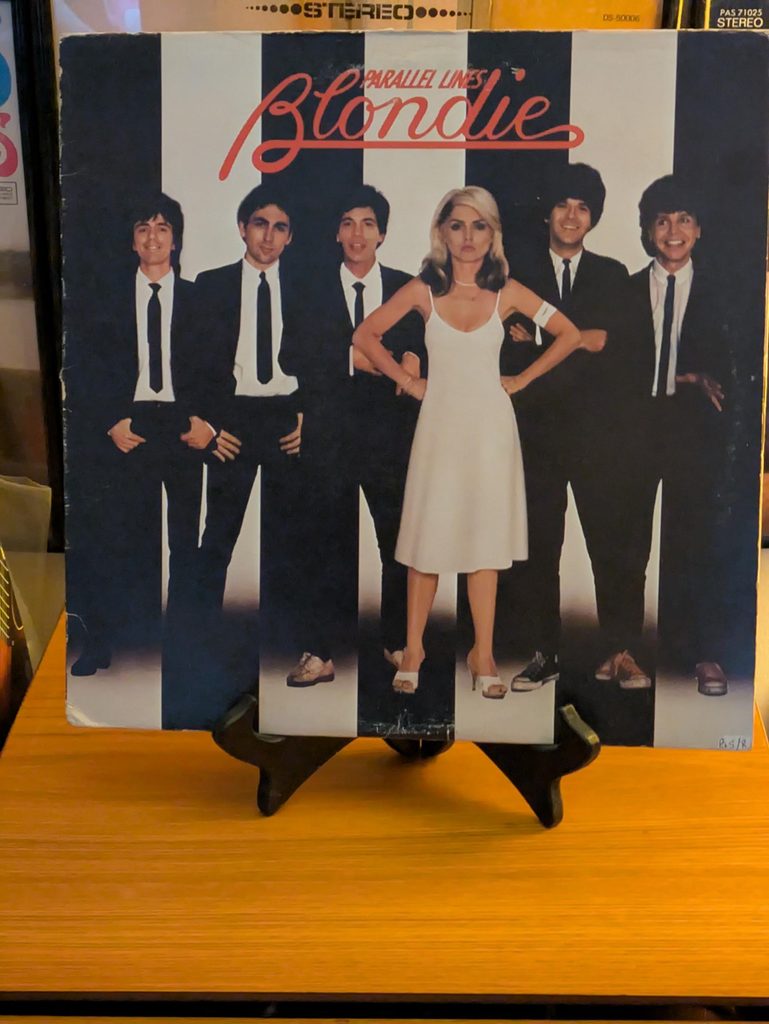
Possibly the most notable of the Nite City players would be Nigel Harrison who immediately joined Blondie just in time to record their most iconic album, “Parallel Lines.” One of the biggest albums of 1978, “Parallel Lines” established Blondie as being a major rock act worldwide and had a series of massive hits including “Heart of Glass,” “Sunday Girl,” and “Hanging on the Telephone.” However, Harrison’s biggest contribution to the album was cowriting the group’s anthem “Call Me” alongside Debbie Harry, which not only became a massive hit itself but would be the iconic theme song to the film “American Gigolo.”
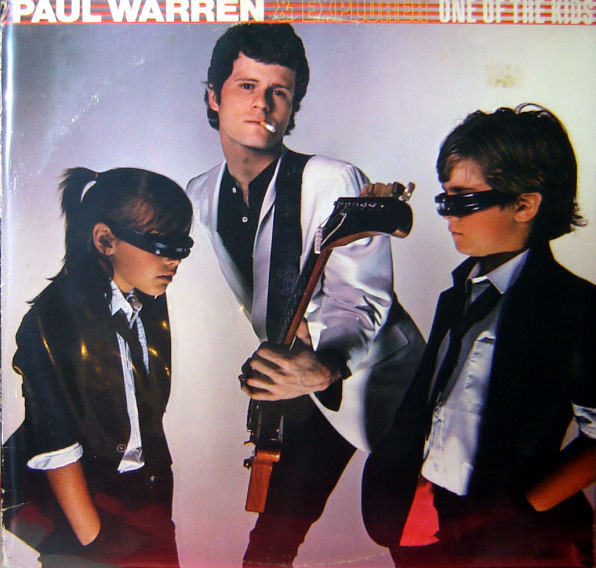
After parting ways with Nite City, Paul Warren started his own band called Explorer, which gained a following on the LA scene which led to the release of their album, “One of the Kids,” in 1980. Although Explore’s success proved to be limited, Warren would go on to have a lucrative career as a “guitarist for hire,” touring throughout the 80’s and 90’s with artists like The Ventures, Tina Turner, Prism and Richard Marx.
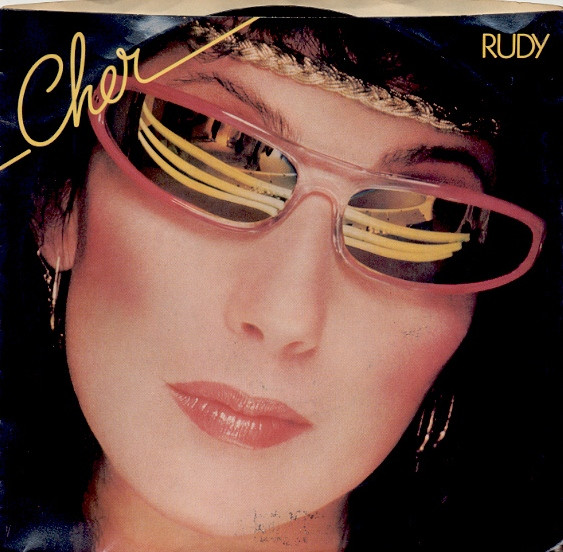
Jimmy Hunter joined Paul Warren as Explorer’s drummer after Nite City disbanded and would go on to have a varied career as a drummer and producer, working with a curious cross section of talents including Flo and Eddie, Sweeny Todd, The Village People and Was Not Was. However, what he seems to be the proudest of is cowriting the lyrics for the song “Rudy” from Cher’s 1981 album “I Paralyze.” Released as a single, “Rudy” was a cover of French-Italian singer Dalida’s 1981 Euro-dance hit “Quand je niaime plus je M’en Vaism” but, retooled for Cher, Hunter only co-wrote the new lyrics and not write the music. Although “Rudy” did not become a hit, Jimmy Hunter did receive a Platinum disc for the song when it was included on Cher’s best selling 2013 Greatest Hits package “The Very Best of Cher.”
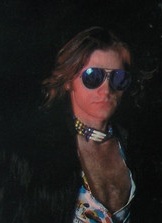
As for Noah James, that guy just disappeared without a trace as if he never existed at all. Nothing was ever heard of him ever again. Although a number of “Noah Jameses” appear to exist throughout the music industry, all of them seem to have been born long after Nite City even existed. At this point, if Noah James is even alive, there is a good possibility that he doesn’t even want to be found. If there is anybody out there who has any information on the enigmatic Noah James, either before, during or after his time with Nite City, please drop us an email. Obviously, somebody out there knows something, and I can’t help but feel that Noah James has a story to tell. I’m willing to be it’s a hell of tale.
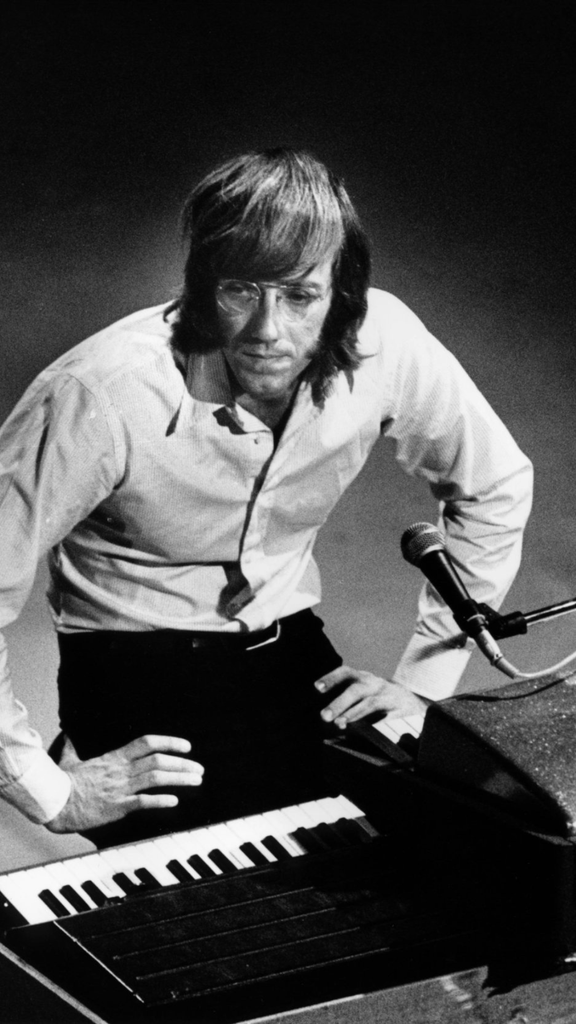
And Ray Manzarek, well the next few years would prove to be fruitful for him when The Doors finally achieved immortality and a popularity far beyond what they had during their existence. But despite the years of his life that he put into Nite City, Manzarek never revisited the group nor it’s music for the rest of his life. Choosing to forever focus on his legacy with The Doors and building up Jim Morrison into a sort of a mythical rock n’ roll deity, Nite City became nothing more than a footnote on Manzarek’s illustrious career.
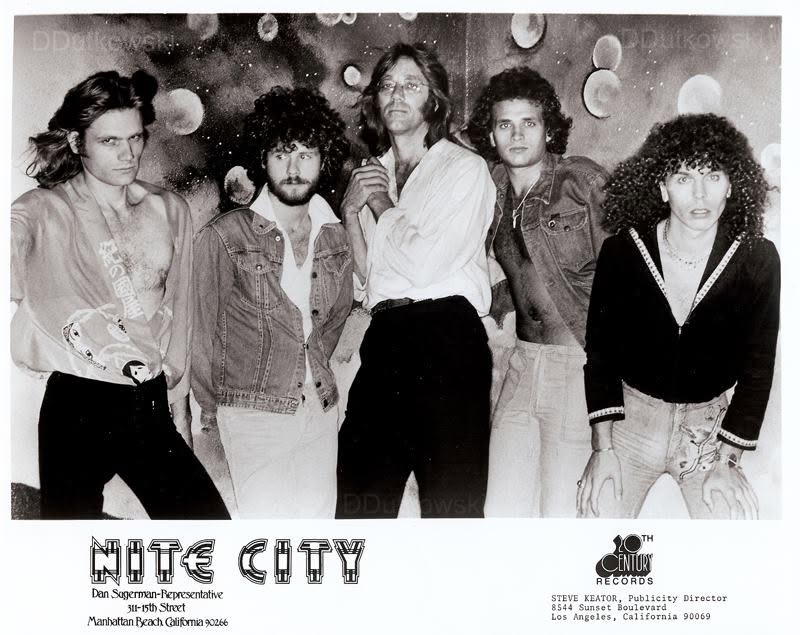
Nite City was a band that never fully got off the ground and never found an audience. However, I personally feel that Nite City disserved far more than it ever received, and that the album remains to be a forgotten gem of the 1970’s which was arguably a little ahead of it’s time. Although it’ll probably never reach the cult status it deserves, Nite City is a cool album that still packs a punch and is worth checking out if you are a fan of glam rock, post-punk or 80’s metal. But in regard to Ray Manzarek’s musical legacy, it may have been his only true attempt to ever create something that didn’t hinge on the memory of Jim Morrison and his past with The Doors. That, in itself, makes it an interesting album for Doors fans to rediscover.


