
When I was growing up in the 1980’s, like a lot of kids I watched music videos every day after school. The 1980’s was an amazing era to be growing up as a music fan. It was fun, colourful and full of recognizable characters. I began following popular music at a fairly young age, and by the time I got into the sixth grade I had already gotten to the stage of deviating away from the pack and doing deeper dives into other eras of music, which had me exploring 1960’s pop music for the first time. While the kids around me were listening to Bon Jovi, Tiffany and Motley Crue, I had graduated to The Lovin’ Spoonful, The Monkees, The Four Tops and Nancy Sinatra. It was a great time for discovering new sounds, and the start of a journey I continue on to this day via Vinyl Stories.
Well, it doesn’t matter how old you are, there is always going to be some bully who is going to get all in your space and throw some shade on you, especially when you are engaged in something they don’t understand. I remember one day listening to my vintage cassette tapes and having these two older kids just going at me and telling me how stupid the music I was listening to was. I can’t remember their names, and I don’t remember their faces, but I remember the rage that grew in me as these kids cut my music up, trying to make me feel inferior to them by focusing on music that, in all honesty, was probably more sophisticated than what they were consuming. But what for some reason has stuck to my guts about that encounter was one stupid remark that came from one of those stupid kids. I can remember him sneering at me and jeering “You probably still listen to Mini-Pops records.” This one really burnt a hole in me, because it hit a little too close to home. While I may have outgrown them, yeah, I had owned Mini-Pops records. They may not have been amongst the merger collection of records at home in my bedroom, but they were still somewhere in the house. Although I had outgrown The Mini-Pops a while ago, having ever had owned that record had just been used as a weapon against me.
Well, this story is not about those two bullies, but I will say that their spirit lives on in every gatekeeping music elitest who ever trolls others about their individual musical tastes on social media. We’ve all experienced those guys, and people like that are the worst (if you are one of those people, stop being a douche bag).

But in regard to The Mini-Pops, yeah, I may have owned their albums, but you know what? With hundreds of thousands of their albums being sold throughout the world, if you didn’t own a Mini-Pops album as a child of the 80’s, you probably were friends with someone who did. The Mini-Pops were actually fairly sophisticated and well produced children’s albums which not only celebrated the music of the era, but also exposed a generation of kids to ska, new wave, soul and euro-pop for the first time. It wasn’t as good as listening to the real thing, but to a five- or six-year-old, it was good enough. Just about every kid listened to The Mini-Pops, and that wasn’t necessarily a bad thing.
Despite the widespread popularity of this niche music franchise on 1980’s kids culture, the origins of the Mini-Pops, and the controversy that surrounded it, was never really publicized in North America, and even today the group’s distributor, K-Tel Records, seems to want to take credit for the popularity of the brand, while dismissing the classic albums that got it all started. It may have been a while since you’ve thought about The Mini-Pops, but there is a lot to say about them, and it’s a more interesting story than you probably would have imagined.
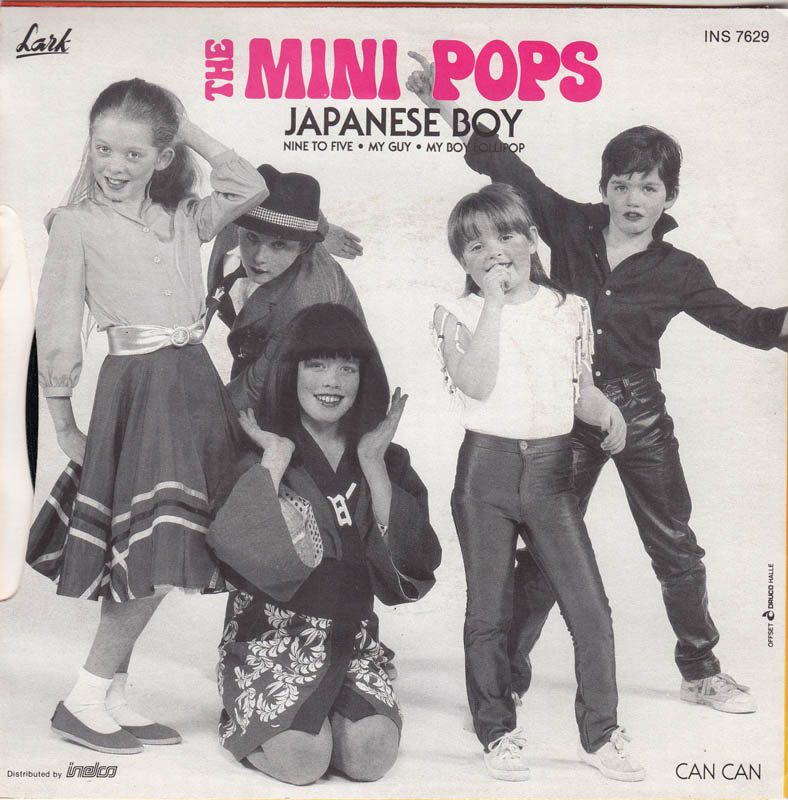
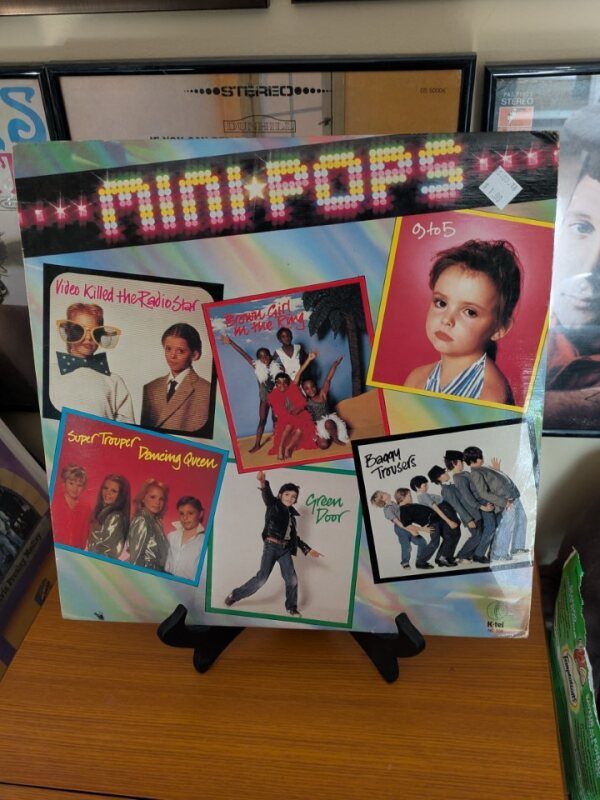
Despite its mass popularity in Canada, The Mini-Pops were a British group, and were very much a product of the European pop market. Just look at the track list to The Mini-Pops original self titled album and you can see the tell-tale signs of the Euro-pop influence on it. While Blondie, The Village People and Abba were sensations worldwide, songs such as “Baggy Trousers,” “Turning Japanese,” “Daddy Cool,” “Una Paloma Blanca,” “Stop the Calvary” and “Japanese Boy” were all staples on BBC’s “Top of the Pops” which didn’t hit the top of the charts in North America. In fact, I can verify personally that for a lot of kids of the early 1980s, The Mini-Pops versions of these songs were probably our first introduction to most of this music.
The Mini-Pops was the brainchild of London based music producer Martin Wyatt. As head of a small production company called Bright Music Ltd, some of Wyatt’s earliest work was with Harry Nilsson and Peter Skellern. Anyhow, as the story goes, one afternoon Wyatt overheard his daughter Joanna, who was about nine years old, playing in her bedroom with some friends. What the little girls were doing was dressing up and pretending to be their favorite pop stars and singing along to their records. Reflecting on how the themes of children’s play had changed from the more traditional pretend game of “house,” to the modern media charged themes influenced by celebrity culture, Wyatt started to rethink the way that music for children was being produced and marketed. Kids no longer wanted the traditional type of children’s music that was being directed at them via kiddie labels and, for the most part, they were listening to the same music as their older brothers and sisters. I mean, this might seem like a no brainer today, but just take a look at the types of children’s albums being released in the 1960’s and 1970’s. While Disney and Sesame Street albums may tug on our nostalgic heartstrings, the albums were primarily juvenile material which often contained an educational agenda. There were exceptions to this of course (Ross Bagddasarian’s Alvin and the Chipmunks come immediately to mind), but for the most part the modern child was becoming hyper aware of the celebrities and music already around them, and they were becoming far more sophisticated than the music industry was giving them credit for.
As someone born in 1975, I can attest to this. Although I did have traditional children’s albums as a little kid, by the age of three I was already a Village People fan and owned two of their albums. Like a lot of kids, I was highly aware of who KISS were, although they scared the ever-living shit out of me. And then there was “The Muppet Show,” which introduced me to a diverse range of artists such as Kenny Rogers, Alice Cooper, Debbie Harry and Harry Belafonte. In the 1970’s many musicians began to look like living cartoon characters that were easily identifiable to even the youngest children, and this trend was only going to increase in the next decade. From Sha-Na-Na to Donny and Marie, the time was right for the youngest of tykes to become music fans.
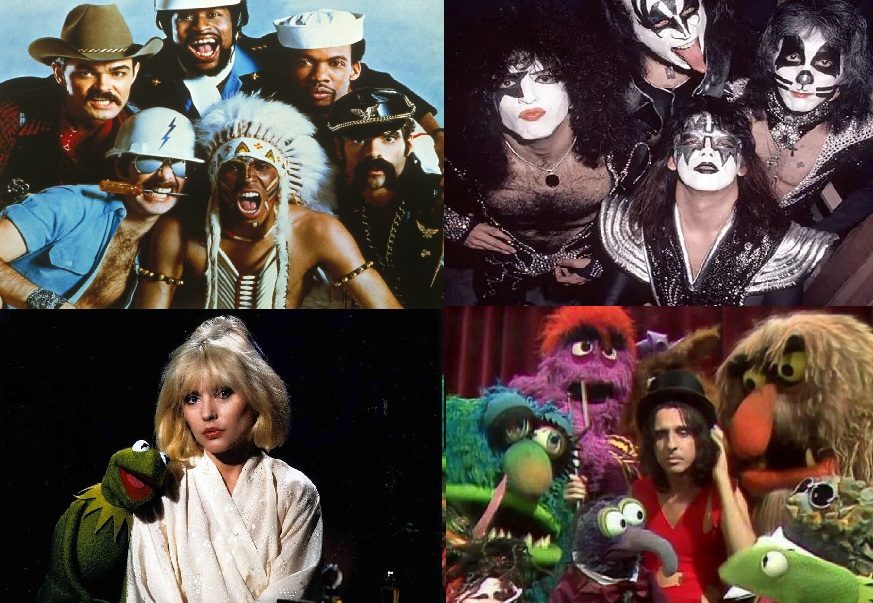
So, Martin Wyatt was really on to something with this and he wondered what would happen if he produced an album that had normal children singing a selection of modern chart topping hits and release it as an album that didn’t speak down to kids? The idea was so obvious but surprisingly had never successfully been done before.
Wyatt’s first recruit for the project was his daughter Joanna, who was joined by an additional four kids who eventually performed all the songs for the album (more than five kids appeared on the album’s cover, with many of them being hired as models to pose as the pop stars represented on the finished lp). The names of the other kids seem to be lost to time, and for the exception of five year old Joanna Fisher, who would eventually become the most “notorious” of the Mini-Pops kids (more on that in a bit), I can’t find the names of the other Mini-Pop performers anywhere (if anybody can provide information on the additional original Mini-Pops please drop us a note). Martin brought the kids to the legendary Abby Road Studios in the summer of 1981 and in a series of sessions they managed to produce, in all honesty, a fairly inspired collection of recordings which would ultimately become “Mini-Pops.”

Although they may have seemed like an odd choice to distribute an album produced in England, K-Tel Records was involved in The Mini-Pops right from the start and would prove to be a major part of the brand’s success. A Canadian based company stationed in Winnipeg, K-Tel had dominated the international discount record market throughout the 1970’s for producing their now infamous compilation albums. Every collection has a K-Tel release, and their compliations are filled with nostalgic gold. Although located in Canada, in 1977 K-Tel had created a European division to their company, and having expanded their enterprise to include various “seen on TV” products, the company was always looking for new ideas. Well, somehow Martin Wyatt and K-Tel crossed paths, and realizing the potential of The Mini-Pops, K-Tel joined forces with Bright Music Ltd and they released “Mini-Pops” in late 1981 to an unsuspecting, but ultimately enthusiastic public.

A large part of the initial success of The Mini-Pops was possibly the introduction of MTV on American television. Making its debut in August 1981, MTV quickly became a cultural phenomenon which translated music from sound into visuals, forever changing the way that the public perceived music production. Thus, when “Mini-Pops” was released a few months later, the brand of music on the album was heavy in the popular zeitgeist. Furthermore, K-Tel was a unique company which didn’t wait for record buyers to discover their releases in the record shops and instead advertised their records on television which helped generate sales for the company. K-Tel put their proven advertising formula to work on “Mini-Pops” and produced a slick TV ad that not only included clips from the albums, but even footage of the kids in full costume performing the songs. While some of the commercials for later Mini-Pops albums can currently be found on YouTube, unfortunately the ad for the original album does not seem to be available.
And, again, I can testify to just how successful that original ad campaign was. In 1981 I was a six-year-old kid, and although I was aware and engaged in the music within my direct soundscape, I didn’t know the majority of the songs on “Mini Pops.” But in my minds eye I can recall seeing that TV ad for the album with the clips of the kids singing the songs, and the TV ad announcer’s authoritative voice telling me that this album was going to be the greatest kids’ album ever released. Everything about that ad was upbeat and cool and exciting and the song hooks featured already got stuck in my brain and I remember clearly wanting a copy of “Mini Pops.” Well, during a Friday night visit to the local K-Mart my mother let me pick out the record and we brought it home. While it was not the first pop album in my own record collection, it quickly became a staple in our home, as well as thousands of other homes throughout Canada and Europe where it reportedly sold over 100 thousand copies.
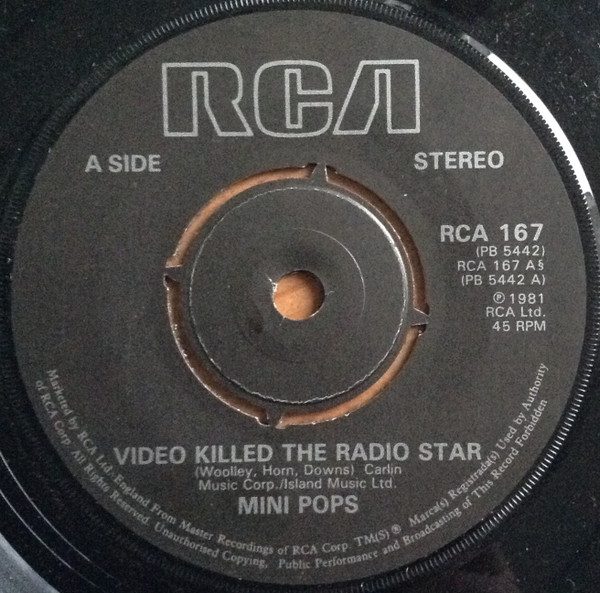
But what may be even more astonishing is just how successful “Mini-Pops” was on the legitimate music charts! While it didn’t go beyond being a novelty children’s album in Canada, “Mini-Pops” reached #63 on the UK Billboard sales charts, and the first single, a surprising well executed cover of The Buggles hit “Video Killed the Radio Star,” managed to actually enter the Billboard UK charts getting as high as the #60 position.
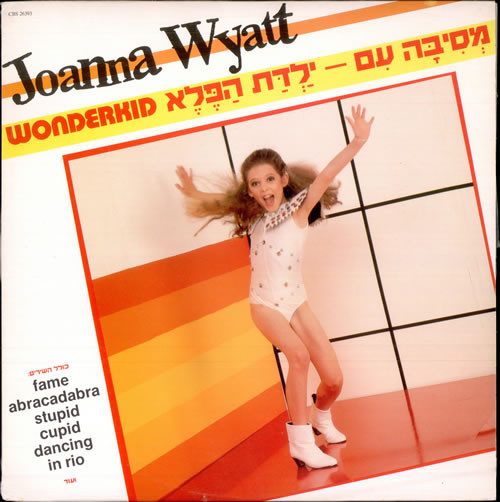
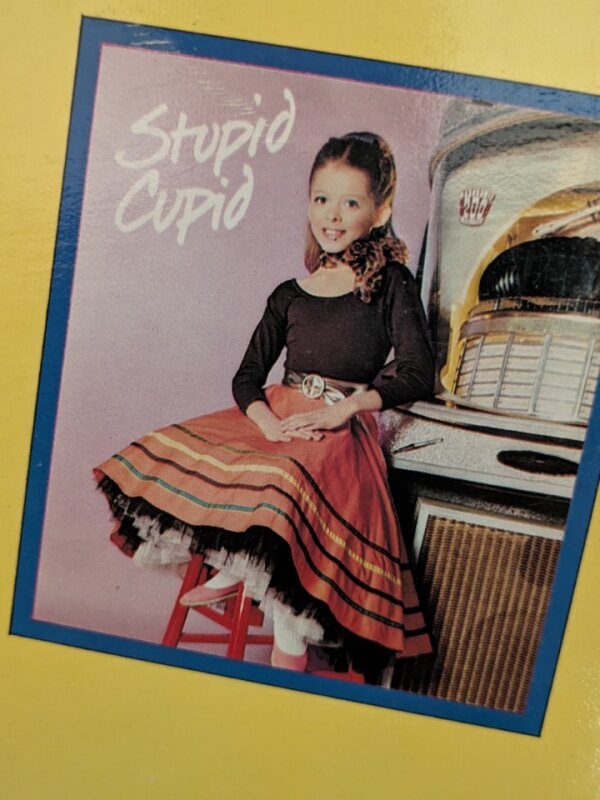
But even more impressive was the success of the single’s B side, which was Joanna Wyatt’s peppy performance of Connie Francis’ 1959 hit “Stupid Cupid.” “Stupid Cupid” managed to get all the way to the #1 spot in France, where it bumped Paul McCartney and Stevie Wonder’s classic duet “Ebony and Ivory” out of the top spot! A promotional video of Joanna performing in a classic 50’s era poodle skirt was shot for the video, which got her name billing in some countries! The success of the track led to the single being repackaged with a nice picture sleeve with “Stupid Cupid” as the A side, backed with “The Birdie Song” on the B-side. Over the next few years, Joanna Wyatt’s Mini-Pops performances would often be repackaged in various countries as solo singles, including an entire solo compilation lp being released in Isreal.
So, by the end of 1982, The Mini-Pops was an unexpected success. The kids appeared on popular British variety shows, met and were photographed with the actual pop stars that they emulated and were reportedly having fun doing it. However, sometimes when you push a good thing, it can go unexpectedly bad, and things were about to get really weird.
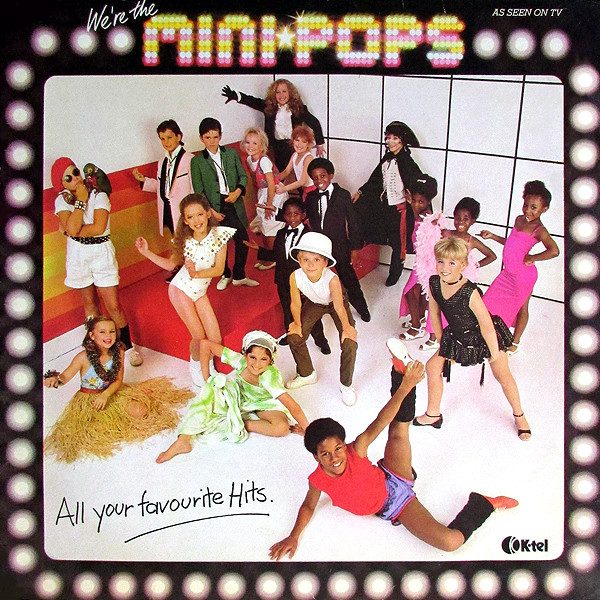
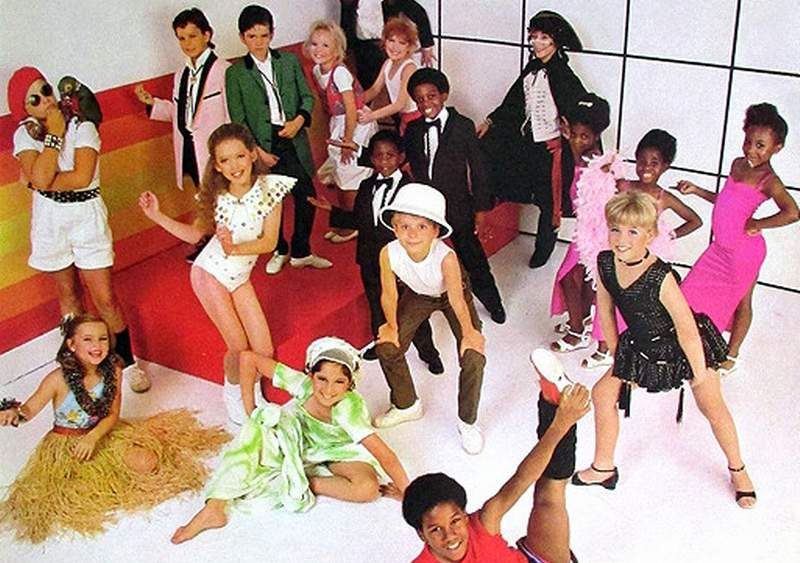
In late 1982 Martin Wyatt teamed up with TV producer Mike Mansfield to bring The Mini-Pops to British television. Again, the concept seemed like a no brainer. With MTV and music videos having successfully grown into a cultural phenomena, having an entire show featuring pre-tweens dressed up and performing the hit songs of the day didn’t only have the potential to be a ratings success, but it also could be used as a cross-promotion tool for future Mini-Pops projects. The idea of the series was sold to Channel 4, but Wyatt and Manfield would need to flesh out the group and add more kids to the roster. Audition notices were sent out looking for kids who could sing and dance, and long before shows like “Britian’s Got Talent” and “Ameerican Idol” became a television phenomenon, thousands of eager showbusiness children and their exasperated stage mothers showed up at Wimbledon Theatre for the try outs, which was captured on film for a TV documentary titled “Don’t Do It Mrs. Worthington.” Once the expanded roster of Mini-Pops singers was selected, the production team got them onto a Channel 4 sound stage dressed in neon lights and completed with a soda fountain bar and bean bag chairs, and costuming the performers up as their favorite singers, gave them the opportunity to play pop star on weekly television. Essentially, what The Mini-Pops television series was doing was taking that original concept that Wyatt observed when Joanna and her friends were playing pop star in her bedroom and expanding it into family friendly television entertainment. What surely could go wrong?
Well, despite the initial intensions of the producers, the end results of “Mini-Pops” was considered a complete disaster. Debuting on February 8, 1983, the show managed to draw approximately two million viewers and proved popular with children who enjoyed watching performers their age pretending to be the era’s rock idols. The song selection also continued to be rather inspired, with performers emulating a wide range of artists including Joan Jett, The Police, Frank Sinatra, Cliff Richards, Irene Cara, Rogers and Hammerstein and even Motown’s entire roster of stars.
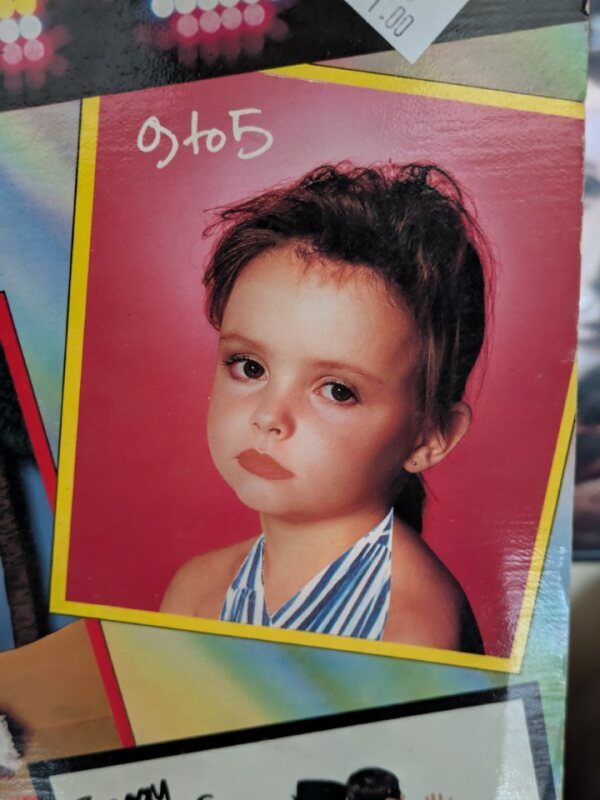
But despite its creativity, high viewership and good intentions, within weeks of its premier “Mini-Pops” quickly found itself under fire. Critics not only hated the show, but soon it gained the reputation of being “pedophile bait” with columnists and critics accusing the producers of putting the children on it in exploitive situations. Criticizing the show for tarting up the girls in excess makeup and inappropriate costumes, a controversy around the series began to boil over in the press, giving The Mini=Pops unwanted negative notoriety.
The one performer which seems to have spawned the majority of the controversy was Joanna Fisher, who now seven years old, performed Sheena Easton’s “Morning Train (9 to 5).” Dressed in an oversized housecoat over silk pajamas, Fisher sang the song word for word, which included age-inappropriate lyrics that set off alarm bells to cultural critics:
“Nighttime is the right time, we make love.
Then it’s his and my time, we take off.
My baby takes the morning train….”
Although some editing of lyrical content should have been considered by producers, defenders of the show pointed out that the controversy was the creation of adults with dirty minds and didn’t seem to actually be affecting the kids on the series who seemed to be having fun singing and dancing. But, as the controversy continued, after weeks of negative press Channel 4’s newly promoted head of entertainment Mike Bolland put the hammer down and ended “Mini-Pops” after only six episodes. Over the decades the series would gain a sordid stigma within British entertainment industry gaining the reputation of being one of the worst television series ever produced.
But just how bad was “Mini-Pops,” really?
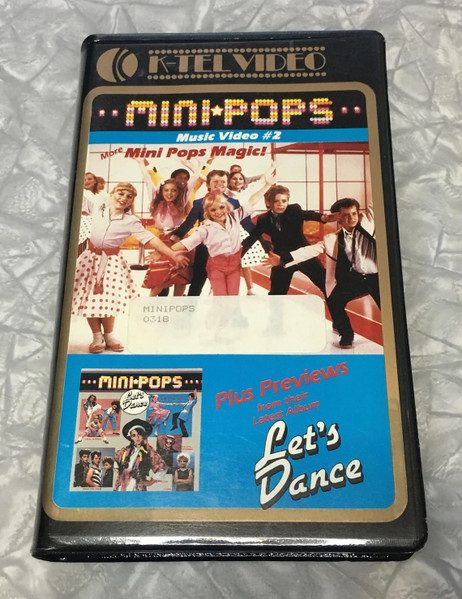
While the series never aired in North America, at the time of the program’s premiere K-Tel was expanding into video tapes, and in 1984 episodes of “Mini-Pops” were reedited and released in Canada for the home video market. Another successful advertising campaign for the video tapes appeared on television, and soon the videos were available in stores across the nation. Thanks to these video releases, “Mini-Pops” broadcasts are now available on YouTube to revisit and reevaluate.
Having worked through the hour of “Mini-Pops” material currently available on YouTube, I looked carefully for questionable content and potential child exploitation, of which I am extremely sensitive of. But, when looking at the forty year old series with modern eyes, I have difficulty in finding the offensiveness of “Mini Pops.” When I watch the footage all I honestly see is a lot of little kids singing and dancing and having fun acting like pop stars. Even Joanna Fisher’s “Morning Train” performance, while definitely cringy, lacks the salaciousness of its reputation. I’m not saying that it is fine entertainment, and I’m not even saying it’s worth watching. But I believe what critics were shocked by in 1983 were children emulating adult performers. Yes, song selection and lyric editing should have come into consideration, but I wonder if cultural critics at the time were less concerned about child exploitation as much as they wanted kids to “stick in their lane” in regard to performance.
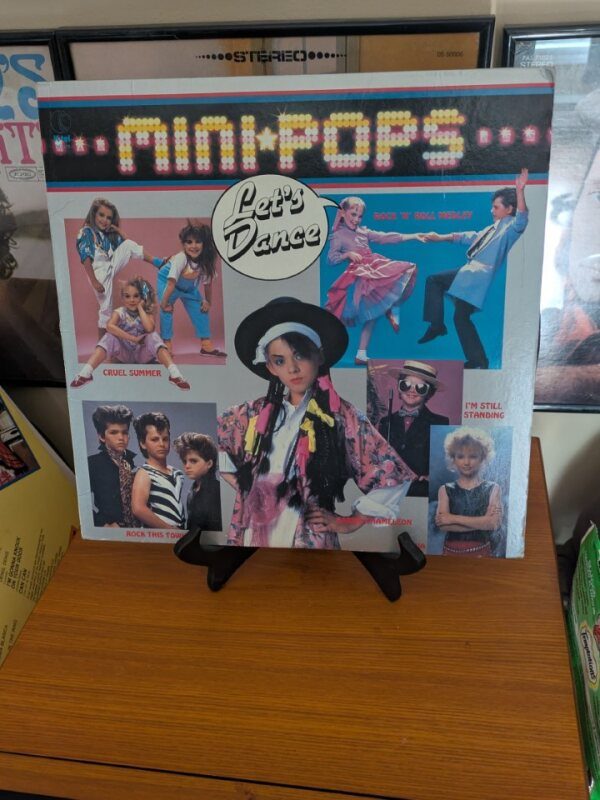
But while the controversy around “Mini Pops” crushed the franchise in it’s home country, when the second album, “We’re the Mini-Pops” hit Canadian shores, without the critical response and controversy tainting the reputation of the brand, the album became as big of a seller as “Mini-Pops” was. In response to the unexpected success of The Mini-Pops in Canada, K-Tel brought Martin Wyatt and a selection of Mini-Pops performers over in the summer of 1983 for a three month tour, which included autograph sessions at local malls and record shops, parade appearances and sold out concerts (reportedly an audience of twenty thousand spectators showed up to see The Mini-Pops in Toronto). Although cancelled in the UK, Mini-Pops was alive and well and bigger than ever in “the great white north.”
In 1984 K-Tel went full force and released two Mini-Pops albums – “Let’s Dance,” which had the iconic image of Joanna Wyatt dressed up as Boy George on the front cover, and a holiday album titled “Mini-Pops Christmas.” As the MTV era continued to rage on, The Mini-Pops emulated many other highly visible pop icons of the era, including Cindi Lauper, Wham!, Madonna, Bananarama, Elton John and Michael Jackson.
However, a major shift in the Mini-Pops operation happened sometime thereafter. Although the product was hotter than ever, Martin Wyatt and his team suddenly broke ties with K-Tel and moved distribution operstions over to their rival, Quality Records. Another Canadian based company Quality Records would start distributing the albums beginning with 1985’s “Wanna Have Fun.” Still being produced via Wyatt’s Bright Records, to most people, the product hadn’t changed at all, and the transition seemed seamless. The cover designs and logos remained the same, and the quality and sound on the records still had that distinct Mini-Pops vibe. Quality Records even went so far as to put copy cat ads on television promoting the album.
But while things seemed to be chugging along in Mini-Pop land, time was running out for the brand. Of course, as the original Mini-Pops kids grew up and aged out, they were replaced by new Mini-Pops kids. But, much like the Mini-Pops themselves, eventually the original audience for the albums began to age out as well. While Mini-Pops albums may have served a purpose to kids of a certain age, within time kids grew up and were far more interested in listening to the actual singers perform their hits than small children do what was essentially inferior covers.
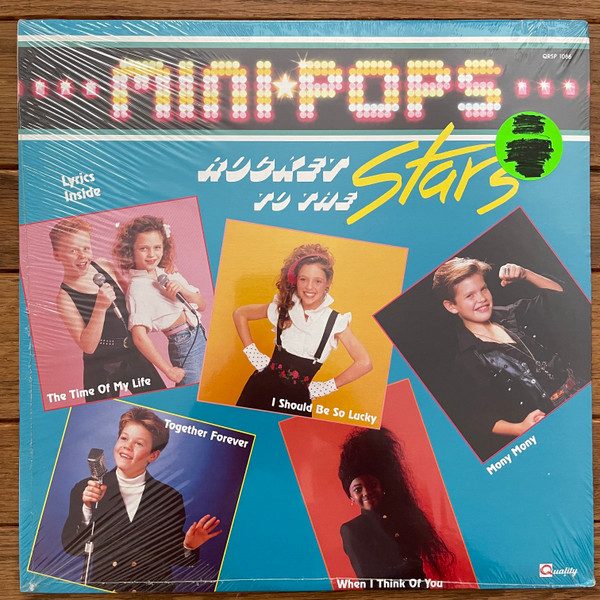
By the end of the 1980’s The Mini-Pops seemed to have run its course. The last of the original Mini-Pops albums, “Rocket to the Stars” was released in 1989 and contained covers of songs by Belinda Carlisle, Rick Astley, Janet Jackson and Whitney Houston. What was noticeable by the performers represented in the song selection was how the aesthetic appearances of the current crop of artists were becoming far more generic, with far less flamboyant characters for the kids to perform as. I mean, how do you dress up as George Benson? Trends were changing again, and with the 90’s music scene becoming bleaker, it seemed like the time of The Mini-Pops was over and it quietly went away without anybody really noticing.
But you shouldn’t underestimate the marketing power of K-Tel. Over the decades, despite frequent industry and format changes, including financial ruin and bankruptcy due to a fluctuating market, K-Tel has rose from the ashes on more than one occasion and continues to be not only a player in the entertainment industry but also continues to be savvy in regards to branding. Nearly fifteen years after the final Mini-Pops album was released from Quality Reccords, K-Tel obtained the rights to the Mini-Pops brand and revived it with a group they refer to as “The Mini-Pops Kids.”
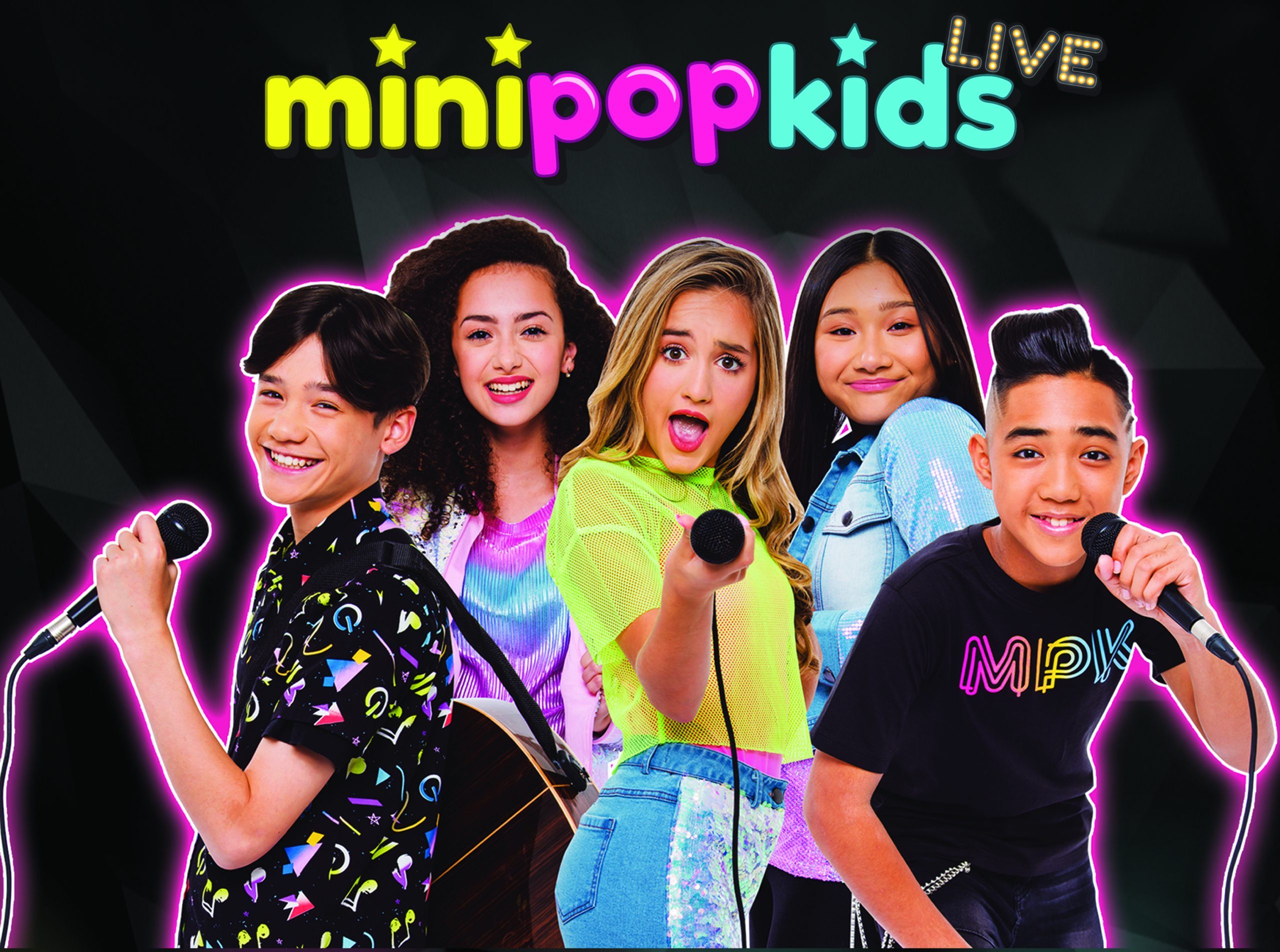
Since 2004, K-Tel has continued creating new Mini-Pops releases. Initially released as double disk CD packages, the current product is no longer available in physical media and are only sold as electronic files. Meanwhile, The Mini-Pop Kids continue to make appearances throughout Canada and beyond to perform for family friendly audiences. But, by rebranding the group as “The Mini-Pop Kids,” K-Tel has made an attempt to distance itself from the original product while keeping the nostalgic band name.
In 2024 K-Tel made a big deal of celebrating the Mini-Pops by releasing the 20th Mini-Pops album and sent The Mini-Pops Kids out on a cross Canada tour. However, when you do the math, in total 27 Mini-Pops albums have been released over the brand’s entire history, and it was actually the 20th album to be credited to The Mini-Pops Kids Of course the reason for this renumbering is due to Quality Records involvement in distributing the final three original Mini-Pops albums, which K-Tel does not want to acknowledge, But, in doing so, K-Tel also seems to be trying to rewrite the narrative starting in 2004, thus erase The Mini-Pops’ true legacy of selling millions of records for the company. What K-Tel seems to forget is that they not only played a pivotal role in launching the Mini-Pops brand, but they also distributed the most iconic albums from the series. But, if you go to the K-Tel website, there is no mention of the original Mini-Pops at all. While K-Tel seems to want to pull on the nostalgic heartstrings of the parents (or, more accurately, grandparents) who purchase the “albums” for their kids with brand familiarity, they also want to divorce themselves from the release of the albums that have become so iconic in the memories of Canadian gen-xers.
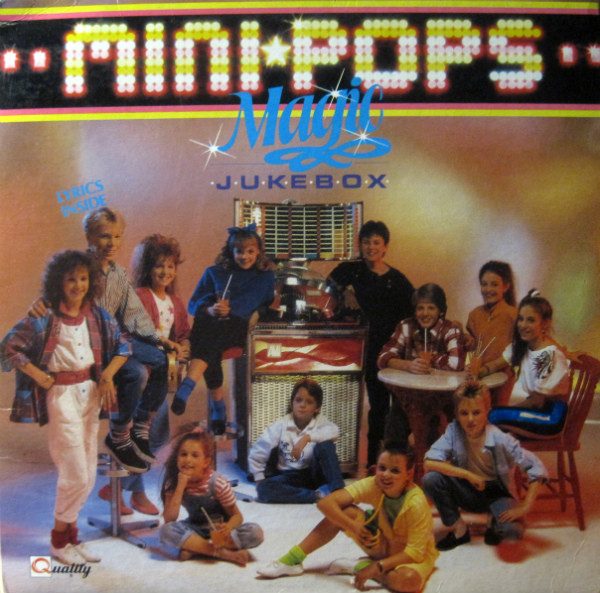
But unfortunately for K-Tel, the original Mini-Pops albums have become a unforgettable part of the musical experience of 1980’s children, and no matter how many digital downloads they sell of the new product, the original physical copies of “Mini-Pops” are not going to completely be wiped out of the cultural landscape. Every time a middle aged record collector comes across and old Mini-Pops album in a discount vinyl bin, it’s going to spark a response. The collector may smirk at it and flip to the next record, but they won’t forget. The Mini-Pops will continue to be an iconic part of Canadian childhood nostalgia which seems to have entered the collective experience of my generation.


