
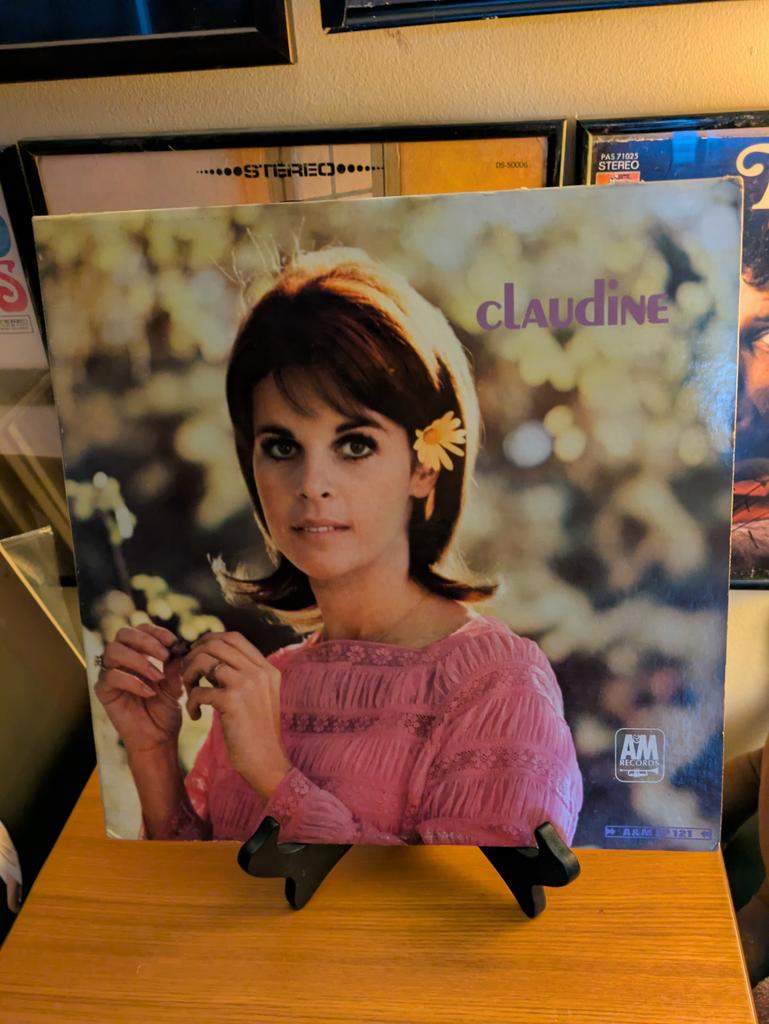
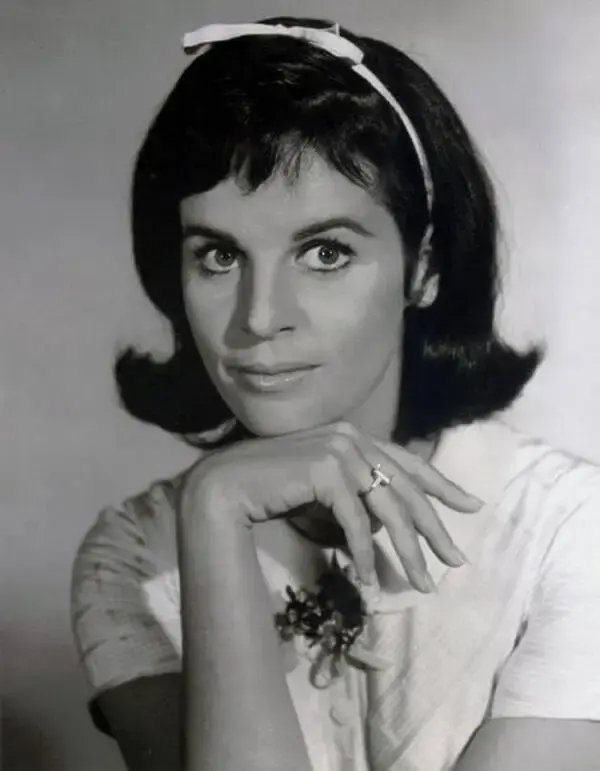
Once a recognized figure on the entertainment landscape, in the decades since Claudine Longet removed herself from public life she has fallen into near obscurity. These days there seems to be only two things anybody remembers about her – in 1960 she became the remarkably young wife of strait-laced crooner Andy Williams, and in 1976 she shot and killed her lover, championship skier Spider Sabich. But in the sixteen years between those two distinct points in her life, Claudine had a prolific career as both an actress and singer. However, due to the sensationalism of the larger story that surrounds her, nobody talks about Claudine Longet’s music anymore. You never hear it in the popular soundscape, and it isn’t reaching the potential fanbase it deserves. So, let’s talk about Claudine Longet, but not about the murder, the scandal or the trial. Instead, let’s look at what made Claudine a star in the first place – her music.
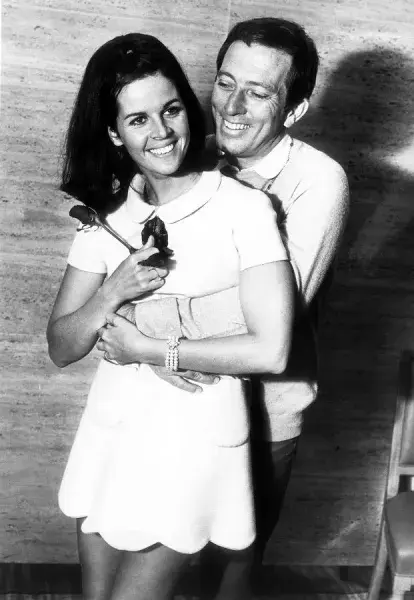
Now you can’t really examine Claudine Longet’s career without including Andy Williams. Although Claudine began a career in showbusiness prior to meeting the laid-back singer, her public visibility was fully adjacent on Andy’s popularity throughout the 1960’s. But, right from the get-go, Andy’s publicists were worried about what the public perception to Claudine might be, and how it could potentially impact Andy’s career with the primarily conservative audience that bought his albums. Even before the world knew who Claudine Longet was, Andy William’s “spin machine” were already conducting alternative narratives about the beautiful French performer.
You see, Andy Williams first laid eyes on Claudine Longet when she was working as a dancer at the Tropicana in The Folies Bergère Revue. In America for barely a year, Claudine had been spotted on French television by famed nightclub manager Lou Walters during a visit to Paris, and having his assistant locate her, he offered to set her up in Las Vegas. Although still a teenager, Claudine took the offer and soon found herself living the life of a showgirl in one of the hottest shows in Sin City.
Replicating the sights and sounds of the French Cabaret, the Folies Bergere Revue has become an iconic part of Vegas history, but in 1960 the show was brand new, and at the time was still considered risqué. So, when Andy Williams started making time with a performer from a show with its controversial reputation it was enough to raise a few eyebrows. But what was even more potentially scandalous was the sizeable gap in the couple’s ages. Claudine was barely nineteen years old, and Andy was 32! But when it became obvious that Claudine was here to stay, Andy’s team went to work, concocting a completely fabricated story which attempted to romanticize their first encounter, although in hindsight the new story may have been even more sketchy. In the version given to the public, it was told that Andy and Claudine first encountered each other years ago, when Andy was a young singer visiting Pairs and Claudine was just a child roller skating outside the Louve. Andy was charmed by Claudine’s youth and innocence, and he never forgot that whimsical little girl on a beautiful Parisian afternoon. Then, years later, Andy is driving down the Vegas freeway on a dark night and he sees a helpless young woman trapped on the side of the road with a flat tire. Andy stops the car to go to the woman’s assistance, and when their eyes met he recognized her as being the same little girl on the roller skates. Although an unlikely story, this was the kind of material that would be given to fan magazines during an era when nobody could easily fact check the stories told, so for better or for worse, the public accepted it. Andy and Claudine tied the knot in December 1961, only weeks away from her 20th birthday.
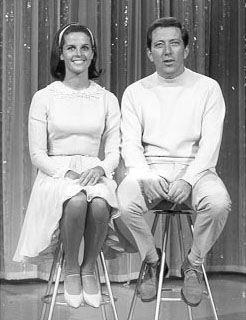
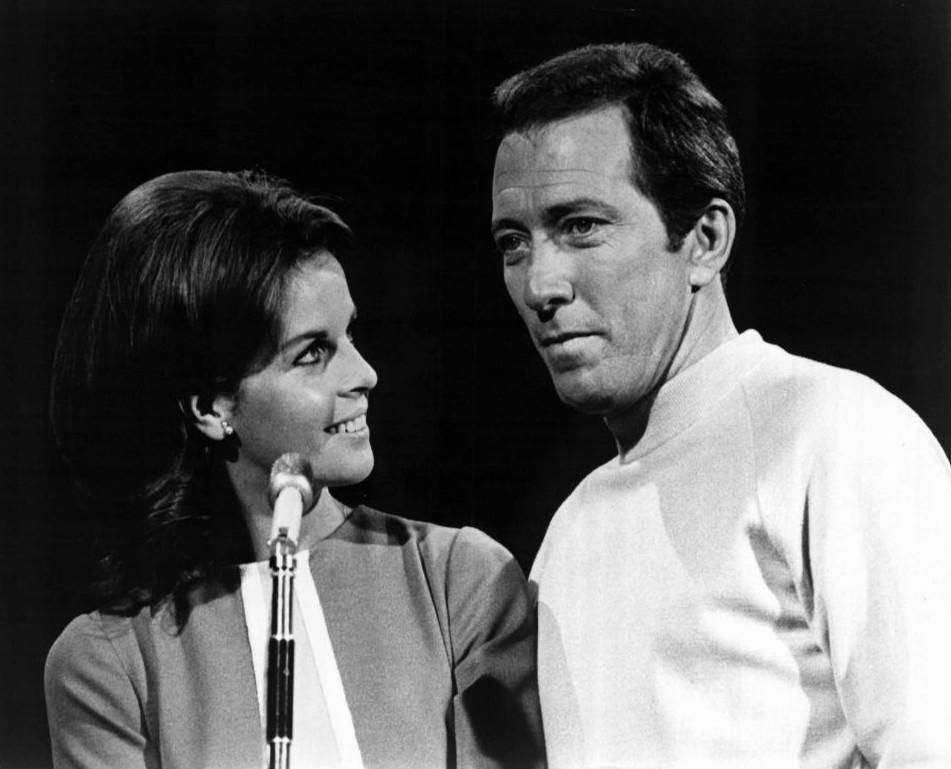
Just after their marriage, Andy made one of the biggest moves of his career when he returned full time to television with the first iteration of “The Andy Williams Show.” The lighthearted musical variety show brought Andy together with both new and established show business acts and would make him a television staple in middle American homes for the next decade, while his popular Christmas specials became a holiday tradition for decades to come. Early on in the series Andy began bringing Claudine on the show, which increased her public profile. Although she still hadn’t established herself as a notable entertainer, Claudine charmed the television audience with her grace, her beauty and her humor. Often playing the role of the “naïve French girl,” the show made light of Claudine’s youth and accent. But by having to match the same wholesome energy that Andy was exuding, Claudine was often put into a precarious balancing act of being chic but virtuous.
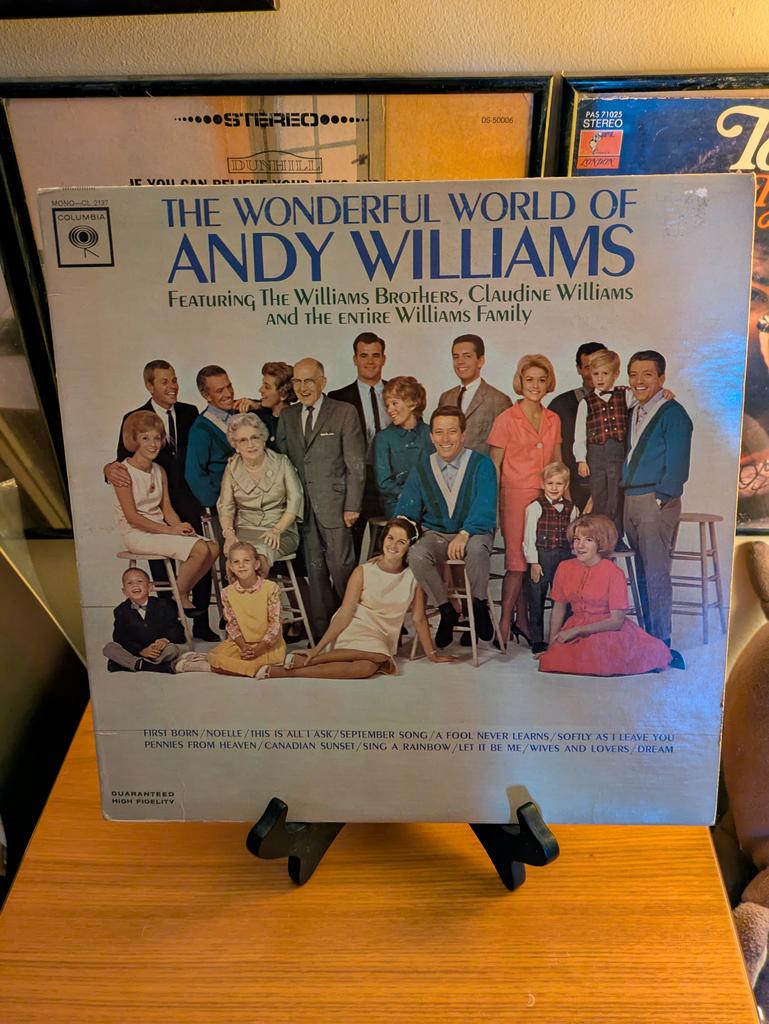
Claudine’s first recording dropped in 1964 on “The Wonderful World of Andy Williams.” Somewhat of a concept album that paired Andy with members of his family, in particular his brothers whom he first broke out with in showbusiness with in the early 50’s, it was a perfect opportunity for Claudine to enter the recording studio. Doing a duet of The Everly Brothers’ 1960 hit “Let It Be Me,” Claudine and Andy accentuated the romance of the song, and producers were even able to exploit Claudine’s “frenchness” by having her sing one of the verses in her native language. Two different album covers were released for the album, with one of them featuring the entire extended Williams clan, where Claudine became the obvious standout in her stylish white minidress, sitting seductively on the floor next to Andy with her head lovingly resting on his hip. Although “Let It Be Me” was the standout track on the album, it was passed over as a single. Instead Capitol Records released “A Fool Never Learns,” with the B side being “The Theme from ‘Charade” (“The Theme from ‘Charade’” would be the more successful track, barely squeezing into the Billboard top 100 at the 100th position.) Despite the popularity of their TV duets with audiences, Andy and Claudine surprisingly never recorded together again.

Claudine would launch her own solo career in 1966 after making an appearance on the dramatic series “Run for Your Life.” Pursuing an acting career since 1962, Claudine had become a popular staple on episodic television in a variety of different types of shows including “McHale’s Navy,” “Rat Patrol,” Combat!,” “Twelve O’clock High,” “Mr. Novak,” and “Hogan’s Heroes.” Primarily typecast in the role of the “pretty foreign girl,” Claudine proved to be a versatile actress that could do comedy and drama and lit up every set she was on. In the opening moments of “Run for Your Life’s” first season episode “The Sadness of a Happy Time,” Claudine performed a sensual rendition of Antonio Carlos Jobim’s bossa nova “Meditation” to a bewitched Ben Gazzara. Well, apparently the performance bewitched the viewing audience as well and soon calls and letters began to arrive at NBC-TV asking about Claudine and her performance.

Due to the interest in Claudine’s version of “Meditation,”, Andy dropped a call to Antonio Carlos Jobim’s producer, who happened to be Herb Alpert, and told him about the response to Claudine’s performance. Alpert expressed interest in hearing it so, securing a tape of the episode, Andy had it sent to him. Alpert recognized that Claudine’s musical vibe matched the direction of the material being released on his own label, A&M Records, which released “adult contemporary” music that walked the line between jazz and pop. Artists on A&M’s roster in 1966 included Sergio Mendes and Brsil ’66, The Sandpipers, Burt Bacharach, Tommy Boyce and Bobby Hart and, of course, Alpert’s own Tijuana Brass. Although Claudine didn’t have a sound that matched anything on the current pop charts, Alpert saw the potential of what she could do to a song and offered Claudine a contract.
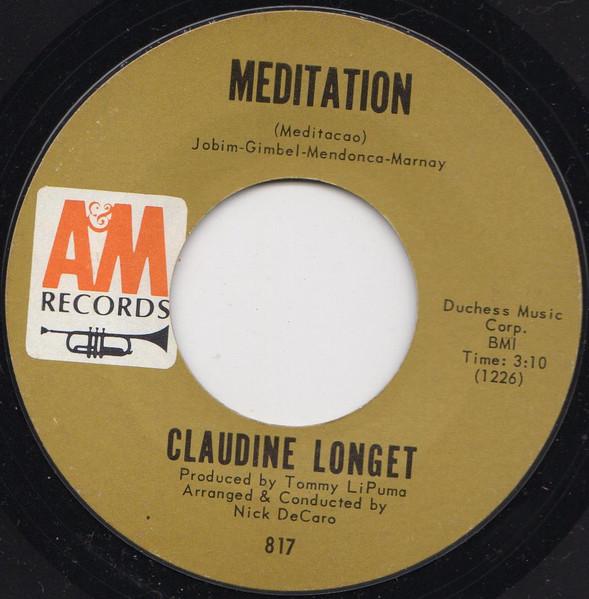
Claudine’s first solo release was a single of “Meditation,” backed with a breathy rendition of “Sunrise/Sunset” from the hit Broadway musical “Fiddler on the Roof.” With Claudine performing lyrics in both French and English, “Meditation” was different from everything else on the charts, but the romance of the track got some attention and it managed to struggle to the #98 position on the Billboard charts. Not exactly a hit, but enough for Alpert to go ahead with plans to produce an entire album of Claudine’s music.

Claudine’s self titled solo release was recorded in early 1967 and was a mixture of distinctly French inspired tracks and Claudine’s special takes on modern pop tunes. With songs like Francis Lai’s “Un Homme and et Une Fille” (aka “A Man and a Woman”) and “Tu as Beau Sourire” inserted into the album to create the sounds of Parisian café’s and romantic walks along the Siene, Claudine gave songs like The Beatles “Here, There and Everywhere,” Buffy Saint-Marie’s “Until It’s Tim For You to Go,” and Mary Wells’ “My Guy” the “chanson” treatment. While her style emulated popular French singers such as France Gall and Francois Hardy, her music was something distinctly new to North American record buyers who were overall unfamiliar with the Parisian music scene. Although it might not have been the kind of thing that was turning on the American youth during the Summer of Love, it was obviously turning somebody on because, despite the limited success of “Meditations” as a single, “Claudine” rose to the #9 position on the Billboard sales charts and was certified gold after selling more than 500K copies by the end of the year.
So just who was buying Claudine Longet’s album? Honestly, Claudine seemed to be caught between two worlds where she was too hip for the establishment, but too square for the hipsters. It’s not hard to imagine kids going into the record shop to buy the latest Beatles or Doors album, while their parents left with Claudine’s album tucked under their arm in an attempt to seem relevant. But as good as her debut album was, and despite healthy sales, “Claudine” was barely getting played on commercial radio. “Un Homme et un Fille,” which was one of the album’s more delightful tracks, was released as the second ingle but failed to chart. A third single, “Hello, Hello,” did slightly better by peaking at the #91 spot on Billboard. So Claudine was in an interesting place in the musical landscape. She was a prolific personality on television and had released a best-selling album, but her songs were not becoming major Billboard hits.
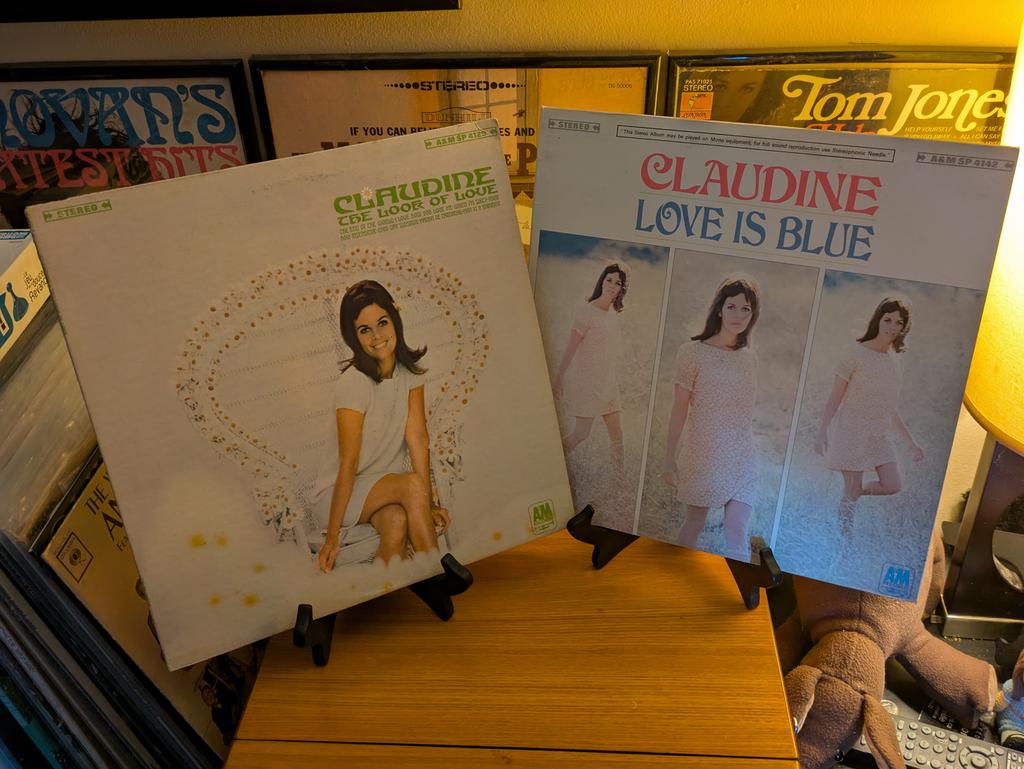
Despite the lack of hits, “Claudine” made money for A&M and Claudine’s second album, “The Look of Love.” was rushed for release for the end of 1967. The second album included tracks made popular by other A&M artists with the strongest being Claudine’s sensual renditions of Burt Bacharach and Hal David’s “The Look of Love” and Antonio Carlos Jobim’s “Insensetez.” The album contained more Lennon and McCartney tracks, with “Good Day Sunshine” and “When I’m Sixty-Four,” and she also performed moody versions of Skeeter Davis’ “The End of the World” and Priscilla Wright’s “The Man in the Raincoat.” Although “The Look of Love” was easily the gem on the album, “Good Day Sunshine” was chosen as the A side of the first single. Perhaps it was a sales attempt to attract Beatles fans, but it barely worked. “Good Day Sunshine” got minimal attention and only reached the 100th spot on the Billboard charts.
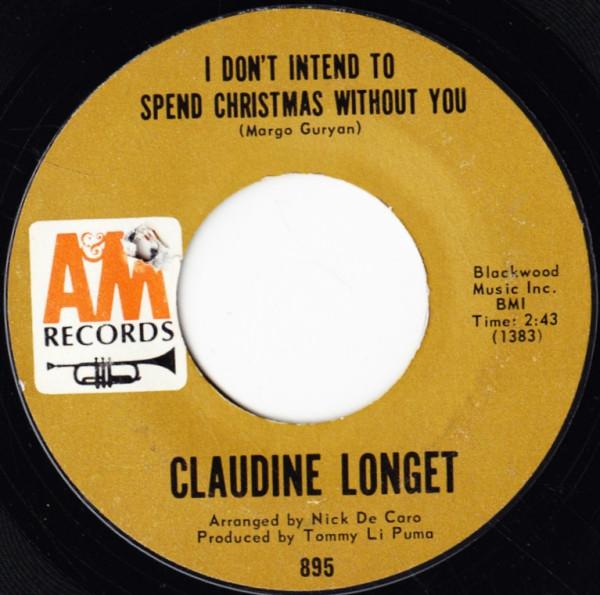
Claudine released one final single before 1967 was through. On the A side was a hip little number written by Margo Guryan called “I Don’t Intend to Spend Christmas Without You,” with the B side being a romantic little melody called “Snow.” Although “I Don’t Intent to Spend Christmas Without You” could have been actually considered certifiably cool, and was arguably the best track Claudine had recorded up to that point, it didn’t get any attention and fell quickly into obscurity. “Snow” would surface on Claudine’s next album, “Love is Blue,” as well as get dropped on an A&M compilation Christmas release titled “Something Festive!” in late 1968. It is curious that Claudine’s Christmas single was not featured on Andy’s annual holiday special, but I suspect that might have had something to do with him being signed to Columbia Records, which possibly had some sort of contractual deal in regard to the music used on his programs. Although “I Don’t Intend to Spend Christmas Without You” remains to be a deep cut today, it is one of her absolute best recordings and really worth dusting off for festive play lists..
The song “Love is Blue” was an obvious choice to headline Claudine’s third album. A global phenomenon after it’s debut at the Eurovision song contest, the distinctly European sounding song became an unlikely instrumental hit for Paul Mariet in January 1968. The song, once again, translated well to Claudine’s vocal style and, as a result, became her highest charting single peaking at #71 on Billboard. However, it would be the final single that Claudine Longet ever had on the charts.

Claudine would have another landmark moment that year when she got her first leading role in a feature film, playing beautiful songstress Michelle Monet in the Peter Sellers comedy “The Party.” Directed by Blake Edwards, the score for the film was written by Henry Mancini, who provided Claudine with a brand-new song, “Nothing to Lose.” In one of the most memorable sequences in the film, Claudine takes center stage and does a light and breezy performance of the song which seduced audiences worldwide. But as a result of conflicting contracts, Claudine’s performance of “Nothing to Lose” was not included on the official original soundtrack to “The Party,” which was released on RCA Victor. Instead, A&M released Claudine’s version of “Nothing to Lose” as a single, but declined to release it on any of her full albums. “The Party” would go on to be considered a cult classic, and despite “Nothing to Lose” not placing at all on Billboard, the popularity of the film has made it possibly Claudine’s most recognizable performance.
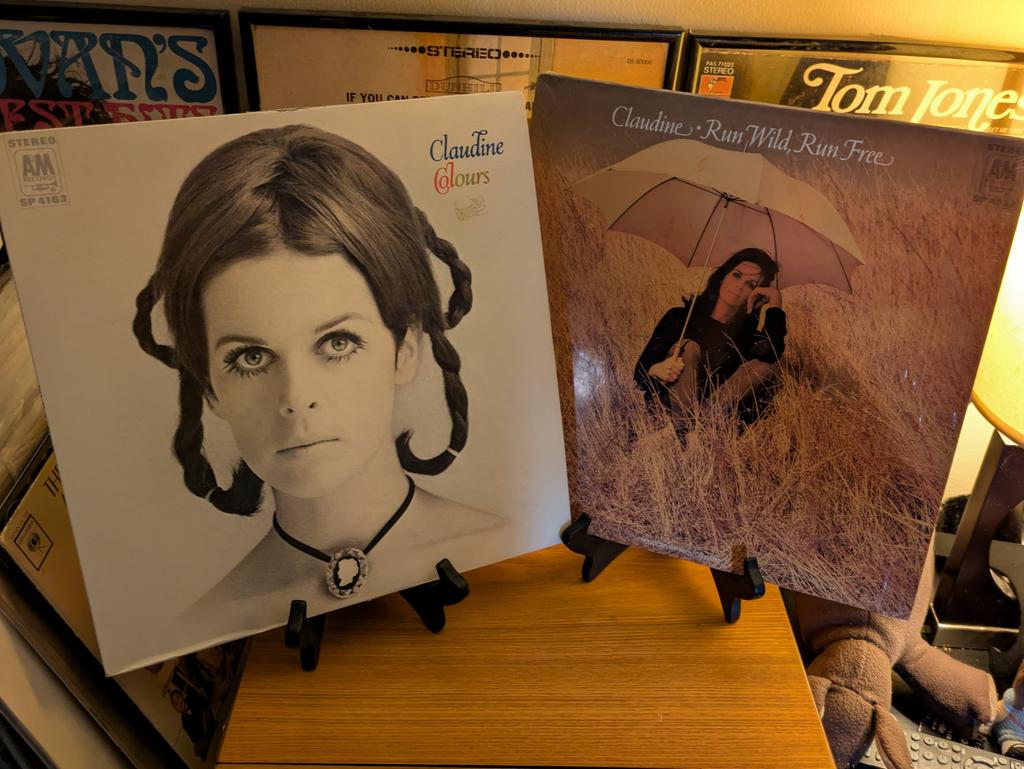
While Claudine never managed to reach the top 40 in the Billboard charts , her early albums continued to be best sellers on the Billboard sales charts. However, as musical trends continued to evolve by the end of the decade, her final two albums for A&M, “Colours” (1968) and “Run Wild, Run Free” (1970), drastically underperformed. Although they were still well produced, whatever hold that she had ever had on the record buying public seemed to be slipping. But it should be noted that Claudine continued to have strong fanbases in Europe, as well as in Japan and Korea.
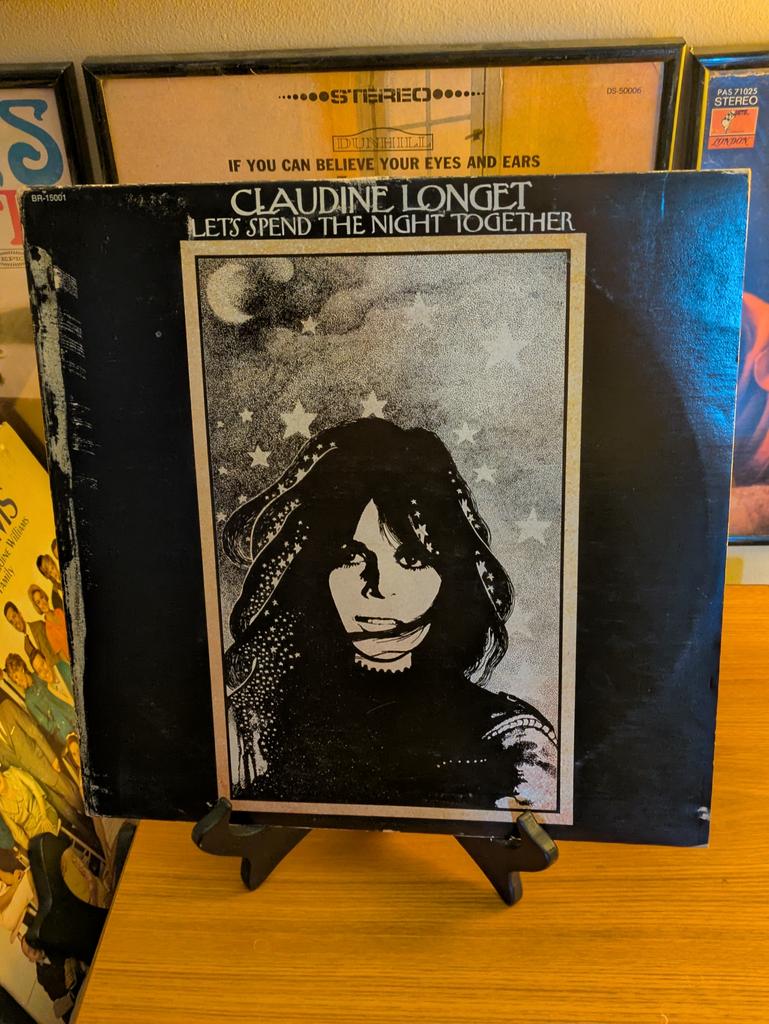
In 1970 Andy Williams launched his own record label, Barnaby Records, which prompted Claudine to jump to her husband’s fledging label where she released her final two albums, “We’ve Only Just Begun (1971) and “Let’s Spend the Night Together” (1972). Although both albums got little attention, they contained some of Claudine’s most interesting recordings. One of her most experimental tracks was taking an unlikely go at Diana Ross’ version of “Ain’t No Mountain High Enough,” which she performed primarily in French. Covers of “Close to You,” “Hey, That’s No Way to Say Goodbye,” and “I’ll Be There” were inspired selections for Claudine, and her version of The Beach Boy’s classic “God Only Knows” is perhaps one of the finest recordings she ever cut. But having a bit more freedom over her material allowed Claudine to at long last reveal a more sexual side to her personality, with sensuous renditions of Bread’s “Make It With You,” and a head scratching version of The Rolling Stones’ “Let’s Spend the Night Together” being recorded. Finally, her take on John Lennon’s “Jealous Guy: would come back to haunt her in the years to come. Although they aren’t the albums commonly found in most record stores (I have yet to find a copy of “We’ve Only Just Begun” for my own collection, which remains to be the only Claudine Longet album I don’t own), the Barnaby releases show that Claudine was evolving forward as a recording artist, but unfortunately they’d be the final albums she’d release . A third album was planned, with some tracks being recorded, but was never completed. A few of the unreleased tracks would sit dormant in Andy Williams’ vault for decades to come, but most of them were lost forever.
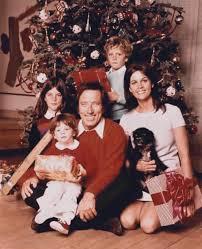
But while Claudine was trying new things in the recording studio, her life with Andy was deteriorating at home and in 1970, although not yet divorced, Claudine and Andy publicly announced that they had separated. In later interviews Andy would shoulder much of the blame for the breakdown of their marriage, saying that his over ambition and constant work schedule had got in the way of his role as a father and husband, and that he had failed his family. Yet, despite the separation, Claudine and Andy continued to remain friends, and Clausine and the children even contninued to appear on Andy’s annual Christmas specials.
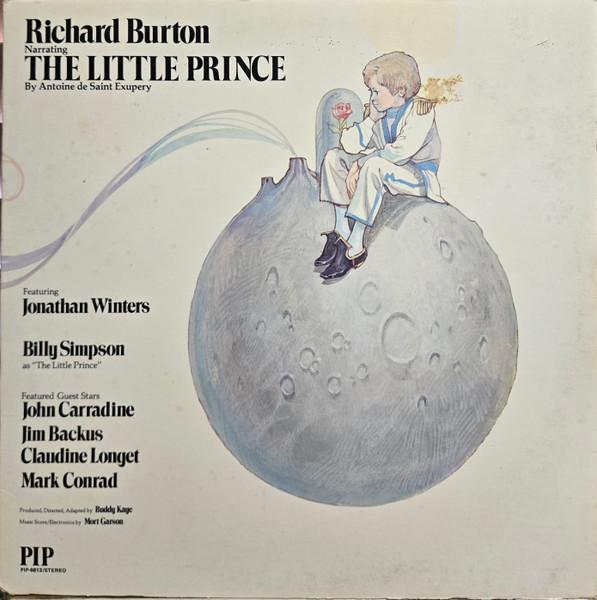
But somewhere between starting a new life as a single mother and being a single woman for the first time as an adult, it seems Claudine was moving away from music. Claudine was still doing the occasional television appearance, but her primary focus seemed to be raising her and Andy’s three kids, and she developed a new hobby – downhill skiing! Claudine’s final recording session would be on a spoken word project based on Antoine de Sainte-Exupery’s children’s novella “The Little Prince.” Produced by jazz musician Buddy Kaye, the project featured Richard Burton in the primary role of the Aviator who narrates the story and featured an eclectic and inspired cast of performers including Jim Backus as the Businessman, John Carradine as The Fox and Jonathan Winters as The Snake. Claudine, as the sole female voice on the project, was given the role of the vain and temperamental Rose, which was perfect casting with her soft and fragile voice. Released in 1975, the album proved to be a success by winning the 1976 Grammy Award for Best Recording for Children.
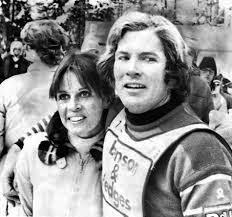
1975 would prove to be the end of Claudine Longet’s entertainment career, but she was about to get a lot more famous. That year Andy and Claudine finally signed the divorce papers, officially ending their marriage. Claudine and the kids moved to Aspen, Colorado and into the home of Claudine’s new beau, championship skier Spider Sabich, but the relationship wouldn’t last very long. On March 21st, 1976 a single gunshot echoed through Sabich’s home, and Claudine was no longer remembered as a wife, mother, actress or singer. From that moment on, Claudine Longet became the woman who killed Spider Sabich.
Since the death of Spider Sabich, Claudine Longet’s music seemed to be all but forgotten for the exception of a few pops along the way. She momently resurfaced among fans of the TV series “Gilmore Girls” when she was name dropped in the first season episode “Double Date,” which also featured her version of “God Only Knows.” Meanwhile, a wave of interest in lounge and exotica music in the late 90’s and early 2000’s prompted new CD collections of Claudine’s music being released on some European and Japanese labels. One of the most significant collections, 2003’s “Cuddle Up with Claudine Longet,” issued on Spain’s Vampi Soul label, saw the release of the tracks from Claudine’s uncompleted final album for the first time!
When listening to Claudine Longet’s albums with fresh ears I feel that they have aged extremely well. Perhaps a bit out of step at the time they were released, they have now surpassed the stage of “ironic camp” that they may have held even a decade ago and maybe now could be recognized for their experimental sound and Claudine’s inspired takes on modern pop standards. Claudine’s albums are unique gems that deserve to be re-examined and appreciated, and while we’ll never be able to separate the scandal from her story, her music should hold a larger part of her legacy than just the afterthought it has become.


