C’mere a moment. I want to show you something special from my collection.
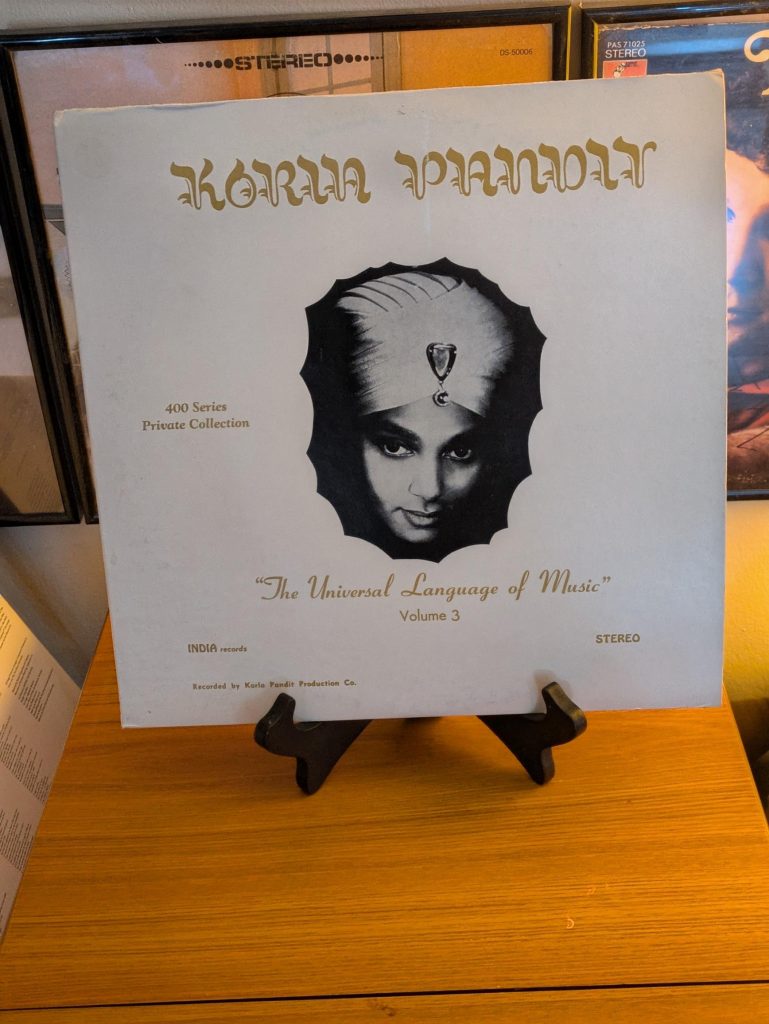
In a lot of records I bought from a dealer from Vancouver was a copy of Korla Pandit’s 1969 album “The Universal Language of Music, Vol. 3.” Released on India Records, this was one of the albums that Pandit self produced after leaving San Francisco for Canada near the end of the 60’s. Pandit’s decision to move his family further North was not for career ambitions nor opportunity but was so that he might save his sons, Shari and Koram, from the eventual possibility of being drafted into the Viet Nam War, However, by relocating to British Columbia, which became his homebase for the remainder of his life, Pandit basically put himself into a sort of career purgatory. Having never had any sort of audience in Canada, the once legendary Los Angeles based performer, who hypnotized his primarily female audience via his afternoon TV show “Adventures in Music” during the 1950’s, fell even further into obscurity, settling for a quiet life of teaching private music lessons while occasionally making public appearances at pizza parlours, drive in theatres and local fairs. Although cheaply made and under produced compared to albums produced a decade earlier by Fantasy Records, these records pressed on Pandit’s boutique label were the ones that were available for sale from Pandit directly at his public appearances, making them unique items for collectors.
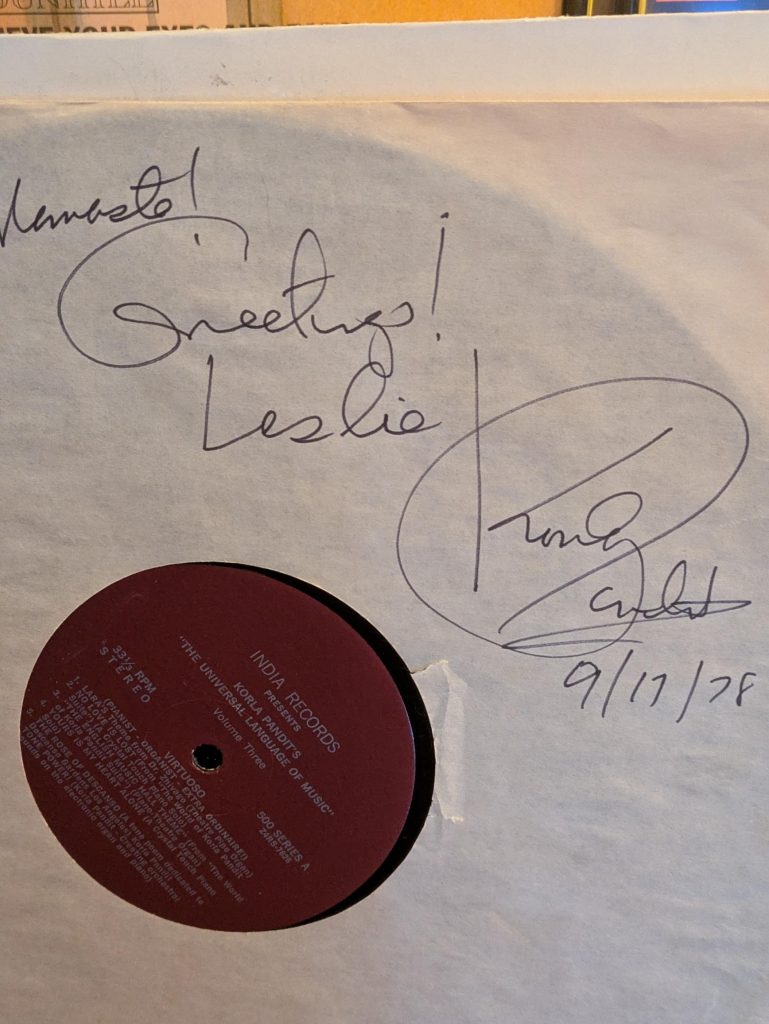
But when you pull out the record, check what is on the inner sleeve! Signed in blue ball point pen is the message “Greetings Leslie! Korla Pandit 9/17/78.” A message to the original owner by the great “Genie of the Keys,” this autograph makes this album extra special. I don’t know who Leslie was, but I’m proud to be able to give her record a loving home! I actually love signed items, and I have a fairly large collection of autographs. I believe there is a certain power left behind in a signature, as if the individual who created it has left a permanent imprint on something which can still exist long after they are gone. An autograph is like a fossil, proving that someone that we might only know from films, recordings, photographs and maybe only history books actually once existed. If authentic, it is a simple thing that has been personally left behind by a human being.
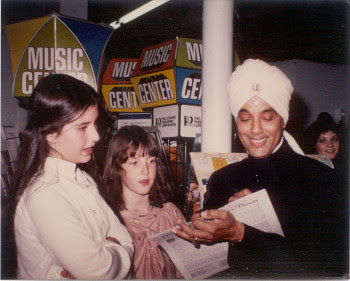
What makes the Korla Pandit signature even more unique is that while it exists in a tangible form, there never ever was a Korla Pandit. So if there never was a Korla Pandit, how can this autograph exist? One of the most mysterious musical oddities of the 20th century, the legend of Korla Pandit got even stranger in the 21st Century when, two years after his death, it was revealed that everything we thought we ever knew about Korla Pandit was a lie. However, instead of ruining his niche legacy, the revelation of Pandit’s true identity only gave him even more notoriety, making him more fascinating to the public in death than he ever was when he was alive.
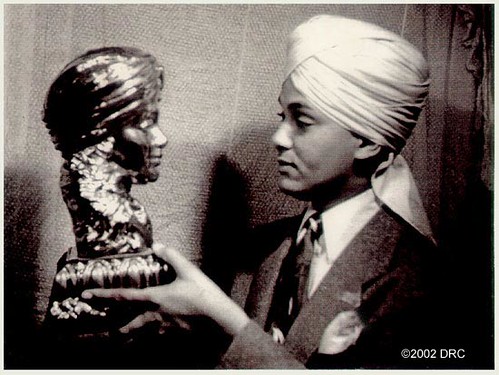
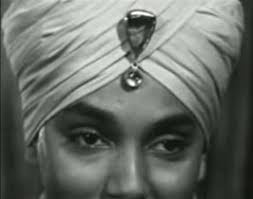
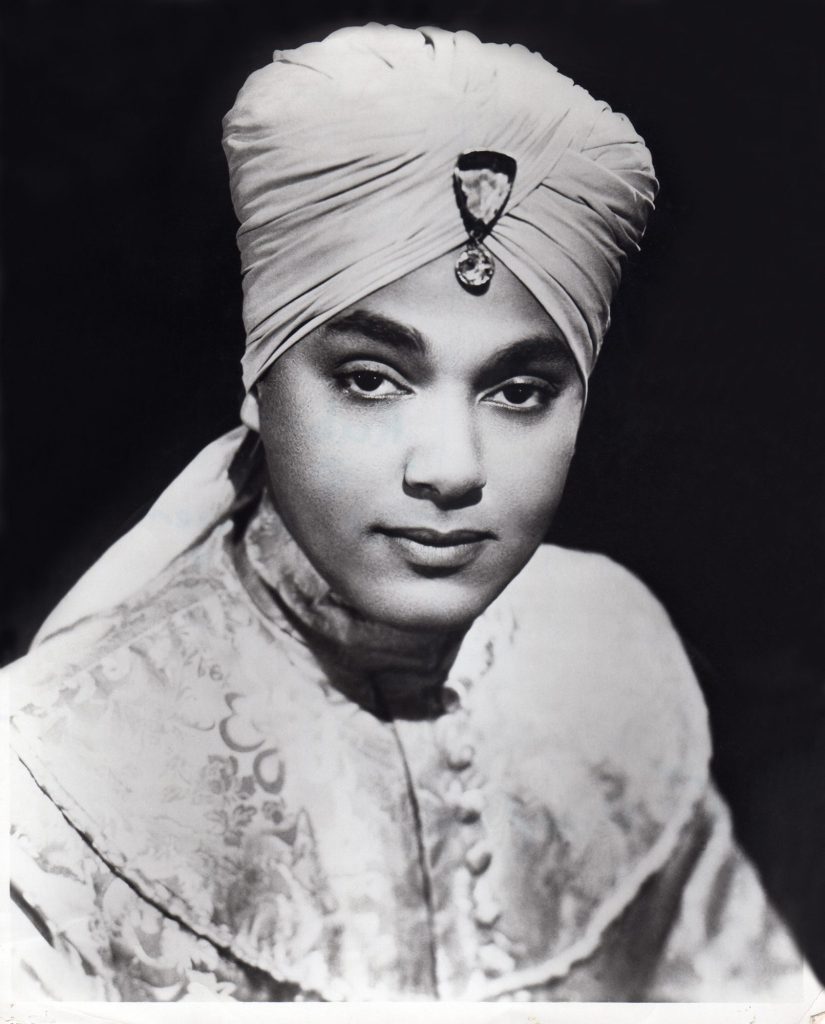
With his hypnotic eyes, silent gaze and jeweled turban, organist Korla Pandit mysteriously emerged out of seemingly nowhere when he appeared on the Los Angeles entertainment landscape in the late 1940’s. Via his daily television program “Korla Pandit’s Adventures in Music,” Pandit became both a musical oddity and a LA sex symbol by riding the wave of America’s fascination with the far away East which, during the 1950’s, was still heavily romanticized by Americans in legend and lore. Never speaking on his broadcasts, Pandit helped popularize the new music genre which became known as “exotica.” Alongside artists such as Martin Denny, Les Baster, Alfred Apaka, Yuma Sumac and Arthur Lyman, Korla Pandit became a staple of this unique genre which was basically pop music with exotic rhythm and instruments which conjured up the feeling of far away lands. More what white people thought music from Africa, Asia and the Islands might sound like than the authentic thing, exotica was embraced by the hip intellectual crowd which was looking for a sort of alternative sound which went beyond the standard pop industry of the time, and was even more unorthodox than jazz.
Korla Pandit’s upward career trajectory would be a short one, and after a number of career missteps, by the end of the 1960’s he was barely staying alive on local television in San Francisco (for more details on Korla Pandit’s career, as well as his feud with Liberace, read “Korla Pandit – Music of Hollywood (1962) and Liberace – Rhapsody in Blue (1966) here at Vinyl Stories). While he would eventually gain a new sort of following in the 1990’s via a renaissance of interest in exotica music, his resurgence was cut short when he died in 1998 at age 77. Upon his death Pandit was remembered for helping to popularize the culture of India to 1950’s America and gained the moniker “The Godfather of Exotica.” There the story should have ended…. but it was only the beginning. Korla Pandit’s story was about to get even stranger.
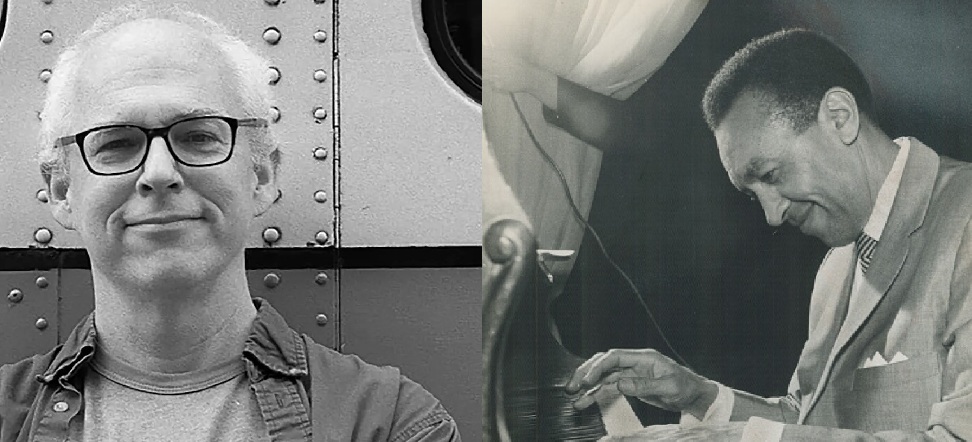
Enter R.J. Smith. A writer for Los Angeles Magazine, Smith was doing interviews and research for his book “The Great Black Way,” which chronicled the experience of African American musicians in Los Angeles during the 1940’s. Encountering an old jazz pianist playing at an LA based Italian restaurant, Smith recognized him as “Sir” Charles Thompson, who worked with greats such as Count Basie, Miles Davis, Charlie Parker, Dexter Gordon and Ornette Coleman. With many of the great jazz artists having been long dead by the 1990’s, it was a rare treat for Smith to find Thompson and persuaded him to talk to him for his book. During the conversation Thompson talked about his childhood during the 1930’s, and about first learning music in the small Midwest town of Columbus, Missouri when he mused about how there was one boy he knew who was an even better piano player than he was. According to Thompson, the local Baptist preacher’s son, Johnny Redd, was a hell of a boogie woogie player and played the best keys in town. But then he dropped a musical bombshell by telling Smith that years later, upon moving to Los Angeles to pursue jazz, he turned on the local television and saw Johnny Redd wearing a jeweled turban and posing as a man from India. Who Thompson was watching was, of course, Korla Pandit!
With this baffling piece of information revealed, Smith went on a musical detour of a lifetime and what he found out changed not only everything we thought we knew about Korla Pandit, but also entertainment history. Korla Pandit wasn’t from India! Just as “Sir” Charles Thompson had told him, RJ Smith uncovered that Korla Pandit was, indeed, John Roland Redd from Columbus, Missouri – an African American man posing as an East Indian!
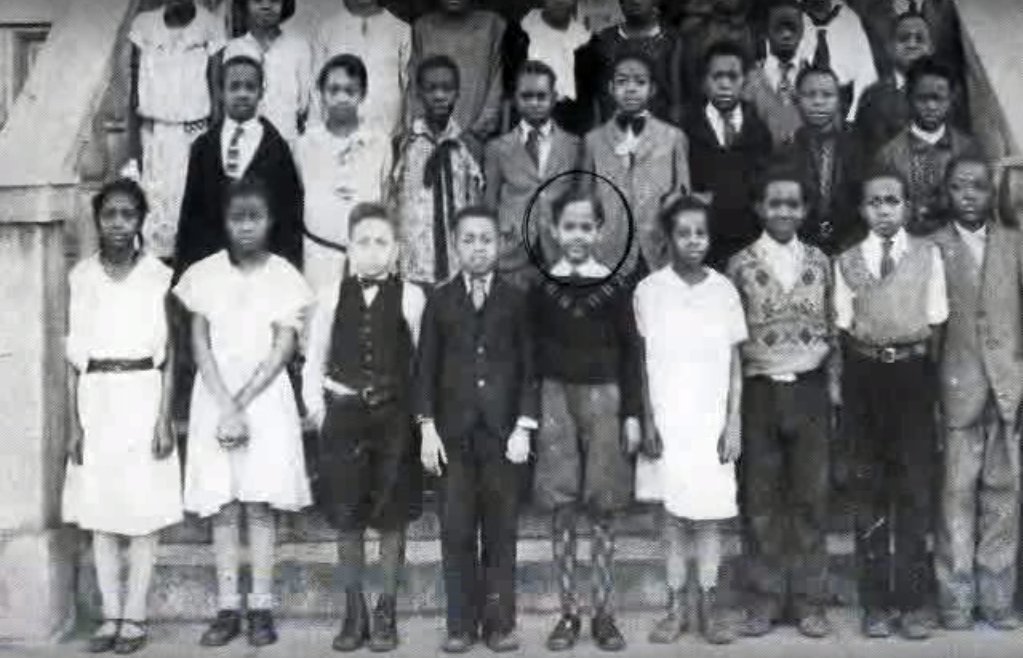
So, who was Johnny Redd? Born in St. Louis, Missouri, Redd was one of seven children of Reverand Ernest Redd, a Baptist Minister, and his wife Doshia. Both direct descendants from African slaves, one of Doshia’s descendants had been fathered by a white man, which accounted for Johnny’s light-coloured complexion and straight hair. When Johnny was ten years old the Redd family moved to Columbus, Missouri where his father began preaching at the Second Baptist Church.
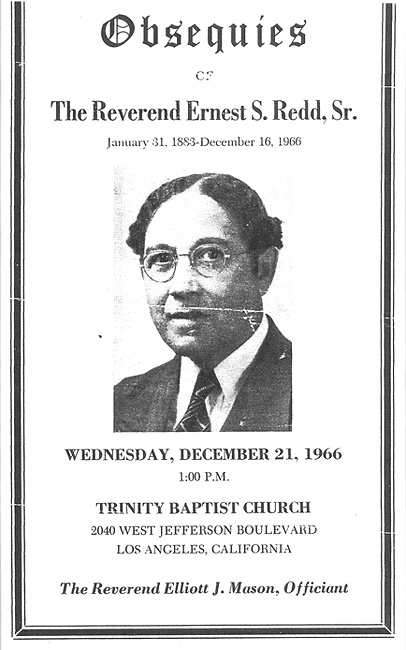
The Redd family were musically inclined, but Johnny was said to have been the prodigy amongst his siblings and began learning piano at the age of three years old. It was told that an early age Johnny could memorize and play back elaborate pieces quickly. Johnny’s older sisters, Ruth and Frances, were both singers and eventually moved to California in an attempt to break into showbusiness, while Johnny and brothers Ernest (aka Speck) and Henry played together in jazz bands throughout the Midwest (Speck would eventually become a well established band leader in Des Moines, Iowa).
By the mid 1940’s, Johnny decided to take a chance and follow his sisters out to California in search for new opportunities. Although not considered a Southern State, Missouri was still a hotbed of racism and repression due to the inhumane Jim Crow Laws that continued to make segregation legal, and Johnny thought perhaps he would find things a bit easier in the more liberal state of California. Instead, he found that things weren’t that much better on the West Coast. No matter where you went in America it seemed that opportunity, success and acceptance often depended on the colour of your skin.
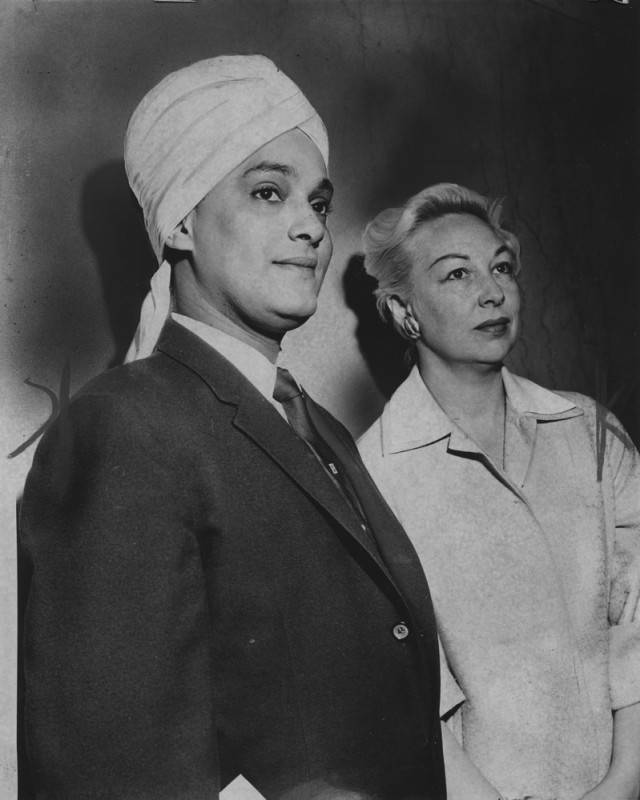
But before he could even set himself up, Johnny fell in love. Johnny’s sister Frances had a roommate, Beryl DeBeeson, who was working as an animator at Walt Disney studios and a romance quickly developed between the pair. But things were immediately difficult for them because Johnny was black and Beryl was white, and interracial marriages were still illegal in California! In order to skirt the laws, Beryl and Johnny eloped to Tijuana, Mexico to tie the knot. While celebrating their nuptials, Beryl noticed that Johnny’s light complexion wasn’t much different than most of the Mexican people around them, and the couple devised a plan that when they returned to LA Johnny would start presenting himself as a Mexican. I mean, why not? People in Hollywood were reinventing themselves all the time by changing their names and stories and even their ethnicity. If Kirk Douglas, Edward G. Robinson and Tony Curits could hide that they were Jewish, why couldn’t Johnny pretend he wasn’t black? In fact, while black musicians were not yet allowed to join the musician’s union, Mexican musicians were. So Johnny Redd adopted the persona of Juan Rolando (basically a Spanishized version of his first and middle name – John Roland) and returned to Los Angeles as a Mexican.
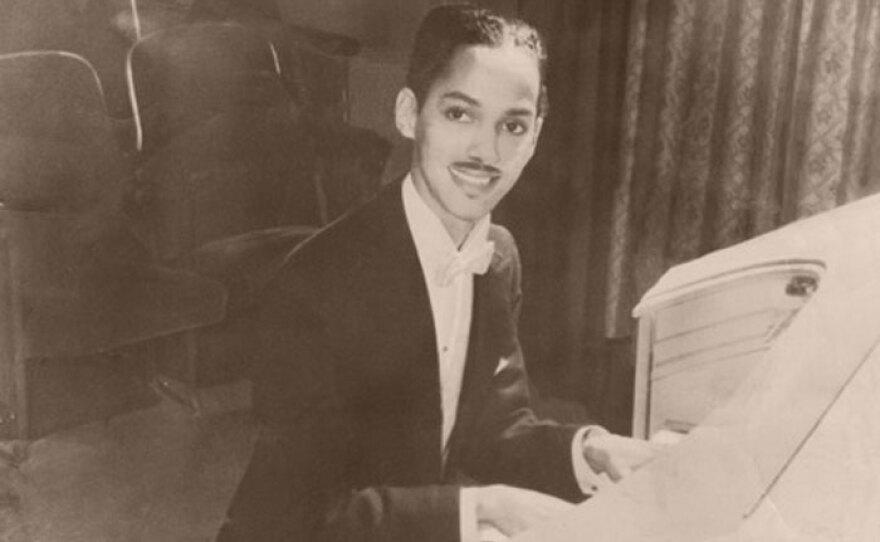
Under the guise of Juan Rolando, Johnny eventually became employed by radio station KMPC as their organist. His disguised ethnicity also allowed him to get jobs in other areas that still pushed out black musicians, including various recording studios and clubs in which he gained work as a pianist for hire. But back in Missouri, Johnny was outed pretty quickly when a Columbia based newspaper reported that Johnny was posing as a Mexican performer in California and even published a photo of Johnny in his Juan Rolando guise. But Columbia was a long way from Los Angeles, and the reveal didn’t affect Johnny’s life in LA.
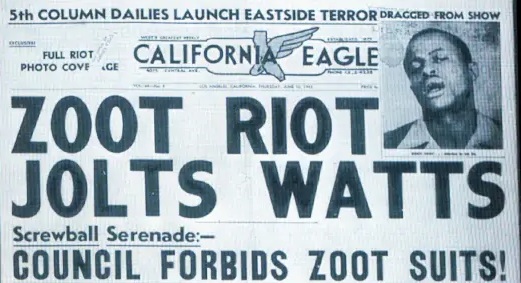
But what did affect his life was the Zoot Suit riots of 1943! As a part of the jazz scene, Johnny found himself in the thick of things when a series of violent clashes between white roughnecks and black, Asian and Mexican men donning the zoot suits that became a staple of jazz culture put the heat on Mexican performers. Fearing for his safety, it is believed that Beryl came up with the scheme for Johnny to change his identity once again, but this time as a man from India. Inspired by the popularity of Indian actor Sabu, and America’s then love affair for films with exotic locals such as “The Thief of Baghdad, “Arabian Knights,” “Road to Morocco,” and “Casablanca,” Beryl surmised that few people in America had ever actually encountered anybody from India. During the 1940’s there was an immigration ban that prohibited people from India to relocate to the United States, and although ethically different, the few who managed to slip through the ban were actually identified as “Caucasian” by the immigration department.
With Beryl designing the clothes, makeup and backstory for Johnny’s new identity, Johnny moved away from the piano and adopted the Hammond organ as his primary instrument. Learning to play traditional Indian ragas, he eventually was able to take the exotic sound of the East and incorporate it into contemporary American music. Johnny also came up with a unique signature in which he would slap the palms of his hands rhythmically on the organ keys which would create a sound much like a conga or a bongo.
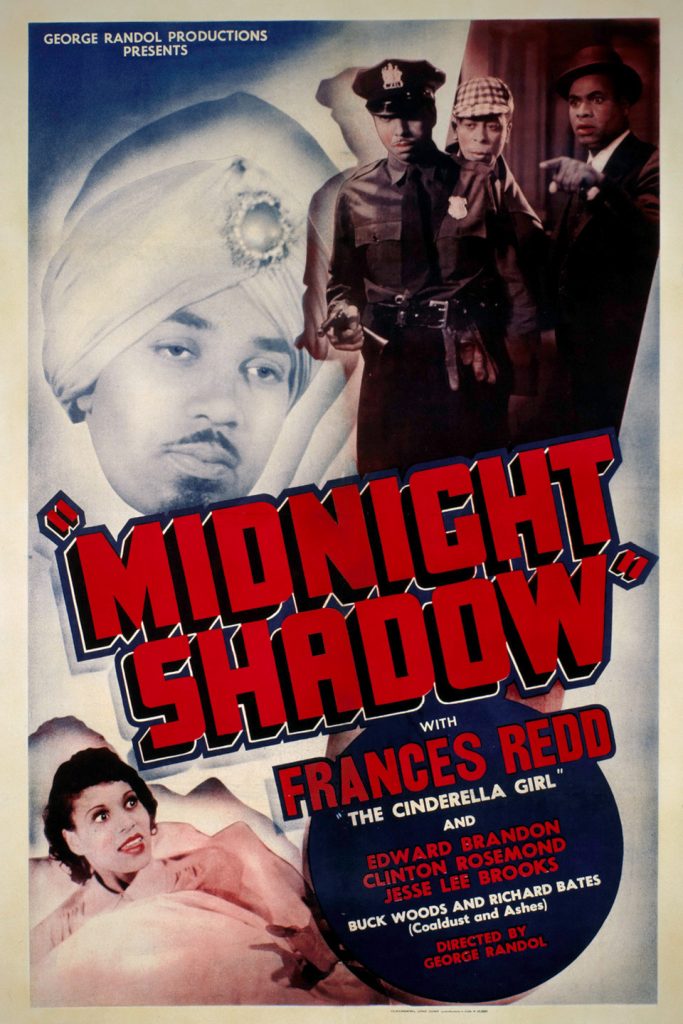
Further inspiration for Johnny’s new identity was believed to be taken directly from a 1939 film called “Midnight Shadow” which starred Johnny’s sister Frances in the female lead. A third-rate B-film made for the black audience, the film featured Frances in a love triangle between an awkward small-town boy and a suave stage mentalist named Prince Alihabad. Played by actor Laurence Criner, Prince Allahabad’s ethnic identity was unclear, but he was depicted wearing an elegant turban donned with a giant jewel. The direct inspiration of the jeweled turban between Frances’ exotic screen love interest and the new identity of her younger brother can hardly be denied and it would become Johnny’s new identity’s trademark. Ironically, Johnny would claim that he was Hindu, but the jeweled turban was more closely associated with Sikhism, putting a clue to his deception in plain sight. Under that jeweled turban, Johnny Redd ceased to exist, and Korla Pandit was born!

To complete the charade, Beryl came up with a back story for Korla Pandit which would be believable, but not fantastic enough for anybody to question. They said that Korla Pandit was form New Delhi and was the son of a government official and a French opera singer, as well as a distant relation of Indian Prime Minister Jawaharlal Nehru. When his family recognized him to be a musical prodigy at an early age, Pandit was sent to England to study music as a young child and eventually was sent to America to attend the University of Chicago at only thirteen years old. What happened between Chicago and Hollywood seemed to be missing in the narrative, but nobody seemed to be asking. Cleverly, an air of mystery became part of Pandit’s character and appeal with the public, and the more that the facts of his life were obscured, the more exciting his fans found him. In an age before the internet, and with little way to easily verify people’s pasts, the public just accepted that Korla Pandit was exactly who he said he was.
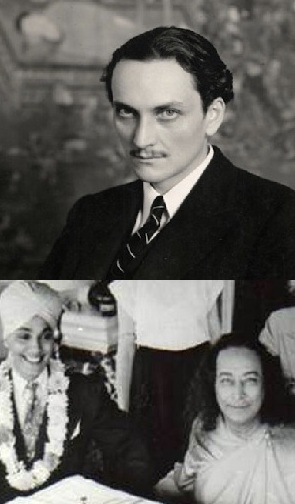
Now officially identifying himself as Korla Pandit, to further the authenticity of his new identity, Pandit (as we will continue to call him from here on in) began to attend lectures at Los Angeles’ Philosopher Research Society under the guidance of philosopher and occultist Manly P. Hall. There he engaged in Eastern religion, which led him to an association with LA based spiritual leader Paramhansa Yognada. Through his studies, Pandit began to adopt many Eastern beliefs as his own, especially in regard to the connection between music and spirituality. Pandit came to form his own spiritual philosophy which he called “The Universal Language of Music.” Pandit believed that a song never died, and instead continued forever, materializing into a harmonic blessing from spirit sources which expressed universal love through tonal vibrations from an ethereal place. Adopting this new alternative spiritualty as his personal truth, he not only added a touch of authenticity to his identity but made it his own personal belief. He would later be invited to lecture at the Philosopher Research Society and would write and speak about the universal language of music as part of his performances for the rest of his life. The spiritual messages that were adopted in the creation of Korla may have been the only authentic thing about his act.
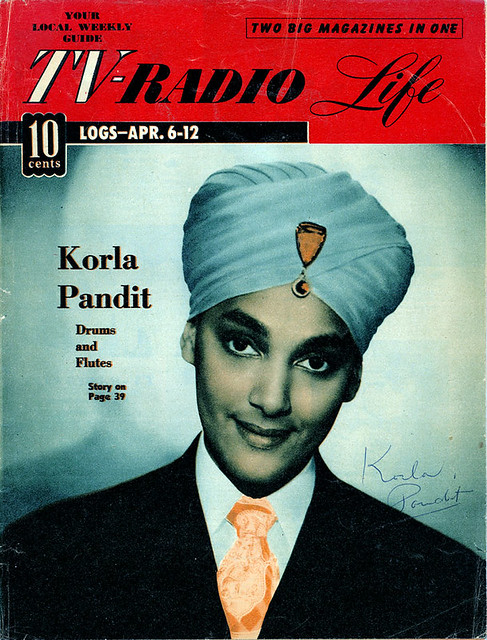
Korla Pandit made the Hollywood scene by the late 1940’s playing in dinner clubs, and got his first notable work in 1949 when becoming the organist for the radio revival of “Chandu the Magician,” as well as gigging as the regular keyboardist on the popular series “Hollywood Holiday.” Soon afterwards, Pandit and Beryl met television pioneer Klaus Landsberg, who had the insight of bringing Pandit to television. Pandit’s daily musical showcase “Adventures in Music,” premiered on KTLA-TV in February 1949 and over the next four years he’d do more than 900 live broadcasts and became an unlikely television sex symbol. Via his mysterious persona and silent stare, Korla Pandit was a ratings success especially to the thousands of housewives who held him in their wildest fantasies.
But as writer RJ Smith brilliantly would point out in his expose on Pandit, the erotic response of Korla’s fanbase could never have been a reality in 1950’s America. “If an African American man had established that kind of connection, he would have been beaten, thrown into a police car,” Smith would later observe. “Bad things would have happened.”
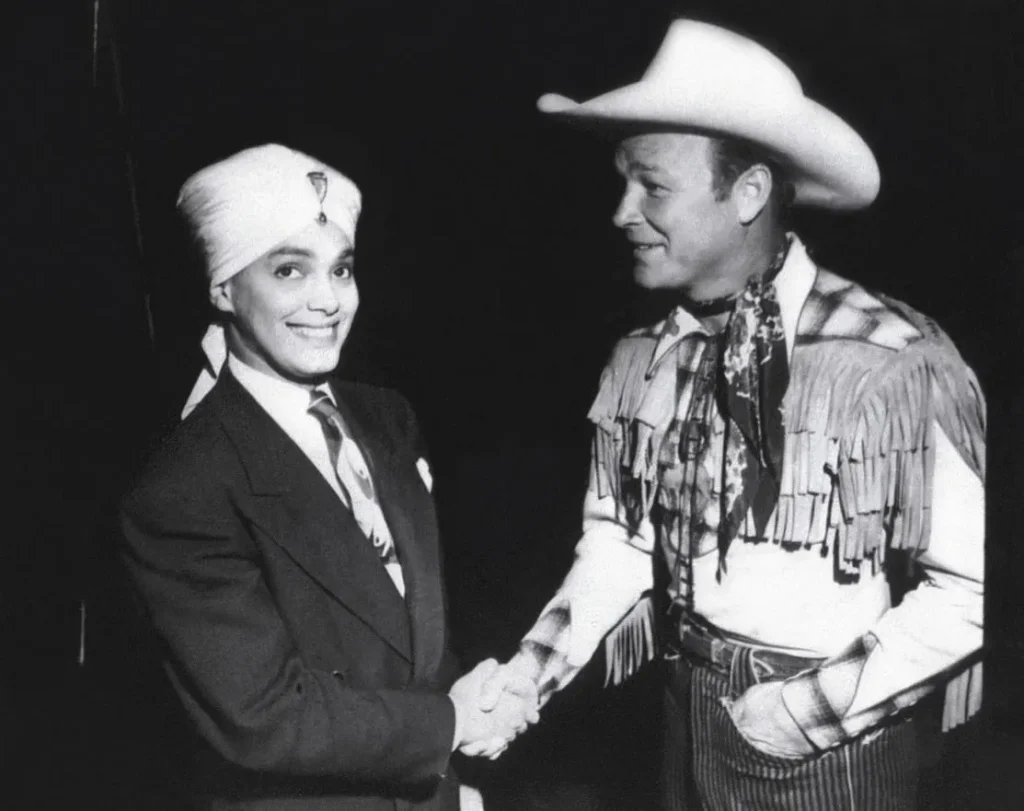
Soon after his television debut, Korla Pandit was chumming it up with major stars like Bob Hope, Errol Flynn and Roy Rogers, and making appearances at The Hollywood Palace and even getting his own float during an Orange Bowl Parade. But, upon finding fame, he was recognized by members of the music community as being the former Juan Renaldo! To maintain the narrative, it was cleverly explained that, yes, Korla Pandit and Juan Renaldo were one and the same, but it was Korla Pandit who had adopted the Juan Ranaldo persona and posed as a Mexican to get work upon arriving to Los Angeles, forever leaving Johnny Redd out of the equation. People easily bought that explanation. Decade after decade, through every stage of his life, Korla and Beryl Pandit never deviated from the story or dropped the façade. Johnny Redd basically became Korla Pandit in mind, spirit and soul.
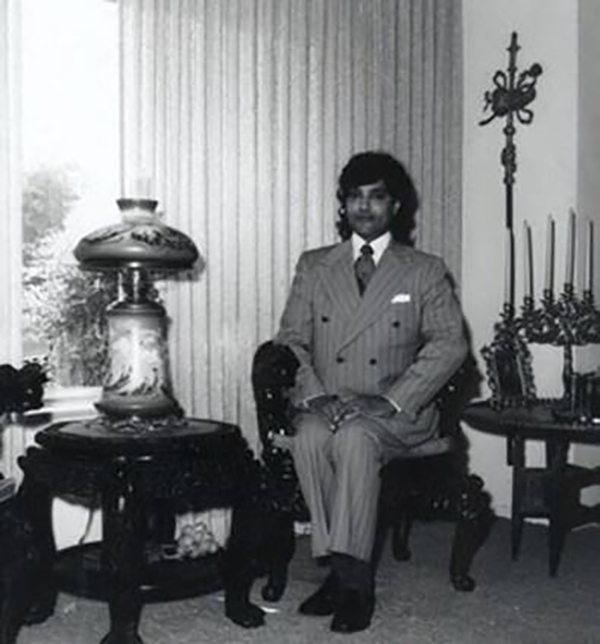
But what of the Redd family he left behind? What did they make of the Korla Pandit persona? According to later interviews conducted with Pandit’s siblings’ children, Pandit did maintain relationships with his parents, brothers and sisters but, obviously, there was now a distance between them so that the charade could be maintained. It was said that on occasion Pandit would return to Columbus, usually incognito and at night, only to be long gone by the next morning. Family visiting Los Angeles would often attend Korla Pandit performances, but Pandit would not acknowledge them before, during or after his concerts. Instead, he would meet up with them in a private and secluded location hours after the concert had concluded. During times of need Pandit would send money to aid family members in crisis, doing what he could to help support them from afar. Although he kept his distance in fear of being found out, Pandit continued to have a loyalty to his family, who in return kept his secret. Meanwhile, members of the Columbia community, especially those in the congregation of Reverend Redd, were known to be aware of Korla Pandit’s true identity. But at that time Korla’s fame was purely regional, and his program didn’t even broadcast in the Midwest. The few who apparently knew what was going on, out of respect of Reverend Redd, also kept the secret close to their chests.
So, from his first confirmed appearance in 1949 to his death in 1998, there was only Korla Pandit, and the world had never heard of Johnny Redd…. that was until “Sir” Charles Thompson blew the whistle on him to RJ Smith. With this incredible piece of information, Smith put his manuscript on hold and did a brilliant bit of investigative journalism, uncovering the true story of Korla Pandit and bringing Johnny Redd back into existence.

But before revealing the story to the world, Smith wanted to consult with the family which Korla Pandit left behind. In 1999 Smith traveled to Sechelt, British Columbia to meet with Beryl and Shari and get their side of the story. To say the least, the meeting did not go well. Shari refused to verify that the information Smith presented to them was true, and as he tried to comfort his crying mother, Beryl was reported to proclaim, “I wish you would go doodle on somebody’s else’s life.” Although he did not meet with Smith, Pandit’s other son, Korma, also would never verify the truth to his father’s identity and, in a later public statement, said ““How would you feel if somebody told you they had a different history of your whole life?” This raised the question if Korla and Beryl had ever actually revealed the truth to their sons, who they raised in an Eastern tradition. If they were in on the ruse we will probably never know. Shari died in 2000 prior to the public finding out the truth about his father. Beryl passed away in 2005 at the age of 85, never publicly speaking about her husband’s true identity. Korma died in 2025, but what is curious is that in the 2000’s he changed his name to that of his father’s and started going by the name “John Pandit.” Did he eventually come to terms with the truth?
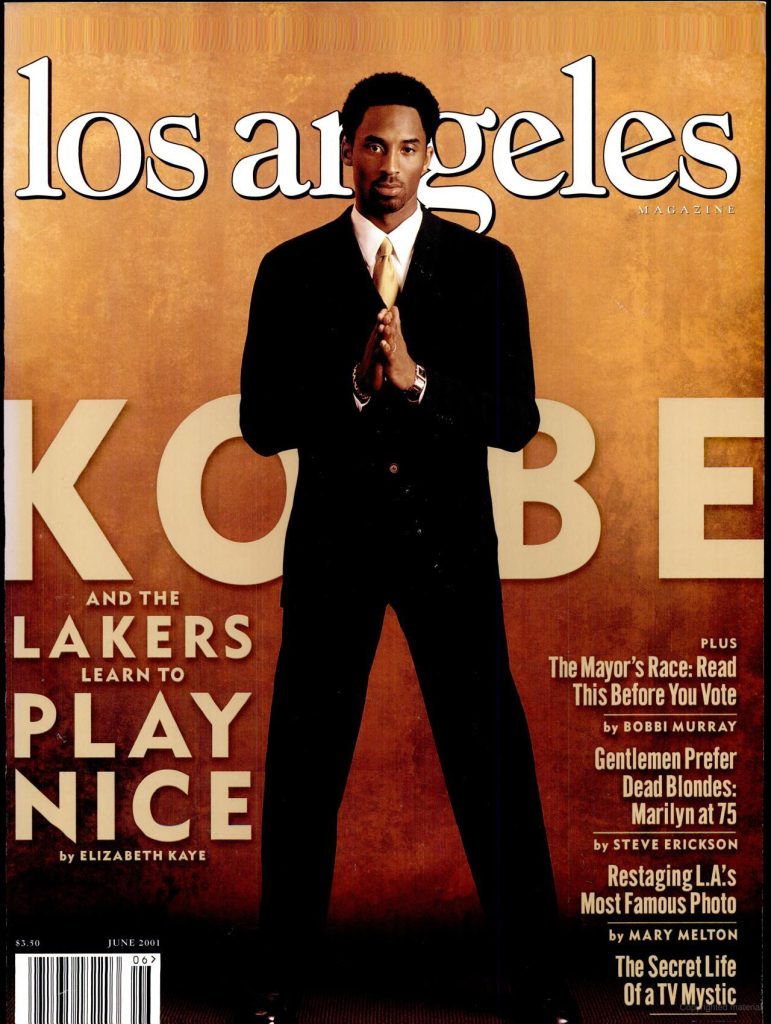
In June 2001, Los Angeles Magazine published Smith’s expose “The Many Faces of Korla Pandit,” exposing the truth behind Pandit’s identity to the public for the first time. With Pandit still being a niche performer with little more than a cult following, the story did not become earth shattering headline news but did manage to get a fair bit of attention which, once again, created new interest. While members of the Pandit and Redd family denied the story was true, even going so far to hire lawyers to threaten lawsuits, younger members of the Redd family seemed more willing to tell what they knew and even participated in Smith’s investigation. But new conversations started being had, especially in regard to cultural appropriation, racial identity and just how far black Americans would go to escape oppression during1950’s America.
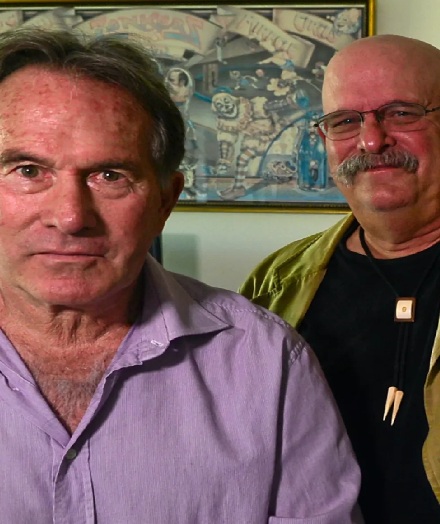
The story eventually came to the attention of San Francisco based film makers Eric Christiansen and John Turner. Turner had a personal stake in the Korla Pandit story by having been associated with him during the late 1980’s via his work with KGO-TV. When the station was celebrating it’s 50th anniversary in 1989, Turner was part of the team who was creating material to chronical the station’s history, which brought him into direct contact with Pandit. After leaving Los Angeles in 1958, at a low point in his career Pandit was thrown a lifeline by KGO-TV and given a new television show which lasted until 1968, only to end when Pandit decided to leave the US for Canada. Locating Pandit in Vancouver, Turner conducted an interview with Pandit which was broadcast on KGO-TV in 1990. For many years afterwards, Korla would stay in touch with Turner via sporadic phone calls and even invited Turner to his shows when he played in the Bay area during his brief resurgence prior to his death. Through all of their interactions, Turner had never suspected that Pandit was anything other than who he claimed to be.
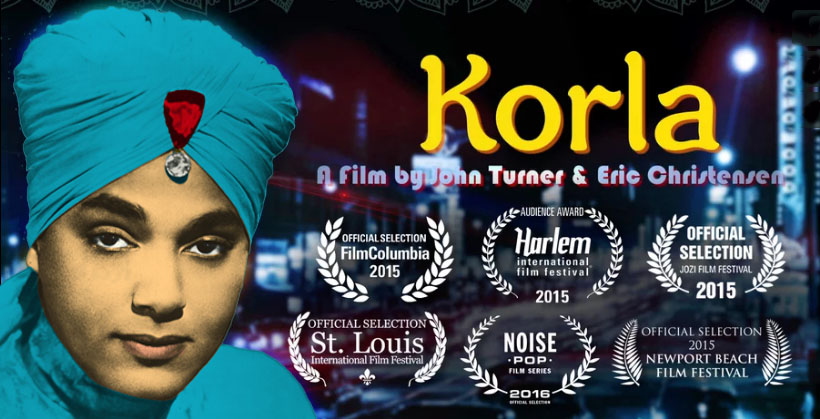
When Turner retired from KGO-TV in 2010, the story of Korla Pandit was still swimming in his head, and contacting Christensen, who was a former associate of his at the station, the two combined their talents to create the first documentary chronicling the story. Their film, “Korla,” included interviews with RJ Smith as well as performers such as Carlos Santana, Harry Edwards, Booker T. Jones and Ben Fong Torres who made commentary on the influence and difficult legacy of Pandit. “Korla” was released in 2015 to positive reviews and became a poplar entry on the film festival circuit. Via the film, Turner and Christensen managed to raise Korla Pandit’s profile even higher, bringing his music and story to an even broader audience than ever before.
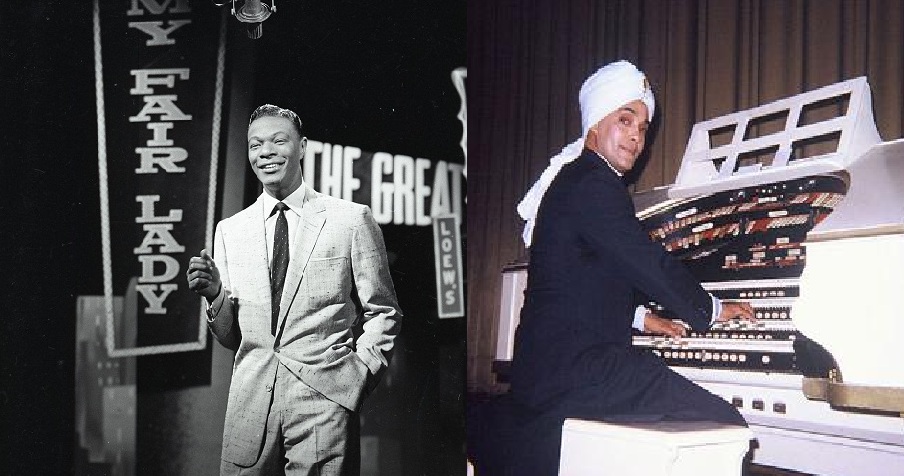
But one of the most significant things that came from the reveal of Korla Pandit’s true identity was how it altered history. Up until 2001 it was an often-repeated fact that the first black performer to have his own television series was Nat King Cole, who hosted 64 episodes of “The Nat King Cole Show” on NBC-TV between 1956 and 1957. A breakthrough in television, it was an important landmark moment in both social and entertainment history. However, with the reveal of Korla Pandit’s true identity, “Korla Pandit’s Adventures in Music” is now officially the first television show to be created for and hosted by a black performer. Of course, this doesn’t change the importance of Nat King Cole’s achievement, being the first black performer to be given the opportunity knowingly by a network. If anybody had suspected that Korla Pandit was a black performer it is doubtful that he would have ever gotten the opportunity to have the television show that he had. However, as a result of his ruse, Korla Pandit now gets the distinction of being the first African American to have a television show via a technicality.

Although still far from being in the mainstream, Korla Pandit has more of a presence in the musical landscape now than he has ever before. Thanks to his curious story, as well as the film which continues to be available on streaming platforms, people are still becoming aware of his myth and music. As a result, a beautiful new Korla Pandit collection, “Genie of the Keys: The Best of Korla Pandit” was released by Fantasy Records, on powder blue vinyl, as a Record Store Day Exclusive in 2023.
On September 15th, 2015, Columbus, Missouri celebrated the complicated life and legacy of the son they never knew by declaring the day “Korla Pandit Day.” A screening of “Korla” was held with filmmaker John Turner on site, and members of the Redd family were in attendance to honor their late relative. A discussion on Pandit’s legacy followed the film led by faculty from the University of Missouri, breaking down the nuances of Pandit’s place in social history, and the impact of his deception. But, while his legacy may have its difficulties, the event was created to be a celebration of the life of one of entertainment’s most curious performers. In life, Korla Pandit was an oddity, but in death the revelation of his bold deception has sealed his infamy.